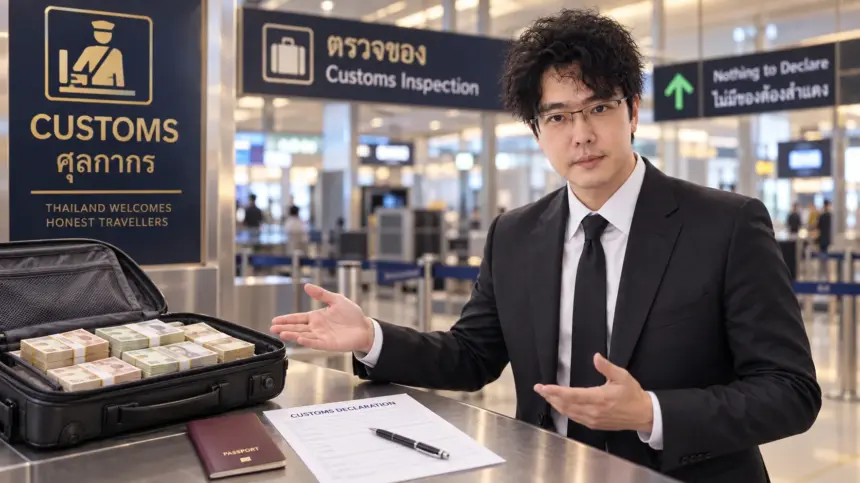
Carrying cash into or out of Thailand can raise questions at Customs, especially if you have several currencies or are crossing a land border. The amount that triggers a declaration depends on the currency and the rules that apply to your route. Chiang Rai Times reports that travelers carrying more than USD 20,000, or its equivalent in foreign currency, must report it when entering or leaving Thailand. Because Customs requirements can change, check the current guidance before you travel. A declaration is a report to Customs; by itself, it does not mean you’re barred from carrying the money.
Key Takeaways
- Chiang Rai Times reports a foreign-currency reporting threshold of more than USD 20,000 or its equivalent.
- The reported rule applies to arrival and departure, so check the requirements for each leg of your trip.
- Keep a clear record of the banknotes and coins you’re carrying, including amounts and currencies.
- Thai baht rules are separate from foreign-currency reporting requirements.
- Check with Thai Customs about the process for your specific crossing and keep any declaration confirmation.
Taking Cash Across Thailand’s Borders: What to Declare
The available Chiang Rai Times guidance says travelers must report foreign currency worth more than USD 20,000, or its equivalent, when entering or leaving Thailand. It describes this as a combined value across foreign currencies, rather than a separate allowance for each currency. For example, if you carry U.S. dollars and euros, the relevant calculation may involve their combined value.
The guidance covers physical banknotes and coins carried by a traveler or packed in baggage traveling on the same conveyance. It does not treat bank balances or payment cards as cash carried across the border. For details, see Thailand’s cash declaration rules for travelers.
Because Customs requirements can change, check the current Thai Customs guidance before your trip, especially if your cash total is close to the reporting threshold. Confirm what applies to your specific travel date and crossing. A report to Customs is not automatically a ban on carrying the money, but you should check for any separate restrictions that may apply to your circumstances.
Why the foreign-currency declaration threshold needs a fresh check
The published guidance gives a USD 20,000 equivalent figure. Before relying on it, confirm the current requirement with Thai Customs, including whether it applies to your route and the currencies you’re carrying. Don’t assume an old article or a threshold remembered from a previous trip reflects the rules in force when you travel.
Which forms of money may count
The available guidance refers to physical banknotes and coins. Count the currency you’ll carry yourself and any cash packed in baggage traveling with you. If you plan to carry a financial instrument other than banknotes or coins, ask Thai Customs how it is treated rather than assuming it follows the same rule.
How Much Thai Baht Can You Carry Across a Border?
Thai baht and foreign currency are separate considerations. The foreign-currency reporting guidance does not, by itself, tell you how much Thai baht you may carry across a border. Check Thai Customs’ current rules for baht and the requirements of the country you’re entering.
This matters whether you’re flying or crossing a land border. The next country may have its own rules for bringing in Thai baht, and those rules don’t disappear because you’ve checked Thailand’s requirements. Before you travel, consult the customs authority for your destination as well as Thai Customs.
A reported incident at the Mae Sai 1st Friendship Bridge involved Customs seizing 3,572,240 baht from a traveler. That case illustrates why travelers should take border rules seriously, but an incident report does not establish a general allowance or reporting threshold. Check the rules for your own circumstances instead of using a reported seizure as a guide.
Keep Thai baht and foreign currency totals clear
Write down each currency separately, with the amount you’re carrying. Don’t assume that Thai baht and foreign currency are added together in a particular way unless current guidance confirms it. A clear breakdown makes it easier to answer questions and complete any required reporting.
Check the rules for your destination, too
Thai Customs’ requirements don’t replace the entry rules of the country you’re visiting next. If you’re crossing by land or connecting through another country, check that country’s customs guidance before departure. That way, you can prepare for the rules on both sides of your route.
How to Declare Cash at Thai Customs
Start by checking the current Customs requirement for your travel date, route, and currency. If your cash meets the reporting conditions, prepare a precise breakdown before you reach the checkpoint. List each currency and amount, and note who owns the money.
Next, follow the declaration process at your entry or exit point. Procedures can depend on the crossing, so ask a Customs officer where to report and what information to provide. Submit the required declaration, answer questions accurately, and keep any receipt or confirmation you receive.
Allow extra time for this step, especially if you’re traveling through a land crossing you haven’t used before. Don’t assume that every airport and checkpoint follows an identical process. If instructions are unclear, ask an officer before you leave the Customs area.
Prepare the amount, currency, and supporting details
Count your cash before reaching the checkpoint, then record the total for each currency. Note who owns it and, if asked, be ready to explain its source or purpose. You may also want to keep relevant documents, such as withdrawal receipts or sale records. For context on why records can matter later, see Customs documents proving cash entered Thailand legally.
Allow time to speak with Customs at your crossing
Customs guidance refers to reporting at a port, airport, or customs checkpoint, but the steps may vary by location. Follow the instructions at your crossing and ask an officer if you’re unsure where or how to declare. Keep proof of your declaration with your travel documents.
Avoid Delays by Checking These Details Before You Travel
Check the requirements for both entering and leaving Thailand. Then confirm the process for your specific airport or land crossing. Rules may apply at more than one point in a return or onward journey, so don’t assume that a declaration on arrival settles the question for departure.
Count all the cash you’re carrying and keep each currency’s amount clear. If you’re traveling with cash in baggage as well as in a wallet or purse, include it in your records. Avoid relying on old articles or a threshold you remember from a previous trip. Instead, consult Thai Customs before travel and ask for guidance if any part of the rule is unclear.
Declare the money when the rules require it, and answer Customs questions honestly. A calm, accurate breakdown can make it easier to explain what you’re carrying and follow the instructions at the checkpoint.
Do not assume arrival and departure rules are identical
Reporting requirements can arise when you enter Thailand and when you leave. Check the rules for each leg of your trip, including onward travel through another country. If your route changes, confirm whether the new crossing affects your obligations.
Keep your declaration accurate and easy to verify
Count your cash before you reach Customs, separate the currencies in your notes, and make sure the figures match what you carry. Keep any declaration confirmation with your travel papers. If an officer asks for more information, answer clearly and honestly.
Frequently Asked Questions
Does declaring cash mean I cannot bring it into Thailand?
No. Reporting cash to Customs is not automatically the same as being barred from carrying it. Check whether any separate restrictions apply to the money or your circumstances.
Should I declare cash if I am not sure which threshold applies?
Check the current requirement with Thai Customs before you travel. If you’re still unsure at the checkpoint, ask an officer rather than guessing.
Can I use an online declaration system for a land border?
Check with Thai Customs about the process at your specific crossing. Don’t assume that an online option, if available to you, replaces any steps required at the checkpoint.
Do I need to declare cash when leaving Thailand?
Reporting requirements can apply when leaving as well as when arriving. Check the current rule for the amount and currency you’ll carry on departure.
What should I do if official sources show different amounts?
Contact Thai Customs and ask which requirement applies to your travel date and crossing. Don’t choose a figure based on an old article or an assumption.
Before traveling, confirm Thailand’s current Customs rules and the destination country’s requirements. Keep an accurate breakdown of the cash you’re carrying, and declare it when required. Carrying cash into or out of Thailand can trigger Customs reporting rules, and what applies depends on the currency, amount, route, and current guidance. The available figures conflict, so relying on a single threshold without checking can leave you unsure at the border.
Before you travel, confirm the requirements for your trip and keep a clear breakdown of the cash you’re carrying. This guide focuses on what to check and how to prepare, so you can report your money when required and follow the process at your crossing.
Key Takeaways
- Thai Customs’ general guidance reports a declaration threshold above USD 20,000 equivalent, but conflicting notices make it important to check official currency guidance.
- Cash reporting can apply when entering or leaving Thailand, so confirm the rule for each leg of your trip.
- Thai baht requirements differ from foreign currency rules; check Thai Customs and your destination country’s requirements.
- Record physical banknotes and coins by currency, then follow the declaration process at your specific crossing.
- Keep any Customs confirmation with your travel papers; a reported Mae Sai cash seizure does not establish a universal cash limit.
Taking Cash Across Thailand’s Borders: What to Declare
When you enter or leave Thailand, cash above the applicable declaration threshold must be reported to Thai Customs. However, official guidance gives conflicting foreign-currency figures, so travelers should confirm the requirement that applies to their travel date and crossing.
Why the foreign-currency declaration threshold needs a fresh check
Thai Customs’ general traveler guidance says foreign currency worth more than USD 20,000 or its equivalent must be declared. A separate Customs notice gives a threshold of USD 15,000 or its equivalent. The available guidance does not make clear which figure governs, so neither should be treated as a settled current rule. Review the general Customs currency guidance and the separate Customs notice, then ask Thai Customs which requirement applies before you depart.
The reporting rule concerns entering and leaving Thailand. Check it for each leg of your trip, and confirm how to report at your airport or land crossing. For airport travelers, Thailand’s customs and baggage rules explain why customs declarations are separate from routine baggage screening.
A declaration is a report to Customs, not automatically a ban on carrying the money. Still, check whether any separate restrictions apply to your situation.
Which forms of money may count
Count banknotes and coins in each foreign currency you carry. Some official Customs material also refers to negotiable monetary instruments, so don’t assume the declaration rule covers only cash in a wallet or bag. The Customs declaration form includes space for Thai or foreign currency and negotiable instruments.
If you plan to carry checks or another financial instrument, ask Thai Customs how it is classified and whether it counts toward the applicable threshold. Keep a record of the instrument type and value, along with your cash totals, so you can give Customs a clear account if required.
How Much Thai Baht Can You Carry Across a Border?
Thai baht and foreign currency follow separate reporting considerations, so record them as distinct totals. Available Thai Customs material mentions a THB 450,000 reporting trigger in some guidance, while other surfaced material includes a THB 50,000 figure without enough detail about the route or destination to treat it as a universal limit. Neither figure should be read as a general allowance for every traveler.
Keep Thai baht and foreign currency totals clear
Write down the amount of each currency separately, including Thai baht, U.S. dollars, and any other cash you carry. Some Customs guidance describes combined totals, but the available material does not establish how every currency combination should be calculated under the applicable rule. Check with Thai Customs before travel, especially if your cash is near a reported threshold.
Also, a reporting trigger is not automatically the same as a maximum amount you may carry. Confirm whether you need to declare the money and whether separate restrictions apply to your route. For context, Thai Customs coverage of a large baht seizure describes one specific case, but an incident does not establish a general traveler limit.
Check the rules for your destination, too
Thai Customs requirements apply to Thailand’s side of the border. They don’t replace the entry rules of the country you’re entering next. If you cross by land or connect through another country, check that country’s customs authority before departure, and verify the rules for the specific route.
For example, travelers entering the United States must report more than $10,000 in currency or monetary instruments to U.S. Customs and Border Protection. The CBP rules for money and monetary instruments explain that requirement. Other destinations may set different thresholds or treat Thai baht differently, so don’t assume Thailand’s reporting guidance applies across the border. Keep your currency breakdown handy and follow the rules of each country you enter.
How to Declare Cash at Thai Customs
Declaring cash at Thai Customs starts with checking the rule that applies to your travel date and crossing. Official guidance has shown conflicting foreign-currency thresholds, so confirm the current requirement before relying on a figure. Then prepare your cash details and follow the instructions at your entry or exit point.
Prepare the amount, currency, and supporting details
Count the physical cash you’re carrying and write down each currency and amount. Keep Thai baht separate from foreign currencies, and note who owns the money. If an officer asks, be ready to explain its source or purpose.
You may want to keep relevant records, such as bank withdrawal receipts or documents showing proceeds from a sale. These can help clarify the funds, but don’t assume they’re always legally required. For airport-specific context, see this report on cash declaration rules at Bangkok Airport.
Allow time to speak with Customs at your crossing
Thai Customs guidance describes reporting to an officer at a port or airport, while other notices refer to a customs checkpoint. The process may vary by location, so don’t assume every airport and land crossing uses the same steps. Ask an officer where to report if signs or instructions aren’t clear.
Thai Customs provides a Foreign Currency Declaration Form and an online Currency Declaration System. Before using the online system, verify that it applies to your specific crossing and whether you still need to speak with an officer or complete another step.
Allow extra time to find the correct reporting point, submit the required declaration, and answer any questions. Give accurate figures that match the cash you carry. Finally, keep the receipt or confirmation with your travel documents in case you need to show proof later.
Avoid Delays by Checking These Details Before You Travel
A little preparation can prevent a last-minute scramble at Customs. Thailand’s published guidance includes conflicting foreign-currency thresholds, and available information doesn’t establish one reliable current penalty amount for failing to report cash. Check the official Thai Customs guidance for departing travelers before you travel, then ask Customs directly if the rule or process remains unclear.
Do not assume arrival and departure rules are identical
Reporting requirements can apply when you enter Thailand and when you leave. Check the rules for each leg of a return or onward journey, including any country where you change planes or cross a land border. A declaration made on arrival doesn’t automatically answer what you need to do when departing.
Also confirm the procedure at your specific airport or land crossing. Customs guidance refers to ports, airports, and checkpoints, but it doesn’t establish that every location uses the same process. If your route changes, check the requirements again rather than relying on instructions for a different crossing.
Keep your declaration accurate and easy to verify
Before reaching the checkpoint, count all relevant money you carry, including cash in your wallet, bags, and baggage traveling with you. Record each currency separately, and note any negotiable instruments if you plan to carry them. Keep the figures together so you can answer questions without estimating at the counter.
Then compare your totals with the current rule for your route. Don’t rely on an old article, a threshold you remember, or a figure meant for another currency or crossing. If you aren’t sure whether your cash or instrument must be reported, ask Thai Customs before departure. Declare when required, answer questions honestly, and keep any confirmation with your travel documents.
A reported cash seizure at the Mae Sai border describes a specific case, not a general traveler threshold. Available information doesn’t support quoting a standard fine, prison term, or confiscation outcome for every reporting issue, so check official guidance instead of guessing at the consequences.
Frequently Asked Questions
When you’ve checked the main declaration rules, a few practical details may still need confirmation. These answers can help you prepare, but Thai Customs should settle questions about your specific trip.
Does an online submission replace speaking with an officer?
Not necessarily. Thai Customs has an online Currency Declaration System, but submitting information online doesn’t confirm that every crossing uses the same process. Check with Customs about your checkpoint and follow any instructions from officers there.
Should my family combine everyone’s cash into one total?
Don’t assume how Customs treats cash carried by different travelers or owned by someone else. Ask Thai Customs how to report money shared among family members, and keep each person’s amount and currency clearly recorded.
How should I calculate the value of cash in different currencies?
Record each currency separately rather than estimating a combined value. Since the declaration threshold is expressed as a U.S. dollar equivalent, ask Thai Customs which conversion method applies to your travel date if your total is close to the threshold.
Do checks or other monetary instruments count as cash?
They may be covered by rules that also refer to negotiable monetary instruments. Thailand’s Customs notice on currency declarations discusses currency notes, coins, and such instruments. Confirm how Customs classifies the specific item you plan to carry.
Can a news report tell me how much cash I’m allowed to carry?
No. A report about a cash seizure at the Mae Sai border describes one incident, not a general allowance for travelers. Check the rule that applies to your amount, currency, and crossing before you travel.
Conclusion
Before crossing Thailand’s border, check the current Thai Customs rules and your destination country’s requirements. Official Thai Customs sources show conflicting foreign-currency thresholds, so confirm which rule applies to your trip rather than relying on one figure.
Prepare an accurate breakdown of the cash you’re carrying, keep Thai baht separate from foreign currencies, and declare it when required. Clear records and a declaration that matches the amount you carry can help you follow Thailand’s customs rules for travelers.