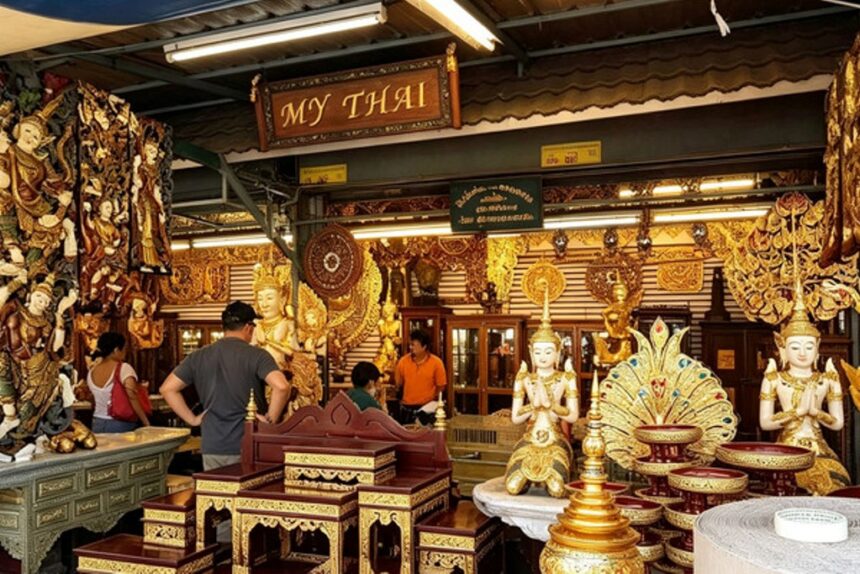
Some Buddha images can be taken out of Thailand, but an image the Fine Arts Department classifies as an antique or object of art needs an export license. Buying a figure as a souvenir doesn’t prove it can leave the country without permission.
Because the Department determines how an item is classified, check the rules for the specific image before you buy or pack it. This guide explains how to confirm its status, apply for a license if required, and reduce the risk of problems at departure.
Key Takeaways
- Thailand may require a Fine Arts Department export license if it classifies a Buddha image as an antique or object of art.
- A shop receipt, small size, recent manufacture, or souvenir label doesn’t automatically exempt an image from the rules.
- If a license is required, apply with the Sor Kor 6 export permit form and present the item for examination.
- The Department decides how an image is classified; its guidance sets no general size or age cutoff that guarantees an exemption.
- Before packing, confirm the requirements for your specific item and review Thai Customs rules for Buddha images and antiques.
Can You Take a Buddha Image Home from Thailand?
You can take some Buddha images home, but the key question is how Thailand’s Fine Arts Department classifies the specific item. If the Department treats it as an antique or object of art, you need an export license before it leaves the country. That rule doesn’t mean every Buddha image requires a permit.
Why the image’s classification matters more than its size
An ordinary modern decorative figure may be treated differently from an item the Department classifies as an antique or work of art. However, its appearance or the seller’s description won’t settle the question. The Department’s guidance gives no general size cutoff or age threshold that guarantees an exemption.
So, a small statue isn’t automatically free to export, and a recently made appearance doesn’t prove that a figure falls outside the rules. The Department assesses the item’s status. Its export application guidance covers antiques and objects of art, including Buddha images and religious icons.
If you’re unsure how your purchase would be classified, contact the Fine Arts Department before you travel. Ask about the specific image and explain what you know about its age, material, origin, and intended use. Getting an answer before packing gives you time to apply for a license if the Department says one is required.
Amulets, modern replicas, and shop-bought figures
The official guidance reviewed here doesn’t confirm a blanket exemption for amulets, new reproductions, or Buddha figures sold as souvenirs. That doesn’t mean every item in those categories needs a license. It means you shouldn’t assume that an item is exempt without confirming how the Department will classify it.
A shop receipt can document your purchase, but it doesn’t prove that an export license is unnecessary. Likewise, a seller’s assurance that a figure is new or intended as a souvenir isn’t a substitute for the Department’s assessment.
Before you buy, or well before departure, contact the Fine Arts Department with clear photos and a description of the item. Ask whether it is considered an antique or object of art and whether you need an export license. If permission is required, follow the application process and present the item for examination.
How to get a Fine Arts Department export license
If the Fine Arts Department says your Buddha image needs an export license, apply before you leave Thailand. The process uses the Sor Kor 6 form, and the Department must examine and approve each item before departure.
Prepare the form, photos, and proof of ownership
Complete the Sor Kor 6 export license form. It asks why you’re exporting the image and where it will go, including its destination or recipient. Department guidance also calls for evidence of ownership and relevant documents for the applicant. Individual applicants may need to provide house-registration documentation.
The Sor Kor 6 form specifies two color photos measuring 9 × 12.5 cm per item. One Fine Arts Department museum page lists different photo dimensions, so confirm the current requirements with the office handling your application before printing. If several images look alike, ask whether the office will accept a photograph of one or a group, with the total number being exported written on it.
As a preparation tip, keep your purchase receipt and any records that explain the image’s origin. These can help document ownership, but they don’t replace the Department’s classification or approval.
Present the image for examination and allow time for approval
Submit the application to the National Museum Office or, if you’re applying outside Bangkok, ask a participating regional national museum about its process. For central-office applications, the Department also allows applicants to use the National Single Window. Regional applications require original documents for verification at a participating museum.
You must bring each image for examination. If an object is too large or otherwise cannot be moved, you may petition the Director-General to arrange an examination at its storage location. Explain why it can’t be brought in; you may have to cover the examination expenses.
After officials approve an item, they attach a lead seal to it. Department guidance describes permit collection in about one to two working days, with the applicable fee paid when you collect it. Processing times and charges can change, so confirm both with the receiving office before making travel plans. Leave enough time for the examination and any follow-up the staff requests.
Understand the fees without treating them as exemptions
Department guidance lists a fee of 2,000 baht for each Buddha statue or religious icon the Department deems to date from the Ayutthaya period or earlier. For a Rattanakosin-period image dated B.E. 2490 onward, or 1947 onward, the guidance lists 300 baht when its length or height exceeds 100 cm.
The available guidance doesn’t confirm other size brackets, so ask the office what fee applies to your specific image. In either case, a listed fee is not permission to export. The Department must classify and examine the object, then approve it before it leaves Thailand.
What to do before you buy or fly home with a Buddha image
A little preparation can help you avoid a last-minute problem at the airport. Before paying, gather details about the image and confirm whether Thai export approval may be needed. Then leave enough time for any examination and check the rules in the country where you’ll take it.
Ask the seller useful questions, but verify the answer
Ask when and where the image was made, whether it’s a reproduction, and whether the seller has documents about its age or origin. Request a receipt that describes the item clearly, and keep any provenance records, such as an earlier invoice or written history of ownership.
These records can help explain what you bought and when. However, a receipt, a “modern replica” description, or a seller’s assurance does not determine whether the image counts as an antique or object of art under Thai rules. The Fine Arts Department makes that decision.
Before purchasing, contact the Department with clear photographs and the details you have. If you already own the image, ask well before departure. Explain its material, measurements, claimed age, origin, and whether it is a reproduction. Keep the reply and related documents with your travel records, but follow the Department’s instructions if it requires you to present the item.
Use this quick checklist while shopping:
- Ask the seller about the image’s age, place of manufacture, and whether it is a reproduction.
- Get an itemized receipt and save any records that support its history or ownership.
- Check with the Fine Arts Department before purchase or departure if its export status is uncertain.
- Don’t pack an image that may need examination until you know what the Department requires.
Keep time for inspection, sealing, and airline packing
A permit application may require you to bring the physical image to officials for examination. If the Department approves it, officials may seal the item. Therefore, don’t plan to treat a potentially regulated image as ordinary checked baggage before completing the process. Contact the office handling your application about timing and how to transport the image to the examination.
After approval, check with your airline about baggage size, weight, fragile-item handling, and whether a sealed object can travel in checked or carry-on baggage. Pack it only in a way that protects the seal and follows the airline’s instructions. A permit does not guarantee that an airline will accept the item in the way you intended.
Finally, Thai export permission and your destination country’s import rules are separate requirements. If you’re returning to the United States, review CBP’s guidance on importing antiques and artwork; for U.S. customs purposes, an antique must be more than 100 years old. Check the rules for the specific material and item, and keep supporting documents accessible during travel.
What can happen if you leave without the required permit?
If Thailand’s Fine Arts Department classifies your Buddha image as an antique or object of art, you need its export license before taking the item out of the country. Leaving without required approval can disrupt your departure plans, even if you bought the image legally and have a receipt.
Your Buddha image may be stopped at departure
A regulated image may be held for review if officials identify it at departure and you can’t show the required license. You could face delays while they determine what the item is and whether it can leave Thailand. If you can’t resolve the issue in time, you may lose the chance to take the image home on that trip.
The available guidance does not establish a specific penalty for every case, so don’t assume that a fine, confiscation, or another outcome is automatic. The practical risk is that you may not be allowed to export the image without the Department’s approval. Its Sor Kor 6 export license guidance covers antiques and objects of art being taken out of Thailand.
A receipt or a seller’s claim that an image is modern won’t settle its classification. The Department requires an examination for items covered by the process, and officials attach a lead seal to approved objects. That means a last-minute airport decision can leave too little time to complete the required steps.
Resolve uncertainty before you travel
If you don’t know whether your image needs a license, contact the Fine Arts Department before packing it or heading to the airport. Share clear photos and details about its material, measurements, claimed age, and origin. Ask directly whether the specific item needs examination and an export license.
Thai export approval is separate from the rules in your destination country. A Thai license doesn’t automatically satisfy import, customs, or documentation requirements elsewhere. If you’re taking the image to the United States, check the applicable U.S. rules as well, and keep supporting documents accessible during travel.
The safest approach is to get the Department’s answer early enough to apply, attend an examination, and collect the license if required. Don’t rely on resolving an uncertain classification at departure.
Frequently Asked Questions
Even after checking Thailand’s export process, practical questions can come up when you plan to carry or ship a Buddha image. These answers clarify who handles approval and what to confirm before departure.
Can I carry a Buddha image in my hand luggage?
Possibly, but airline permission only covers how the item travels. It does not replace a Thai export license if the Fine Arts Department classifies the image as an antique or object of art. Before packing it, confirm its export status with the Department, then check your airline’s carry-on size, weight, and security rules. A permitted carry-on item can still require export approval.
Can I mail a Buddha image from Thailand instead of carrying it?
Shipping the image does not automatically avoid Thai export rules. First, ask the Fine Arts Department how it classifies the specific item and whether it requires a license before leaving Thailand. Then check whether the carrier accepts it and review the destination country’s import rules. Keep any required approval and shipping records, since a carrier’s acceptance does not confirm that the export or import is lawful.
Does a temple gift or blessing mean I can export the image?
No. A gift, blessing, or religious purpose does not by itself exempt an image from export controls. Ask the Fine Arts Department to assess the particular object before you make travel or shipping plans. If you’re visiting a temple, follow local customs and show respect around sacred objects, as outlined in this guide to Thai temple etiquette.
Can a Thai embassy approve the export?
Don’t assume an embassy can issue a Thai export license. The application and examination process belongs to the Fine Arts Department and its designated offices, including participating national museums. Contact the Department to confirm the image’s classification and the application steps. The Sor Kor 6 application form covers applications to export Buddha images from Thailand.
Do I need to check my home country’s import rules too?
Yes. Thai export approval and your destination country’s import requirements are separate, so you may need to meet both. Before traveling, check with the relevant customs or cultural property authority about the image’s material, age, and documentation. For a U.S. destination, federal law restricts imports of certain designated cultural property, so review the applicable U.S. import restrictions as well.
Conclusion
You can take a Buddha image home from Thailand only if it meets the applicable export rules. If the Fine Arts Department classifies it as an antique or object of art, you need the Department’s approval before it leaves the country. A purchase receipt or souvenir label doesn’t settle that classification.
Before paying, packing, or traveling, gather the image’s details and confirm its status with the Fine Arts Department. That check is the clearest way to know whether you need a permit and avoid a departure-day problem.