
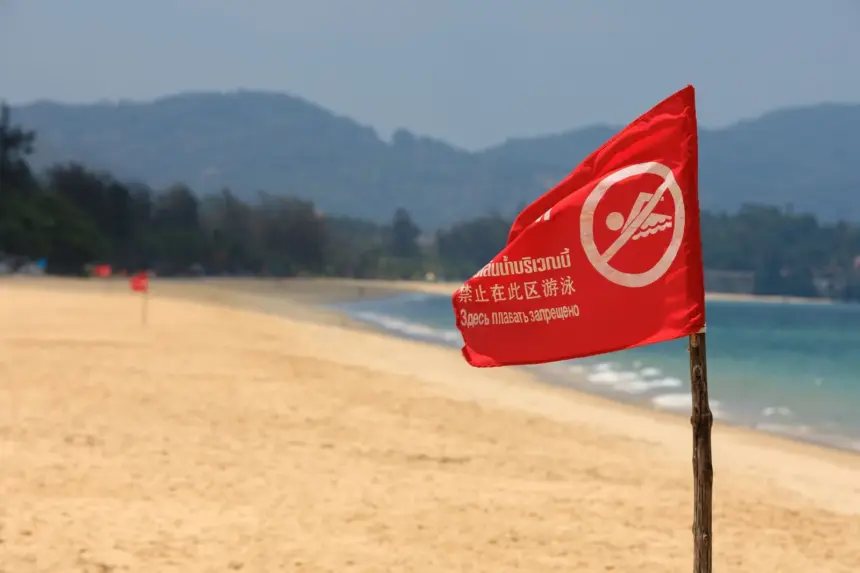
If a beach flag or lifeguard says swimming is unsafe, stay out of the water. Thailand’s government guidance gives meanings for several flags, but the full code isn’t established as uniform across every beach, so check local signs and follow the lifeguard’s instructions.
A red flag means swimming is prohibited under that guidance; yellow calls for caution, while green marks the safest area, not a guarantee of zero risk. You’ll also need to watch for changing sea conditions and know what to do if swimming isn’t allowed. Here’s how to read the warnings and make a safer choice.
Key Takeaways
- Thailand government guidance says a red flag prohibits swimming; leave the water and follow lifeguard instructions at the beach.
- Yellow flags call for caution, while green marks the safest area, not a risk-free one, according to Thailand’s beach safety guidance.
- Black-and-white checkered flags mark watercraft-only zones, so swimmers should stay clear; local beaches may use additional signals.
- On Phuket’s west coast, the May-to-October southwest monsoon can bring stronger surf and rip currents, but conditions vary daily.
- Check posted warnings before entering, and learn why Kata Beach rip current risks deserve attention.
Thailand Beach Flags: When It Is Unsafe to Swim
Thailand’s government guidance defines several beach flag colors, but it doesn’t establish a complete code that applies uniformly to every beach. Treat the meanings below as a guide, then check local signs and follow lifeguard instructions.
A red flag means stay out of the water
Under Thailand’s beach safety guidance, a red flag means the beach is closed and swimming is strictly prohibited. It is not a warning reserved for beginners or people who feel unsure in the water.
Your swimming ability doesn’t change the instruction. Even confident swimmers should stay out when a red flag is raised, since conditions can be dangerous for anyone. At Patong, AI cameras monitor red-flag swimming, but visitors should rely on the posted warning and lifeguard directions rather than waiting for an alert.
Yellow and green flags signal caution and safer areas
The government scheme describes green-flag areas as the safest for swimming. “Safest” is comparative, not a guarantee that the water is free of hazards. Currents, waves, and conditions can still change, so keep checking the beach and stay within any designated swimming area.
Yellow flags call for caution. The guidance associates yellow with sea plants and advises swimmers to be careful in that area. If you can’t tell what a flag or symbol means, check nearby signs or ask a lifeguard before entering the water. Don’t assume a flag has the same meaning at every beach.
Checkered and paired flags can mark zones, not safety guarantees
Black-and-white checkered flags identify watercraft-only areas under the government guidance. These zones may include kayaks and surfboards, so swimmers should stay out and use a designated swimming area instead.
Some Phuket sources describe red-and-yellow flags as marking a lifeguard-patrolled swimming zone. That meaning isn’t confirmed as a uniform national rule, so check the local instructions before entering. A red-and-yellow marker also doesn’t cancel a red no-swimming warning.
Double red flags require the same care. Some local sources use them to warn that swimming is prohibited, but the government guidance doesn’t define a nationally standardized meaning for a pair of red flags. Follow the signs and lifeguard directions at that beach, and don’t interpret unfamiliar flags as permission to swim.
How to Recognize Dangerous Sea Conditions in Thailand
Beach flags and lifeguard warnings give the clearest guidance for the conditions that day. Weather patterns can help you plan, but they can’t tell you whether a specific beach is safe right now. Look at the water before swimming, and stay out if conditions seem rough or unclear.
Rip currents can pull swimmers away from shore
A rip current is a narrow flow of water moving away from the beach. It can carry swimmers beyond the breaking waves, even when the water nearby looks calm. Watch for a gap in incoming waves, a choppy channel, or foam and debris moving out to sea. However, rip currents can be difficult to spot from shore, so visual clues aren’t a substitute for local advice.
The National Oceanic and Atmospheric Administration’s rip current guide explains what these currents are and how to recognize them. If a lifeguard warns about a current or tells people to leave the water, follow that instruction.
The southwest monsoon raises risks on exposed west-coast beaches
Phuket’s southwest monsoon season generally runs from May through October. During this period, west-coast beaches such as Patong, Karon, Kata, Kamala, Surin, and Nai Harn can face rougher surf and a higher risk of rip currents. The pattern is seasonal, not a daily forecast: conditions vary by beach and can change quickly.
Likewise, calmer conditions outside those months don’t guarantee safe swimming. Check the flags, posted signs, and lifeguard directions before entering. For broader trip planning, see this guide to Phuket beach conditions during the southwest monsoon, then reassess the sea when you arrive.
Waves, storms, poor visibility, and marine hazards matter too
Strong waves can break hard near shore, knock swimmers off their feet, or make it difficult to get back to the beach. Storm clouds, strong winds, or sudden weather changes are reasons to leave the water and follow local instructions. After heavy rain or when the water looks murky, poor visibility can make it harder to see other swimmers and hazards below the surface.
Jellyfish and other marine hazards can also make swimming unsafe. Look for warning signs and ask a lifeguard if you’re unsure what’s in the water. Above all, don’t use a general seasonal pattern to overrule a warning on the beach. A red flag, a lifeguard’s instruction, or a current local advisory should guide your decision that day.
What to Do When the Beach Is Closed or Conditions Change
A beach can become unsafe after you arrive, even if the water looked calm earlier. Treat a posted warning, a lifeguard’s call, or a sudden change in the sea as a reason to act right away. These steps apply whether you’re swimming with children, traveling alone, or comfortable in open water.
Leave the water and follow the marked swimming zone
When a red flag goes up or staff tell swimmers to get out, leave the water promptly. Don’t wait to see whether other people follow the warning, and don’t make an exception because you’re a strong swimmer. If waves build, visibility drops, or a storm approaches, head to shore and check for updated instructions.
Once conditions allow swimming, stay inside the designated swimming area and away from watercraft zones. Checkered flags may mark areas for kayaks or surfboards, where swimmers should stay clear. If you’re with children, keep them close and make sure everyone knows where to meet on shore. These Thailand beach safety tips for families can help when planning beach time with younger swimmers.
An empty lifeguard stand or a missing flag doesn’t confirm that swimming is safe. Look for posted signs and ask staff or local authorities if the beach’s status isn’t clear.
Ask a lifeguard before entering unfamiliar water
Before swimming, check the local flag legend, beach signs, and any current warnings. Some beaches use paired or unfamiliar flags, and meanings may vary by location. Ask a lifeguard what each marker means and where the safe swimming area begins.
Follow the instructions posted at that beach, even if you have seen a different flag system elsewhere in Thailand. If no lifeguard is present and you can’t confirm what a warning means, stay out until you can get reliable local guidance.
If a current catches you, focus on staying afloat
Stay calm and avoid swimming straight against the current. Instead, float or tread water to conserve energy, then signal for help by waving and calling out. The NOAA rip current survival guide advises swimmers to move parallel to shore if they can, then angle back toward land once they are out of the current.
If you can’t swim out of the current, keep floating and continue signaling until help arrives. Don’t enter dangerous water to rescue someone yourself. Alert a lifeguard or call local emergency services, and keep the person in sight from shore.
Plan a Safer Thailand Beach Day Without Guessing
A beach can be calm one day and unsafe the next, so make your plan around current conditions rather than a past visit. Check the forecast and local beach notices before you leave, then reassess when you arrive. The flags, signs, and lifeguard instructions at the shore should guide your decision.
Check local warnings on the day you visit
Before setting out, check the Thai Meteorological Department’s daily forecast for weather and sea conditions in the area. Also look for current notices from your hotel, local authorities, or the beach itself. A forecast helps with planning, but it can’t confirm that a particular stretch of water is safe.
Once you reach the beach, check the flags and signs again. Conditions can shift, and warnings may change during the day. Follow the lifeguard’s advice even if the forecast looked favorable or you swam there safely before. If weather turns suddenly, heed beach safety advice during changing conditions.
Choose a supervised area and keep children close
When swimming is allowed, stay within a clearly marked area supervised by lifeguards. Keep children within arm’s reach in or near the water, even when waves look small. A properly fitted flotation aid can offer support when appropriate, but it doesn’t replace close supervision.
Most importantly, flotation gear never makes a closed beach safe. If a red flag is up or a lifeguard says to stay out, keep everyone on shore. Don’t move to an unmarked part of the beach just because other people are swimming there.
Have a safe alternative when swimming is off limits
If the water is closed, enjoy the beach from shore or choose a non-water activity instead. You might explore a nearby market, visit a local attraction, or plan a shaded break until conditions improve. Keep checking for updated notices rather than assuming the warning will lift soon.
You can also consider another beach, but check its flags, posted instructions, and local conditions before anyone enters the water. A short drive doesn’t guarantee safer surf or different warnings. Reassess when you arrive, and follow that beach’s lifeguards and signs.
Frequently Asked Questions
Flag colors can prompt follow-up questions, especially when local markers differ from the scheme visitors have seen elsewhere. Use the posted instructions at the beach as your guide, and ask a lifeguard if anything is unclear.
Can I swim in Thailand when a red flag is flying?
No. Thailand’s government guidance says a red flag closes the beach and strictly prohibits swimming, so stay out of the water and follow local instructions. A strong swimming ability or calm-looking patch of sea doesn’t override the closure.
Do all Thai beaches use the same flag colors?
The available guidance doesn’t establish one complete flag code used uniformly at every beach. Therefore, check that beach’s own signs and flag legend, then ask a lifeguard if you’re unsure what a marker means.
Does a green flag mean swimming is completely safe?
No. In the government scheme, green marks the safest area, but it doesn’t remove every risk or guarantee conditions will stay calm. Keep watching for updated signs and follow lifeguard directions, even after you enter the water.
What do red-and-yellow flags mean in Phuket?
Some Phuket-focused guides use red-and-yellow flags to mark a lifeguard-patrolled swimming zone. That meaning isn’t confirmed as a national rule, so check the local legend and stay within the zone it identifies. These flags never override a red closure warning.
Is it safe to swim on Phuket’s west coast during the monsoon?
May through October often brings rougher surf and greater rip-current risk to exposed west-coast beaches, but conditions vary by day and location. The Tourism Authority of Thailand’s monsoon marine guidance warns that large waves and hidden currents can make swimming dangerous. On the day, follow the beach’s flags, signs, and lifeguard advice.
What should I do if there are no flags or lifeguards?
No flag doesn’t mean the water is safe. Check posted notices and current local conditions; if reliable guidance isn’t available, avoid unfamiliar or rough water. For trip planning, review seasonal beach and weather checks for Thailand, then reassess conditions when you reach the shore.
Conclusion
A red flag means stay out of the water. Treat other colors according to the beach’s own instructions, and don’t assume an unflagged beach is safe. Check conditions each day, since waves and currents can change.
When a flag’s meaning or the sea conditions aren’t clear, ask a local lifeguard before swimming. Following the warning on the beach is the safest way to decide whether to enter the water.