
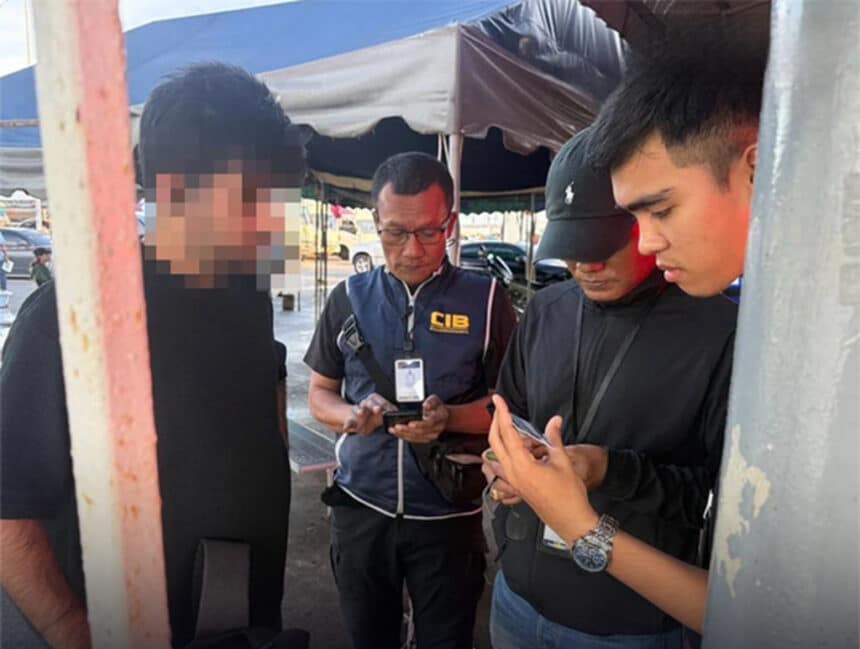
SURAT THANI – AI Face-recognition cameras at Don Sak pier in Surat Thani flagged a 27-year-old Indian man boarding a ferry to Koh Samui on Nov. 14, leading to his arrest for using a fraudulent Thai identity card. Police detained Gopal Das upon arrival on the resort island after automated scanners matched his face to an active arrest warrant issued by the Pattani Provincial Court.
Das later confessed to paying a Thai broker 60,000 baht ($1,700) in 2019 to illegally alter his nationality and enter his photo into state household registries under a false Thai name. The arrest underscores how Thailand’s expanding network of biometric surveillance at marine transit hubs is closing traditional escape routes for foreign fugitives.
Key Takeaways
- Automated facial scanners at Don Sak pier flagged 27-year-old Indian national Gopal Das on Nov. 14 as he crossed to Koh Samui.
- Das admitted paying a broker 60,000 baht in 2019 to obtain a forged Thai identity card and household registration in Pattani province.
- Thai immigration and marine police are rapidly expanding AI-driven biometric screening across island piers to catch wanted suspects.
Ferry AI Surveillance Triggers Rapid Island Arrest
The capture began when high-definition cameras mounted at the mainland ferry terminal scanned Das’s face and triggered an instant alert on police terminals. According to police the alert linked his facial geometry to a Pattani warrant for document forgery and false civil registration. Rather than causing panic on the crowded vessel, plainclothes officers tracked him across the Gulf of Thailand and intercepted him at the Koh Samui pier.
Das initially denied the allegations when confronted on the dock. He handed officers an Indian driver’s license and claimed he was simply a Phuket resident helping his family run a clothing shop near Karon Beach. Biometric fingerprint checks quickly dismantled his alibi. Investigators cross-referenced his prints against Immigration Bureau files and confirmed he was the same man photographed inside the Tor Ror 14 household registry under the Thai alias Surachai Chomphuthawip.
Confronted with the digital match, Das admitted handing 60,000 baht to an intermediary seven years ago in Pattani’s Mae Lan district to secure Thai citizenship papers. Marine police and Immigration Division 6 officers booked him on charges of colluding in official misconduct and falsifying state records before transferring him to Mae Lan police for prosecution.
Civil Registry Loopholes and Maritime Bottlenecks
Fraudulent Thai identity cards have long posed a structural security headache in southern border and coastal provinces. Corrupt brokers historically exploited local district offices by inserting foreign nationals into household registries reserved for stateless residents or deceased citizens. Once armed with a genuine-looking smart card, suspects could buy land, open bank accounts and bypass foreign visa rules indefinitely.
In September 2026, national police chief Pol. Gen. Kitrat Phanphet oversaw a sweeping crackdown across Surat Thani—including Don Sak and Koh Samui—that yielded 27 arrests over illicit ID cards issued to ineligible foreign workers. That operation exposed how syndicates used local certifying witnesses to manufacture fake paper trails.
Geography makes Don Sak a critical chokepoint in stopping these networks. Nearly all vehicle and passenger ferries bound for Koh Samui, Koh Phangan and Koh Tao funnel through the mainland district’s piers.
By linking pier surveillance cameras directly to central court warrant databases and Thailand’s biometric identification network, authorities have turned routine ferry turnstiles into automated border-style checkpoints. For island tourism operators and local residents, the technology adds a quiet layer of security without slowing down peak-season ferry queues, signaling that stolen identities can no longer survive routine domestic travel.