
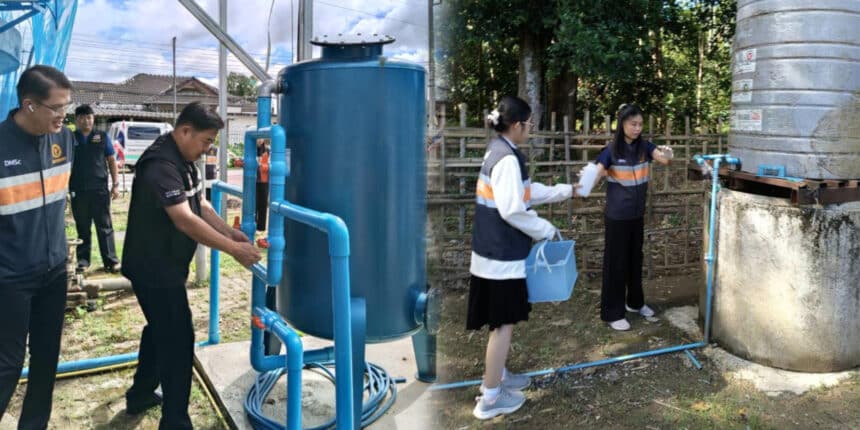
CHIANG RAI – Health officials in Thailand’s northernmost province tightened safety inspections across all 332 licensed bottled water plants this week to calm public fears over arsenic in local rivers.
The Chiang Rai Provincial Public Health Office (PPHO) announced that consumer protection officers are inspecting every stage of production—from raw water sources to sealed bottles—and will launch a provincewide heavy metal testing sweep in fiscal year 2027 (starting Oct. 1, 2026) to guarantee drinking water meets strict national standards.
Key Takeaways• All 332 licensed drinking water facilities in Chiang Rai face strict inspections under the Food Act B.E. 2522 and Good Manufacturing Practice (GMP 420) rules. • Officials launched a provincewide contaminant screening program for fiscal year 2027 targeting arsenic in both raw water sources and finished bottled products. • Buyers should check for a valid Thai Food and Drug Administration (FDA) registration number and intact bottle seals before purchasing water. |
Upstream Mining Drives Local Water Anxiety
Public distrust of local waterways has grown sharply across northern Chiang Rai. Earlier this year, researchers at Mae Fah Luang University detected unsafe levels of arsenic and heavy metals across the Kok, Sai, Ruak and Mekong river basins, tracing the runoff to upstream mining operations in Myanmar’s Shan State. Elevated toxin levels have also turned up in hair, nail and urine samples from riverside communities.
The pollution directly hit household taps this month. Arsenic contamination has forced the Provincial Waterworks Authority to cut tap water supplies in border villages, leaving residents with murky, reddish water and pushing families to rely heavily on bottled water for drinking and cooking. Even after utilities restored partial service, Mae Sai residents remained wary of tap water, prompting PPHO officials to prove that commercial bottled water plants are safe.
Three-Step Gatekeeping From Source to Bottle
To earn an operating license, bottling plants must clear three regulatory hurdles enforced by the PPHO’s Consumer Protection and Public Health Pharmacy Division. First, operators must submit certified laboratory tests proving their raw water source is safe and that finished samples meet physical, chemical and microbial limits under Ministry of Public Health Notification No. 462, which caps arsenic at 0.01 milligrams per liter.
Second, health inspectors audit each factory floor against GMP 420 standards. Officers check building sanitation, pest barriers, worker hygiene and bottle-washing lines. They also verify filtration and disinfection hardware—including reverse osmosis (RO), ultraviolet (UV) and ozone systems—to block contaminants before sealing. Only plants passing both lab and site audits receive a Thai FDA serial number for their labels.
Year-Round Monitoring and Buyer Precautions
Licensing does not end oversight. PPHO teams conduct unannounced follow-up visits and collect random bottle samples for annual lab screening. Under the fiscal year 2027 surveillance plan, inspectors are expanding arsenic testing across both raw intake points and retail bottles throughout Chiang Rai.
Health officials urged shoppers to inspect labels for a clear producer address and a valid Thai FDA registration number, and to reject bottles with broken seals or leaks. Residents who spot cloudy water or suspicious packaging can report the product directly to the Chiang Rai PPHO or their local district public health office.