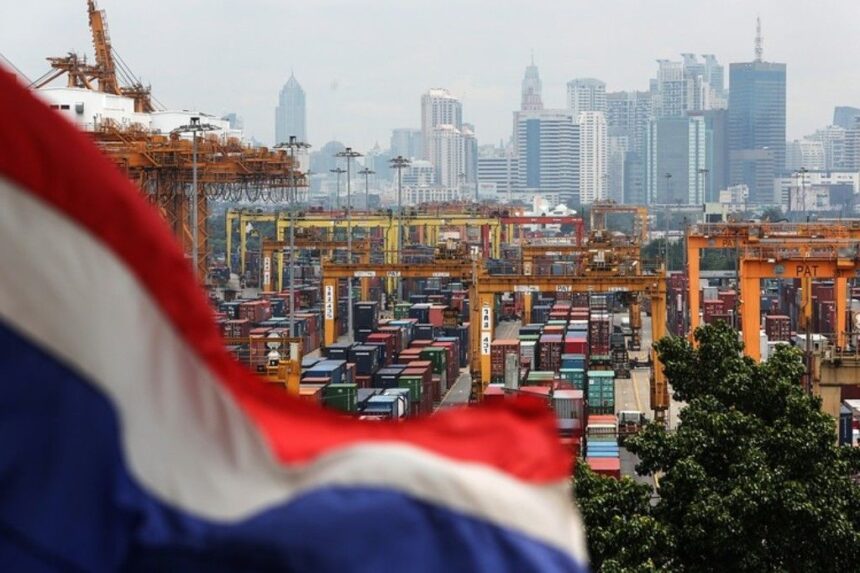
BANGKOK – Thailand’s economy grew 2.9% in the third quarter of 2026, fueled by surging artificial intelligence hardware exports and a 16.2% jump in private investment. The faster pace prompted state planners on Monday to raise their full-year growth forecast from 2.2% to 2.5%.
The data released by the National Economic and Social Development Council marks the country’s strongest quarterly expansion this year, up from 2.4% in the second quarter. For foreign residents, digital nomads, and retirees living in Thailand, the rebound signals a steadier Thai baht and modest inflation ahead—even as uneven domestic spending keeps local prices from surging.
Key Takeaways
- Stronger Output: Third-quarter gross domestic product rose 2.9% year-on-year, prompting the NESDC to lift its 2026 growth outlook to 2.5%.
- Tech and Factory Boom: Global AI server demand propelled merchandise exports up 23.6% and drove private investment 16.2% higher.
- Stable Macros, Rising Debt: Unemployment stayed low at 1.02%, while public debt climbed to 13.4 trillion baht, or 68.6% of GDP.
AI Hardware and Factories Power the Rebound
Factories along Thailand’s eastern seaboard carried the economy between July and September. According to NESDC Secretary-General Danucha Pichayanan, merchandise exports jumped 23.6%—the fastest quarterly pace in more than five years—as overseas data centers ordered computer parts, hard drives, and printed circuit boards.
Private businesses poured money into new machinery and plant upgrades, pushing private investment up 16.2%. Total investment expanded 11.8%, its briskest clip since late 2012, according to The Nation Thailand. That factory momentum offset a 1.6% dip in government spending and softer short-haul tourist arrivals during the rainy season.
Behind the Numbers: New Math and an Uneven Recovery
The headline rebound reflects both real factory orders and a major statistical overhaul. Ahead of Monday’s release, the NESDC introduced a chain-linked Manufacturing Production Index anchored to 2021 prices. As Thai Enquirer noted, the updated formula captures newer electronics and data-center assembly plants that older tracking missed, retroactively revising 2025 factory output from a 0.4% contraction to 3.6% growth.
Away from industrial estates in Chon Buri and Rayong, daily life feels far tighter. Household consumption grew just 2.5% as families wrestled with heavy personal debt and strict bank lending. Public debt also edged up to 68.6% of GDP—nearing the government’s 70% legal ceiling—leaving limited room for big state cash handouts. While official unemployment stood at a tight 1.02%, many rural and service workers rely on informal gigs with stagnant pay.
What a Firmer Baht Means for Expat Budgets
Strong export receipts and a $1.4 billion third-quarter current account surplus give the Thai baht solid support. For expats paid in U.S. dollars, euros, or British pounds, a resilient currency trims local purchasing power at the ATM compared with weaker baht stretches in recent years.
Still, everyday living costs remain predictable. Because domestic consumer demand is muted, businesses have little room to hike prices on rent, street food, or local services. The NESDC projects full-year headline inflation to average just 2.0%, shielding long-term residents from the steep price spikes seen elsewhere in Asia. Expat households importing Western groceries or paying international school fees may feel a mild squeeze from a firmer baht, while neighborhood dining, utilities, and domestic travel stay affordable.
Trending News:
Thailand Real Estate Lock-In Is Easing as FSBO Gains Ground
Gas Shortages and High Prices Derail Southeast Asia’s Energy Plans