CHIANG RAI – Local authorities banned residents in Chiang Khong from drinking tap water and launched round-the-clock clean water distribution on Nov. 15 after lab tests found arsenic at 41 times the national safety limit.
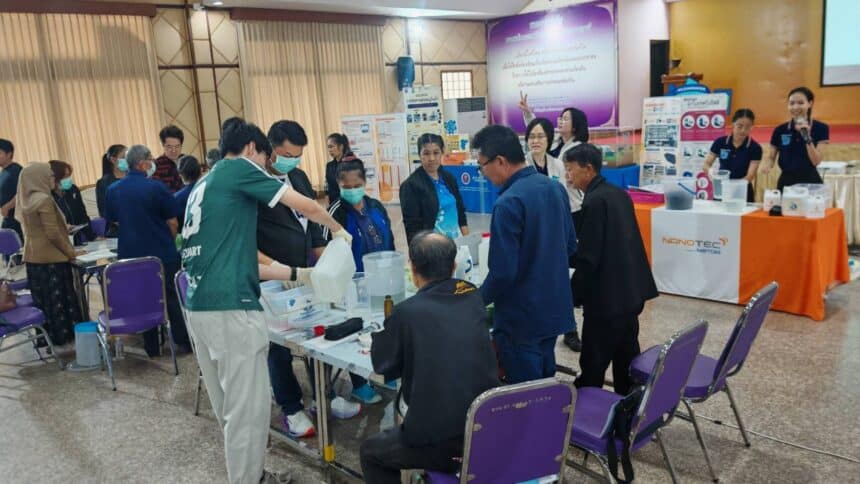
Huai So Subdistrict Mayor Chan Taklai opened 24-hour reverse osmosis water stations at the municipal office after tests by Thailand’s Department of Health revealed severe groundwater contamination in Ban Kaen Nuea, Village 3. Hundreds of residents lined up with jugs and pickup trucks to collect safe drinking water while officials rushed to secure a new surface water source.
Key Takeaways• Laboratory tests detected 0.415 milligrams of arsenic per liter in Ban Kaen Nuea groundwater, exceeding the 0.01 mg/L safety limit by 41 times, alongside fluoride at nine times the safe threshold. • Huai So Municipality halted tap water consumption, suspended new groundwater drilling and deployed 24-hour reverse osmosis water stations to supply affected households. • Officials plan to submit a surface-water pipeline proposal to the subdistrict council in late November 2026 to replace the contaminated wells by December. |
Lab Results Trigger Immediate Drinking Ban
The contamination came to light during a Nov. 14 meeting of the Chiang Khong District Water Management Committee. Public health laboratory results showed groundwater feeding Ban Kaen Nuea’s village tap system contained 0.415 milligrams of arsenic per liter. Both Thailand’s Department of Health and the Provincial Waterworks Authority cap safe drinking water at 0.01 mg/L.
Tests also found fluoride at 6.37 mg/L, more than nine times the 0.7 mg/L limit. Municipal crews flushed the pipes and replaced filter media, cutting arsenic levels roughly in half to 0.2 mg/L. That figure remains 20 times above safe limits, forcing authorities to keep the strict consumption ban in place.
Gold Veins and Regional Water Pressures
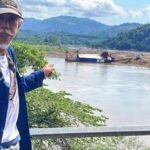
Ban Kaen Nuea sits more than 10 kilometers from the Mekong River, where gold mining operations across the border in Laos have drawn scrutiny. Geological surveys indicate Huai So lies directly over natural gold-bearing mineral veins, which frequently trap arsenic in underground rock strata.
The crisis compounds wider heavy-metal alarms across Chiang Rai Province in 2026. Earlier this year, researchers flagged dangerous arsenic levels in the Kok, Sai and mainstream Mekong rivers tied to upstream mining. Unlike surface runoff, deep aquifer arsenic leaches directly from bedrock into community boreholes, making standard village sand filters ineffective and threatening residents with chronic skin lesions and cancer.
To end reliance on tainted wells, Huai So Municipality is surveying routes to pipe surface water from local reservoirs to Ban Kaen Nuea and neighboring villages. Mayor Chan said engineers will present the pipeline design to the municipal council in late November, targeting construction in December.
Until new pipes open, municipal staff will keep the reverse osmosis stations running day and night while geologists inspect local aquifers.