
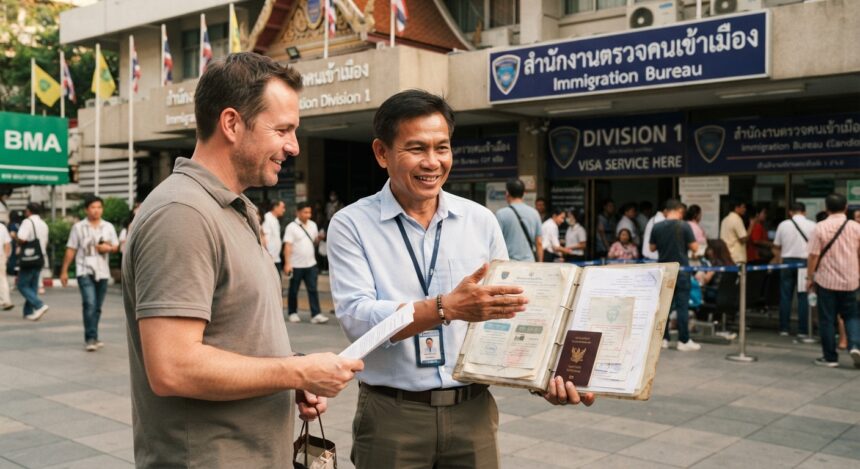
When a visa deadline is close, someone promising a quick, guaranteed fix can sound like a relief. But an immigration fixer who claims to handle your paperwork may instead take your money, misuse your documents, or leave you with an invalid application.
Paid help isn’t automatically a scam, but no private agent can guarantee an immigration decision. Before handing over money or personal records, check what the service will do and confirm the process through the appropriate official channel. This guide explains how to spot warning signs and what to do if something goes wrong, including how to verify suspicious visa claims in Thailand.
Key Takeaways
- A paid agent may help prepare paperwork, but can’t guarantee approval or change an Immigration Bureau decision.
- Check visa and extension instructions through official Thai visa and immigration websites and compare claims with Thai consular visa guidance before paying.
- Get the service scope, fees, timeline, and refund terms in writing. Keep your passport and original documents unless an official process requires them.
- Walk away from pressure, cash-only demands, forged-document offers, or claims of special access. Save messages and receipts if you suspect fraud.
How to Avoid Immigration “Fixer” Scams in Thailand
A paid visa service may help organize paperwork or explain application steps. The warning signs appear when an agent claims unusual authority, hides basic costs, or asks you to give up control of your documents. Check the offer against official requirements before paying or sharing personal information.
Watch for guaranteed visas and special connections
No agent can guarantee a Thai visa, extension, or other immigration decision. Thai authorities review applications and decide whether to approve them, even when a consultant prepares the paperwork.
Be cautious if someone claims to have a personal contact inside Immigration who can secure approval, skip checks, or overlook missing requirements. An offer to submit false information or bypass the normal process can put your status at risk, not just your money. Compare the agent’s claims with the Thai Immigration Bureau’s official information and review VFS Global’s warning about visa application scams before proceeding.
Be wary of pressure, vague fees, and cash-only demands
A genuine deadline should be easy to verify through your visa documents or an official office. If an agent insists you must pay immediately or lose a supposed inside opportunity, pause and confirm the date independently. Scammers often use urgency to stop applicants from checking details.
Ask for an itemized quote that separates government fees from the agent’s service charge. The agent should also explain what the service includes, when payment is due, and whether any fees are refundable. Watch for costs that change without explanation, requests to transfer money to a personal account, or refusal to provide a receipt or written agreement. Cash by itself does not prove fraud, but poor records make it harder to resolve a dispute.
Protect your passport, login details, and personal records
An agent may need to review documents, but don’t leave your original passport with someone for an unclear or extended period. Ask why it is needed, when it will be returned, and get a written receipt if an official process requires the original.
Never share account passwords or one-time verification codes. Those details can give someone access to your visa application or email. Also, don’t sign blank forms or let anyone submit altered documents in your name. Before an application goes in, ask to review the completed forms and supporting records. Keep copies of everything submitted, along with payment records and messages. You should be able to say exactly what was filed under your name.
Check a Thai Visa Agent Before You Hire Them
Before paying a visa agent, verify what they will do, where they will submit your application, and whether their claims match official instructions. Visa conditions and procedures can change, so check the relevant Thai government source for your case rather than relying on an agent’s summary alone.
Ask for the service, total price, and outcome in writing
Request an itemized quote that separates the agent’s fee from government charges. The written agreement should describe the work, list any documents you must provide, give an estimated timeline, and explain refund terms if the service cannot be completed. Also ask for the agent’s full business name, address, and contact details, plus a receipt for each payment.
Pay attention to how the agent describes the outcome. They can offer to prepare forms or organize documents, but they cannot promise that Immigration will approve an extension or that an embassy will issue a visa. Compare the proposed steps with the Thai Immigration Bureau’s official information or the instructions from the Thai embassy or consulate handling your application. For a Bangkok extension, you can also review the Bangkok visa extension requirements.
Confirm where the application will be filed and who controls it
Ask which Immigration office, embassy or consulate, or official online system will receive the application. Find out exactly which forms and supporting documents the agent plans to submit, and request copies of the completed application before it goes in. You should also know how to confirm submission, such as by receiving an official receipt, reference number, or confirmation from the online system.
If the agent proposes an unfamiliar channel, asks you to send documents to a personal account, or won’t explain how you can verify the filing, contact the responsible office directly. For applications that go through a Thai embassy, check that mission’s own instructions. Requirements can differ by application location and visa type, so general advice may not fit your case. Keep copies of everything submitted and any confirmation you receive.
Separate routine paperwork help from legal representation
Some services focus on administrative tasks, such as organizing documents or helping complete forms. That work does not automatically qualify an agent to give legal advice or represent you in a complicated immigration matter. Ask what training or professional credentials they have, and verify any credentials with the relevant issuing organization.
For an overstay, a visa refusal, a criminal matter, or another case that could affect your legal status, seek independent advice from a qualified legal professional. Don’t rely on an agent who claims they can erase a violation or guarantee a result. A clear boundary between paperwork assistance and legal advice helps you assess whether the service fits your situation.
Use safer steps for visa applications and routine reporting
A little preparation makes it harder for a fixer to exploit a deadline. Before paying anyone to handle a visa application or routine immigration task, confirm which process applies to your status and check the latest instructions from the relevant Thai office. Requirements can change, and the right steps may vary by visa type, location, and personal circumstances.
Start with official instructions and your own deadline
List the tasks that apply to you, such as applying for a visa, requesting an extension, filing a 90-day report (TM.47), or confirming a TM30 residence notification. These are separate processes. For example, a 90-day report does not extend your permission to stay, and a TM30 notification records accommodation details rather than replacing another application.
Start with the Thai Immigration Bureau’s official website, then check instructions from the specific office, embassy, or consulate handling your case. Don’t assume that a process available online for one person or location will also work for you. For a local example, see the Chiang Rai 90-day reporting guide, and confirm your own procedure with the responsible office.
Once you know the applicable deadline, add it to your calendar and set a reminder well in advance. Keep separate reminders for your permission-to-stay date and any reporting dates. Early preparation gives you time to correct missing information or ask the office a question, instead of relying on an agent who appears with a last-minute offer.
Keep control of documents, payments, and application proof
Keep scans or copies of your passport pages, forms, and supporting documents before sharing them. If you hire help, save the written agreement, messages, payment records, and any receipt or submission confirmation. Where practical, use a traceable payment method and ask for an official receipt. Also request a copy of the completed application and a reference number or confirmation after submission, so you can verify what was filed.
Before you sign, read every form and check that the details match your records. Don’t sign a form you can’t understand or one with blank fields or missing information. Ask the agent to explain any unclear entry, then confirm it yourself before submission. These basic checks help you retain control of your application, even when someone else assists with the paperwork.
What to do if an immigration fixer has taken your money or documents
If an immigration fixer has taken your payment, passport, or paperwork, act promptly and keep a clear record of every step. First, check your actual immigration status through the office responsible for your case. A complaint may document suspected fraud, but it does not guarantee a refund or change an immigration decision.
Save evidence and check your actual immigration status
Keep the original contract, receipts, messages, advertisements, payment account details, and copies of every form or document you gave the fixer. Save screenshots with dates and contact information, and write a brief timeline while events are fresh. If you paid by bank transfer, contact your bank promptly and ask whether it can flag or investigate the transaction.
Next, contact the relevant Thai Immigration office or official channel directly. Ask whether an application was filed, what your current permission to stay allows, and the next deadline that applies to you. Request any available reference number or written confirmation. Do not rely on the fixer’s claims about your status, even if they say an application is pending.
If your deadline is close, tell the office the date and explain that your documents or application records are with a third party. Ask what steps you can take now and what documents to bring. Keep a record of who you spoke with and when. For guidance on documenting and reporting a scam or fraud in Thailand, use the available reporting routes and follow instructions from the relevant authorities.
Report suspected fraud and get independent help
Report suspected fraud to the appropriate Thai police authority. You can also contact Thailand’s Tourist Police at 1155 for assistance or directions to the right office. Bring your identification, a concise timeline, copies of your evidence, and any details about the person or business. If the dispute involves a paid service, ask the police or a Thai consumer-protection authority which complaint channel fits your case. Reporting creates a record, but it cannot promise that you will recover money.
If your passport is missing or being withheld, contact your embassy or consulate promptly. They can explain passport replacement or emergency travel documents, and may advise what to do before you approach Immigration. Keep copies of any police report and embassy correspondence. If you need to replace a passport, check the steps for transferring a Thai visa to a new passport.
When a visa deadline is threatened, your case is complicated, or the fixer offers to “solve” the problem for another fee, seek advice from an independent qualified lawyer. Share your records, ask about immediate deadlines, and don’t return to the same intermediary for help.
Frequently Asked Questions
A few practical questions can come up after you discover an agent may have misled you. Keep immigration checks and fraud reports on separate tracks, and rely on verifiable records rather than promises.
Is it illegal to use a visa agent in Thailand?
Paying someone to help organize documents or complete administrative tasks is not automatically illegal. However, an agent cannot lawfully bypass immigration rules or guarantee approval, and you remain responsible for truthful answers and valid documents submitted in your name. Avoid any service that offers fabricated bank statements or other false records, as a visa fraud case in Thailand shows that forged paperwork can draw serious scrutiny.
Can an agent guarantee a Thai visa approval?
No private agent can guarantee a decision made by Thai authorities. An agent may help prepare an application, but the responsible office decides whether to approve it. A promise of guaranteed approval or special access is a serious warning sign, especially if the agent asks for extra money to secure that outcome.
Should I let an agent keep my passport?
Some official procedures may require your passport temporarily, but ask why it is needed and when you can expect it back. Get a dated receipt that identifies the passport and the person or office holding it. If the explanation is unclear, confirm the requirement directly with the responsible office before handing over the original.
What if I paid an agent but have no receipt?
Save bank transfers, card statements, payment app records, messages, and any written quote. Then request a written record stating what service the agent agreed to provide and how much you paid. If the agent refuses, or you cannot verify that an application was filed, contact the relevant authorities and seek independent guidance instead of paying more to recover your documents.
Can I report a scam if I am worried about my visa status?
Yes, but reporting suspected fraud and resolving your immigration status are separate matters. Check your status promptly with the responsible office or the Thai Immigration Bureau, and keep evidence of the agent’s conduct for your report. If a deadline, possible overstay, or false filing is involved, seek qualified independent advice; you can also contact the Tourist Police for assistance with reporting or finding the right channel.