Northern Thailand’s mountain forests offer cool air, quiet campsites, and sunrise views, but a safe trip takes more than a tent and a trail map. Weather can shift quickly, remote routes can complicate emergencies, and campsite rules vary, so plan before you set out.
Choose a campsite approved by park staff, prepare for rain and cold, and know how you’ll respond if someone gets hurt or the route becomes unsafe. Start with the key planning decisions that help keep your trip safe and respectful of the forest.
Key Takeaways
- Before leaving, confirm your campsite, trail, and park are open, since closures can follow storms or other hazards. Check Thailand national park closures before camping.
- Contact park staff or your campsite to verify overnight permission, current rules, facilities, and arrival times.
- Pack warm layers, rain protection, reliable lighting, water, and a first-aid kit; mountain weather can change quickly.
- Share your route and return time with someone, keep your phone charged, and know how you’ll seek help if plans change.
- Follow Thailand’s national park visitor rules, stay on designated routes, and carry out all waste.
Mountain Camping Safety in Northern Thailand Starts With Smart Planning
A safe mountain-camping trip starts with decisions made before you leave town. Access, campsite rules, and trail conditions vary by park and season, so confirm current details with park staff or local authorities instead of relying on old trip reports.
Choose a permitted campsite and check local rules
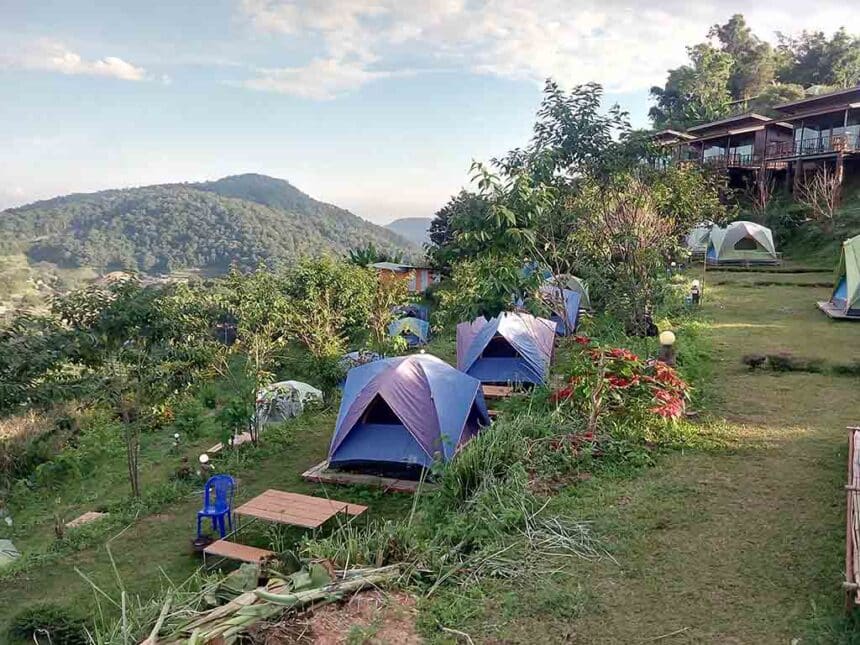
Pitch your tent only at a designated campsite or a location approved by park staff. A scenic forest clearing or community viewpoint may look suitable, but that doesn’t mean overnight camping is allowed. In Chiang Rai, for example, camping options in the mountains can include different types of sites, and permission may depend on the specific location.
Popular destinations such as Doi Inthanon and Doi Pha Hom Pok have park facilities, but opening status and rules can change with the season or local conditions. Before setting out, ask about permits, fees, fire restrictions, and whether you need to reserve a campsite or hire a local guide. Also confirm arrival deadlines and available facilities, since a site may be open while certain trails or services are closed. For Doi Inthanon, check the campsite’s current visitor information and confirm details with park staff before traveling.
Match your trip to the season, route, and experience level
During the dry season, nights at elevation can feel cold even when nearby towns stay warm. Monsoon rain can make trails slippery, swell streams, and prompt park closures. The burning season often brings smoke and poor air quality between February and April, though timing and severity vary by year and location. A study of PM2.5 in mainland Thailand found biomass burning contributes heavily to pollution during those months, so check recent research on seasonal PM2.5 and local air-quality readings before you go.
Check the Thailand Meteorological Department’s daily forecast close to departure, then choose a route the least experienced camper can manage in current conditions. Share your route and expected return time with someone who isn’t on the trip. If weather, smoke, or a closure makes the plan unsafe, change the route or postpone.
Pack for cold nights, rain, and limited phone service
High elevations can feel much colder than nearby towns, so bring layered clothing and a warm sleeping bag or blanket suited to the forecast. Pack rain protection, enough food and water, a headlamp, first-aid supplies, and a paper map or offline navigation.
Mobile coverage may disappear on remote trails. Charge your phone before leaving and carry a power bank, but don’t rely on your phone as your only navigation or emergency tool. Bring enough water for the route, or carry a reliable treatment method if you’ll refill along the way.
Recognize Northern Thailand’s Mountain Hazards Before You Camp
Conditions in the mountains can change faster than they do in nearby towns. Rain, cold, rough trails, insects, smoke, and heat each call for a different response, so adjust your activity when conditions worsen.
Prepare for sudden rain, lightning, and cold exposure
Mountain storms can arrive quickly, turning steep trails slick and making stream crossings hazardous. If thunder starts, leave exposed ridges and open ground for a safer, lower area. Keep away from streams and riverbanks, too, because heavy rain can raise water levels quickly, even when the sky overhead looks clear. Follow ranger instructions and avoid closed trails or crossings.
Rain and wind can chill campers, even when daytime temperatures feel mild. Change out of wet clothes, get into dry layers, and shelter from wind as soon as possible. Shivering, exhaustion, fumbling hands, confusion, or slurred speech can point to hypothermia. Treat these signs seriously: keep the person warm and dry, and seek emergency care if symptoms worsen. The CDC’s hypothermia warning signs offer more detail.
Avoid falls, leeches, insects, and wildlife encounters
Wear sturdy shoes with good grip, take short steps on muddy or uneven ground, and stay on marked trails. After a wet hike, check your shoes, socks, and clothing for leeches. Remove them carefully, then clean the bite and monitor it for persistent bleeding or signs of infection.
Insect repellent and clothing that covers your arms and legs can reduce bites, including exposure to chiggers. Snakes and other wildlife generally avoid people, but watch where you step and don’t reach into dense plants or rock crevices. Give animals space; never approach, feed, or corner them. Secure food and pack out trash according to park rules so it doesn’t attract wildlife to camp.
Take smoke, heat, and water safety seriously
Seasonal haze can irritate the lungs and limit visibility on trails. Check air-quality alerts before heading out, and shorten or cancel strenuous plans when smoke is severe. People with asthma or heart and lung conditions should seek medical advice before a demanding trip. For local guidance on smoke, flooding, and heat, review outdoor safety risks in Chiang Rai.
Heat, exertion, and too little water can cause dehydration. Drink regularly rather than waiting until you feel thirsty, and rest or turn back if you feel dizzy, weak, or nauseated. Treat water from streams or other untreated sources before drinking, even if it looks clear.
Set Up Camp Safely and Leave the Forest as You Found It
Once you reach camp, follow the rules set by park staff or the local community. Their instructions take priority over general camping advice because restrictions can vary by site and conditions.
Pick a stable, sheltered site away from streams and hazards
Use the designated camping area, then choose level, durable ground for your tent. Avoid low spots that could collect rainwater, steep edges, and areas beneath dead branches or unstable slopes. Stay well back from streams, and never pitch a tent in a dry channel, where rising water can become dangerous after rain elsewhere.
Also look for signs of falling rocks before settling in. Leave plants in place rather than clearing vegetation, and don’t move wildlife or disturb nests to make room. These choices reduce risks while protecting the forest floor and the animals that use it.
Use stoves and fires only where they are allowed
A camping stove is often the simplest option, but check with park staff before cooking. Open fires may be restricted or banned, especially during dry or smoky periods. Follow posted rules even if other campers have lit fires.
If staff explicitly allow a fire, follow their instructions and keep it small and attended at all times. Put it out completely before leaving, and never burn trash, food packaging, or scraps. In community-managed forests, fire restrictions can also support local prevention work, so check camping rules for Chiang Rai forests.
Store food, manage waste, and respect local communities
Keep food sealed and secured according to site rules, rather than leaving it beside your tent. Pack out every bit of trash, including food scraps, since leftovers can attract wildlife and make campsites unpleasant for the next visitors. The National Park Service’s Leave No Trace principles also recommend disposing of waste responsibly and leaving natural features undisturbed.
Keep voices low during quiet hours, and be considerate near villages and community-managed land. Ask before photographing people, entering local areas, or using facilities that aren’t clearly open to visitors. Don’t gather plants, firewood, or other natural materials. When you leave, check the site for small items and scraps so the next camper finds it as you did.
Know What to Do if Weather, Injury, or Getting Lost Disrupts the Trip
Remote mountain trails can make even a manageable problem harder to handle. Agree on a simple response plan before you leave: stop, assess the danger, keep the group together, and contact park staff or emergency services when needed.
Stop early and make a clear plan when conditions turn
Turn back or seek shelter when storms intensify, streams rise, visibility drops, or smoke makes breathing or route-finding difficult. Do the same if someone becomes unusually tired, dizzy, confused, or unwell. Continuing to camp or reach a viewpoint is never worth taking a worsening risk.
Move away from ridgelines, streams, and exposed slopes, then find the safest available shelter. Keep everyone together and conserve phone battery by limiting screen use and unnecessary calls. If you lose the trail, stop and check your map or offline navigation rather than taking a shortcut through steep or unfamiliar terrain. Avoid night hiking on an unfamiliar route, especially in rain or poor visibility. Recent mountain rescues in Chiang Rai show why exhaustion and remote terrain can complicate a return.
Handle common injuries and illness with basic first aid
For a small cut, rinse it with clean water, remove visible dirt, and cover it with a clean dressing. Protect a sprain by limiting movement and supporting the injured area. Let the person rest, offer water if they can drink safely, and keep checking whether symptoms improve.
Heat illness can cause weakness, headache, nausea, or confusion. Move the person to shade, loosen extra layers, and cool them while arranging help if symptoms are severe or worsening. For cold exposure, get them out of wet clothing and wind, then add dry insulation. The CDC’s guidance on heat-related illness covers warning signs and first-aid steps.
Severe bleeding, trouble breathing, confusion, a suspected fracture, or worsening symptoms require urgent professional help. Don’t force someone with a serious injury to walk out.
Share your route and contact park staff or emergency services
Before the trip, give a trusted person your route, campsite, group size, and expected return time. Agree on when you’ll check in, and ask them to contact park staff if you miss that time and cannot be reached. Tell them about any route change before setting off, if possible.
A phone may have no signal in remote terrain, so save the park’s contact details and learn its emergency procedures before departure. Ask staff where to report a missing person and what information responders will need. In Thailand, call 1669 for medical emergencies or 1155 for Tourist Police where service is available; the official emergency contact list includes these numbers. If someone is missing or seriously injured, alert park staff or local authorities promptly rather than waiting for phone coverage to return.
Frequently Asked Questions
A few details can still change a trip plan, even after you’ve chosen a park and packed for the forecast. Use these answers to check what needs confirmation before you leave.
Is it safe to camp in Northern Thailand’s mountains?
Many visitors camp safely when they use permitted sites, check conditions, and prepare for cold, rain, and uneven terrain. However, risk depends on the specific route, season, your experience, and local advice. If park staff report a closure or unsafe conditions, change your plan rather than relying on an older trip report.
When is the safest time of year for mountain camping?
There’s no single safest season for every mountain or park. Cooler, drier months can make camping more comfortable, while monsoon rain may create slippery trails, flooding, or closures. Seasonal smoke can also affect visibility and breathing. Before traveling, check the local forecast and air-quality readings for your destination.
Can I camp anywhere in a national park?
No. Don’t assume wild camping is allowed, even if a spot looks suitable. Parks set their own designated camping areas, permit requirements, closures, and fire restrictions. Ask park staff about the exact site you plan to use, and review the Thai government’s national park travel guidance. For example, Phu Chi Fa camping rules and registration include site-specific arrival requirements.
Do I need a guide for a mountain camping trip?
Some routes may require a guide, while remote, difficult, or unfamiliar trails can make local support a sensible choice. Requirements depend on the park and route, so contact park staff or a trusted local operator before setting out. Don’t assume you can access every trail independently.
What should I do if I have no phone signal?
Download offline maps before leaving, carry a charged power bank, and give someone your route and expected return time. Find out where park staff can be reached and how to report an emergency. A satellite communication device can help in remote areas, but it doesn’t replace park rules, route restrictions, or a shared trip plan.
Conclusion
Safe mountain camping in Northern Thailand starts with a permitted campsite and a plan that can change when weather, trail conditions, or visibility shift. Pack for cool nights and rain, and use local guidance to decide when to continue or turn back. Conditions on exposed peaks such as Phu Chi Dao and Phu Chi Fa can feel different from the forecast, so check weather and trail conditions as part of your preparation.
These habits help protect you and your group while caring for the mountain places you came to enjoy. With thoughtful planning, you can spend more time appreciating the trip and less time dealing with preventable problems.