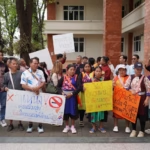
CHIANG RAI – Families along the Mae Sai River are buying drinking water and drilling wells as arsenic keeps the border river unsafe to use. Community groups planned to petition the prime minister on Wednesday, a day before Thailand’s foreign minister raises the pollution in Myanmar.
The Provincial Waterworks Authority cut tap water to 14 villages to 60 percent of normal on November 5 after the river turned abnormally cloudy. Supply recovered to about 80 percent the next day.
Key Takeaways
- Arsenic in the Sai River peaked at 28 times the safety standard in early August, the regional pollution control office said.
- Some riverside households now spend more than 500 baht a month on bottled and container water.
- Foreign Minister Sihasak Puangketkaew will raise the river pollution in Nay Pyi Taw on November 12.
A Chilli Farmer Turns to Groundwater
Kiangkham Khonsongsaen, 70, has grown chillies and vegetables beside the river in Ban San Sai Mai, Mae Sai subdistrict, for decades. She told Siam Rath that the river was once clear enough for household use and for watering crops.
Since the 2024 floods, she said, the water has never cleared. Her family stopped using it on crops and drilled a groundwater well, which costs 200 to 300 baht in fuel each time they pump.
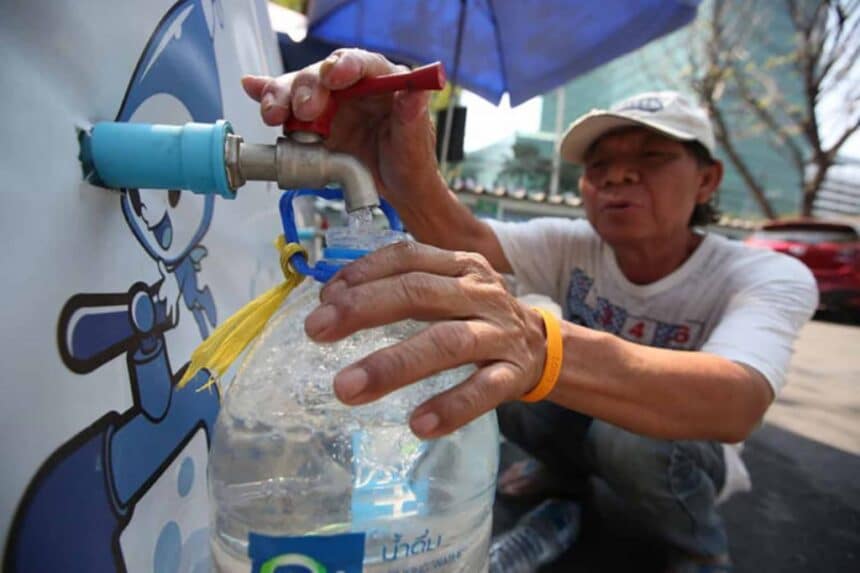
Kiangkham said villagers no longer catch crabs or fish in the river and avoid water from their own wells. Households now buy bottled and container water, adding more than 500 baht a month to each family’s costs.
She said villagers do not know how to fix the problem themselves and need help from the government. On October 8, the Department of Disease Control warned residents of five Mae Sai subdistricts not to drink, cook with or make ice from Sai River water, or eat fish caught in it.
Arsenic Stays Above the Limit
Pollution Control Department tests have found arsenic above the standard in every Sai River sample since August, Thai PBS World reported.
Piyanut Suangkham, who heads water quality work at the department’s regional office in Chiang Mai, said readings peaked at 28 times the standard in early August. They later averaged 0.012 to 0.017 milligrams per litre, against a limit of 0.01.
A newer sample reached 0.25 milligrams per litre after rain upstream, Thai PBS World reported.
PWA Mae Sai branch manager Khomsan Sanma said raw water pumped on November 5 measured 14,000 nephelometric turbidity units, more than the treatment plant can handle. Dry-season readings normally run between 800 and 1,000.
Border sources told Thai PBS World that unregulated mining in Myanmar’s Tachileik area is washing mud and sediment into the river.
Activists Fault a Slow Response
Niwat Roykaew, chairman of the Rak Chiang Khong Conservation Group, told Siam Rath that the river had reached a crisis heading toward disaster for its ecosystem and the people who depend on it.
He said floods, mud and chemical contamination had affected Mae Sai for more than three years, but the government had responded very slowly.
“It’s as if there has been talk, but there is nothing on how the next steps will fix this in time,” Niwat said, translated from Thai. He added that the Sai is shared by two countries, which makes it harder to manage.
Prajak Kreuasri of the Sai Lom Joy community network said the petition would go to the Mae Sai district chief for forwarding to Prime Minister Anutin Charnvirakul. It asks the Cabinet to visit Mae Sai and requests mobile water purification trucks.
The network also says about 9,700 hectares of farmland could face severe water stress by December.
Deputy Prime Minister and Foreign Minister Sihasak Puangketkaew said he will raise pollution in the Kok and Sai rivers in Nay Pyi Taw on November 12. He said a Ministry of Natural Resources and Environment report described the situation as fairly severe.
Sihasak said Myanmar’s government needs to look into mining on its side of the border, and that cleaning contaminated water is difficult.