Wild monkeys can appear without warning at temples, on city streets, and at popular visitor sites in Thailand. They’re fascinating to watch, but they’re still wild animals, so keep your distance and don’t feed or touch them.
Long-tailed macaques are especially familiar at sites such as Lopburi’s Phra Prang Sam Yot and Chiang Rai province’s Wat Tham Pla. Knowing where encounters happen, how to respond if a monkey approaches, and what to do after a bite or scratch can help you enjoy these places more safely. Start with where visitors are most likely to see them.
Key Takeaways
- Long-tailed macaques are common at tourist sites, including Lopburi’s Phra Prang Sam Yot and Wat Tham Pla in Mae Sai district, Chiang Rai.
- At Wat Tham Pla, keep your distance and follow temple etiquette while visiting the cave temple and fish-filled stream.
- Don’t touch or feed monkeys. Keep food hidden, secure loose belongings, and stay calm if a macaque approaches.
- If you’re bitten or scratched, wash the wound with soap and running water for at least 20 minutes, then seek medical care immediately, as CDC guidance for Thailand advises.
Monkey’s in Thailand: Where Visitors Commonly See Them
Long-tailed macaques are the monkeys visitors most often encounter at well-known urban and temple sites in Thailand. They live in the wild, but some troops spend time near buildings and busy visitor areas, where food and shelter are easy to find. Their presence around a temple or street doesn’t make them tame, so observe them from a distance.
Why macaques gather near temples and towns
Macaques can adapt to places where people live and visit. Temples, markets, and old town districts may offer shade, places to rest, and access to food scraps. As a result, monkeys can be part of the scene well beyond a site’s entrance or grounds.
Their familiarity with people can make them seem comfortable around visitors. Still, these are wild animals, not domesticated temple residents. A monkey that sits near a building or crosses a street may move quickly and behave unpredictably.
Lopburi’s famous monkey sites
Lopburi’s best-known macaque gathering places include Phra Prang Sam Yot, a Khmer-era sanctuary with three towers, and the nearby San Phra Kan shrine. Macaques are associated with both sites, but visitors may also spot them on surrounding streets and near buildings. They aren’t confined to temple grounds.
The city’s annual Monkey Buffet Festival is a seasonal event associated with Lopburi’s macaques. Festival dates and arrangements can change, so check the latest details before planning a trip around it. A Lopburi festival guide describes the event and its setting.
The Monkey Temple in Chiang Rai
Wat Tham Pla, also called Fish Cave Temple, is in Mae Sai district in Chiang Rai province. Its “Monkey Temple” nickname comes from macaques living on the nearby mountain, some of which enter the temple grounds. The site is in the province, not Chiang Rai city, so check the location carefully when planning a visit.
The temple is also known for its cave and fish-filled stream. For more context on the site, see this guide to Wat Tham Pla’s cave and fish pool.
How to Stay Safe Around Monkeys in Thailand
A few simple habits can help keep an encounter with macaques from escalating at temples, roadside stops, and other busy sites. Give them room, keep tempting items out of reach, and follow local staff instructions.
Keep food, bags, and loose items secure
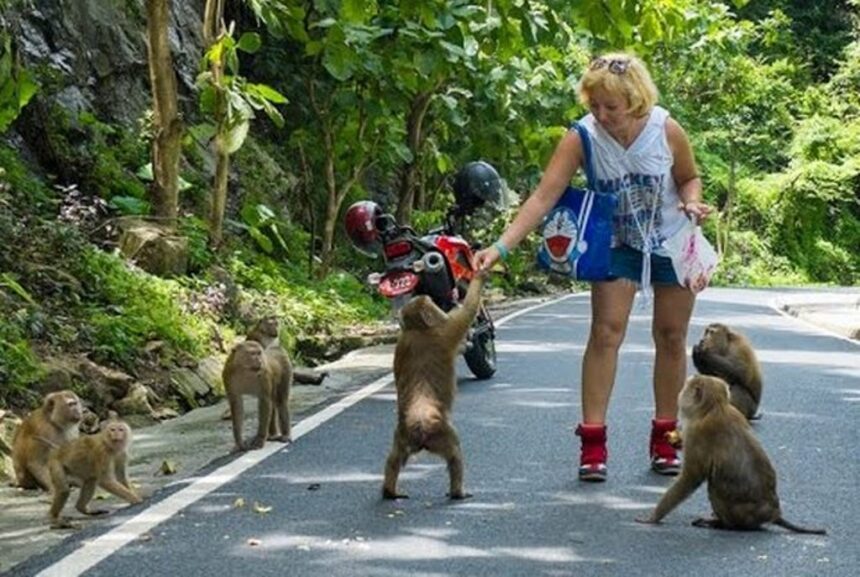
Never feed or touch a monkey, even if it seems calm or approaches visitors often. Feeding can draw animals closer and encourage them to search people for food. Keep snacks tucked away, and avoid carrying food in a visible plastic bag.
Before entering a macaque area, zip your bag and keep it close to your body. Secure sunglasses, hats, bottles, and other loose items, since monkeys may grab objects they can reach. Keep children close and remind them not to run toward the animals or offer them food.
For photos, use your camera from a comfortable distance. Don’t hold out food or an object to invite a monkey closer, and don’t move toward one for a better shot. These habits support responsible wildlife viewing in Thailand, where observing animals without feeding or crowding them is the safer choice.
Stay calm if a monkey comes close or grabs something
If a monkey approaches, stay composed and give it space to move away. Don’t reach toward it, corner it, chase it, or make sudden movements. If it takes food or an item, don’t struggle or try to snatch the object back. Back away slowly instead, and let site staff handle the situation.
Some locations may provide an item or give specific instructions to help visitors keep their distance. Follow staff directions, but never use a site-provided item to hit or provoke an animal. If you’re at a roadside stop, move to a safe area without rushing past or crowding the monkey.
Macaques may approach because they expect food or have learned to investigate belongings. Treat the behavior as a reason to create distance, not as an invitation to interact. If a monkey bites or scratches you, wash the wound with soap and running water for at least 20 minutes, then seek medical care promptly, as the CDC’s Thailand travel guidance advises.
What to Do After a Monkey Bite or Scratch
Even a small bite or scratch from a macaque needs prompt attention. Clean the wound first, then get medical care right away. Don’t wait to see whether symptoms appear.
Wash the wound right away
Move away from the monkey and wash the affected area with soap and running water for at least 20 minutes. Gently scrub the wound as you rinse it, even if it looks minor. The CDC’s Thailand travel guidance recommends this first-aid step after an animal bite or scratch.
If the wound is bleeding, apply gentle pressure with clean material while arranging care. Don’t delay a medical visit to find antiseptic or a bandage, and don’t wait for redness, pain, or other symptoms to develop. Thorough washing helps reduce contamination, but it doesn’t replace an assessment by a clinician.
Get medical care to assess rabies and other risks
Seek medical attention immediately after any monkey bite or scratch, including a shallow scrape that barely breaks the skin. A clinician can assess whether you need rabies post-exposure treatment, a tetanus booster, or additional wound care. They can also check for infection and decide whether other treatment is needed.
Prior rabies vaccination doesn’t mean you can skip care. Tell the clinician if you’ve received rabies vaccines before, and share when the exposure happened and how it occurred. They can determine the appropriate next steps based on your history and the wound.
Macaques can also transmit B virus, which can cause serious illness. This risk, along with rabies, tetanus, and wound infection, makes prompt assessment important even when the injury seems minor. For related guidance on animal exposures, see what to do after a dog bite or scratch in Thailand. Follow the clinician’s instructions and return for any recommended follow-up care.
Visit Monkey Sites Without Encouraging Risky Encounters
Seeing macaques in Thailand can be part of a memorable temple or town visit. Keep the experience respectful by watching from a distance, following site guidance, and checking practical details before you travel.
Choose observation over feeding or close-up photos
A festival, offering, or local custom may involve food for macaques, but it doesn’t mean visitors should hand-feed them. Food sold nearby isn’t an invitation either. The CDC advises travelers to stay away from monkeys and not touch or feed them, since macaques can carry diseases that affect people.
Instead, watch from a spot where the animals can move freely. Don’t pose beside a macaque, reach toward one, or try to touch it for a photo. Use your camera from a comfortable distance, and leave the encounter if a monkey comes closer. At temples and other busy sites, local staff may give instructions that differ by location, so follow their guidance.
These choices protect visitors while reducing pressure on wild animals to approach people for food. For more on responsible wildlife tourism in Thailand, choose experiences that don’t depend on feeding or handling animals.
Check local details before you go
Visitor arrangements can change, especially around festivals, temple events, or periods of high demand. Before leaving, confirm opening hours, entry rules, festival dates, and any current guidance with the attraction or local authority. Don’t rely on an old schedule or assume a site follows the same practices year-round.
This matters at places such as Phra Prang Sam Yot in Lopburi and Wat Tham Pla in Mae Sai district, Chiang Rai province. A festival date or reported visitor practice may apply to a specific year or event, rather than every visit. Check whether the grounds are open and ask what rules apply to photography and wildlife viewing.
Once there, look for posted notices and ask staff if anything is unclear. If food is available for purchase, keep it put away near macaques unless staff clearly direct otherwise. A little planning helps you avoid surprises and gives you more time to appreciate the place without encouraging close contact.
Frequently Asked Questions
A few practical details can help you plan a visit and make sensible choices around macaques. These answers cover species, location, family visits, medical follow-up, and photography.
Are all monkeys in Thailand macaques?
No. Thailand has more than one monkey species, and the animal you see depends on the location. However, long-tailed macaques are the monkeys most associated with popular urban sites such as Lopburi. A sighting elsewhere may involve a different species, so keep your distance rather than assuming every monkey will behave the same way.
Is Wat Tham Pla in Chiang Rai city?
No. Wat Tham Pla is in Mae Sai district, in Chiang Rai province, near the border with Myanmar. When searching maps or planning transportation, look for Fish Cave Temple, another name for the site, rather than entering Chiang Rai city as your destination.
Can I visit a monkey site if I am traveling with young children?
Yes, families can visit, but consider whether everyone is comfortable around wild animals that may approach visitors. Keep children close enough to supervise at all times, and follow posted rules and staff instructions. If macaques crowd the area or you find it difficult to keep your family at a safe distance, leave and choose another place to explore. For more general advice, see these Thailand wildlife safety rules.
Does a previous rabies vaccine mean I can skip treatment after a bite?
No. A previous rabies vaccination does not remove the need for prompt medical assessment after a new bite or scratch. Wash the wound thoroughly, then contact a clinician, who can advise whether you need follow-up treatment based on your vaccination history and the exposure. The CDC’s Thailand travel guidance recommends seeking medical attention after an animal bite.
Should I carry food to attract monkeys for a photo?
No. Bringing food close to wild macaques encourages them to approach people and can lead to unsafe contact. It also conflicts with guidance not to feed monkeys. Keep food packed away, and take photos from a distance without trying to draw an animal closer.