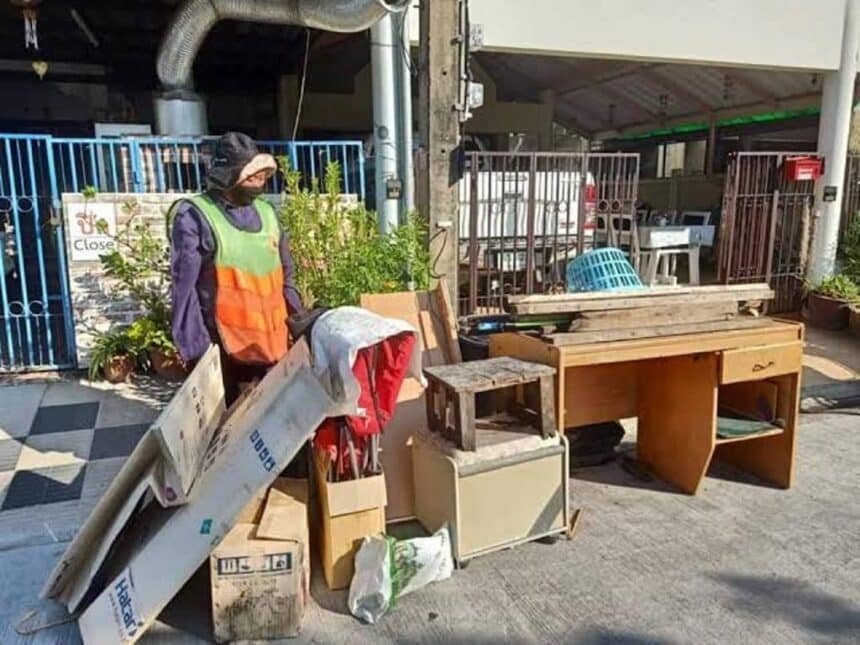
BANGKOK — The Bangkok Metropolitan Administration is collecting unwanted furniture, mattresses and broken appliances free of charge across 31 district offices on Nov. 21–22, operating each morning from 9 a.m. to noon. City crews are stationed at designated neighborhood drop-off zones to haul away oversized household clutter before the year-end moving rush.
The weekend drive gives condo tenants, long-term residents and departing expatriates a legal way to clear heavy items without paying private removal fees. Regular municipal garbage trucks do not accept bulky goods, leaving residents with few disposal options ahead of December lease turnovers and New Year renovations.
Key Takeaways
• Collection runs Nov. 21–22 from 9 a.m. to noon across 31 participating Bangkok district offices.
• Accepted items include old sofas, mattresses, tables, chairs and large unused electrical appliances at zero cost.
• Residents must bring identification or a utility bill to verify ownership and place items out before 8:30 a.m.
How the Weekend Drop-Off Works
District sanitation teams require residents to place oversized items at designated street-level pickup points before 8:30 a.m. on their neighborhood’s scheduled morning. Trucks and loading crews clear the sites strictly between 9 a.m. and noon.
According to the Bangkok city’s 2026 collection guideline, accepted materials cover old furniture, worn mattresses, large electrical appliances, minor household construction debris and unused sports gear. Crews ask residents to dismantle heavy bed frames and tie loose pieces into manageable bundles. Anyone dropping off items must show a Thai national ID card, passport or recent water or electricity bill to confirm local residency.
For expats living in high-rise condominiums along Sukhumvit, Silom and Sathorn, timing matters. Most condo juristic offices ban tenants from leaving discarded appliances in shared basement bin rooms, and private hauling services often charge 500 to 1,500 baht per pickup. Coordinating with building management to move items down before 8:30 a.m. eliminates those out-of-pocket costs.
Why City Hall Targets Illegal Dumping Before Year-End
Bangkok’s rotating weekend pickups form part of a wider municipal push to keep bulky trash out of the capital’s 1,682 canals and storm drains. When discarded sofas and broken refrigerators end up dumped beside alleys or waterways, they choke drainage pumps and worsen flash flooding during heavy rainstorms.
The operational pressure has intensified this autumn. Following severe seasonal runoff in October. City workers cleared more than 10,000 tonnes of flood-damaged furniture and debris from Bangkok streets. At the same time, City Hall rolled out its revamped Bangkok waste fee structure, raising monthly collection rates for unseparated household trash and high-volume commercial buildings while rewarding residents who sort waste through the BKK Waste Pay app.
Under Thailand’s Act on the Maintenance of Cleanliness and Orderliness of the Country, dumping refuse on public roads carries a fine of up to 2,000 baht, while tossing bulky waste into canals draws penalties up to 10,000 baht. Running free district drop-offs gives residents a practical alternative before enforcement teams step up patrols.
What Residents Should Do If They Miss the Window
Because the 31 participating districts split operations across Saturday and Sunday at specific community coordinates, residents should verify exact street drop-off points with their local district office cleaning division before hauling heavy loads outside.
Anyone who misses the Nov. 21–22 morning window does not need to store broken appliances until next year. Residents can schedule a paid on-demand pickup directly through their district office’s sanitation unit—typically priced between 255 and 495 baht depending on volume—or submit a bulky-waste removal request via the city’s Traffy Fondue reporting platform, which dispatches municipal trucks and forklifts to clear registered requests across all 50 Bangkok districts.