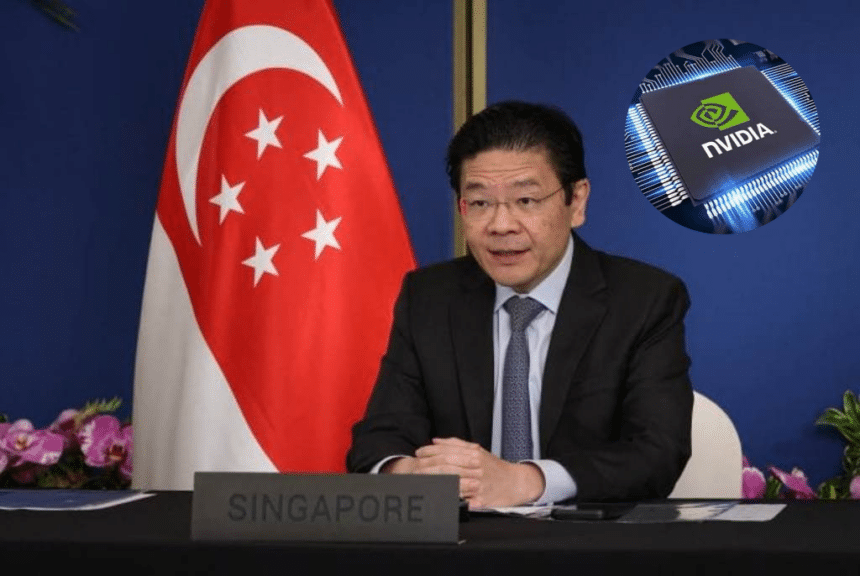
BANGKOK — Singapore is prepared to facilitate United States government inspections of local companies deploying advanced artificial intelligence semiconductors, Prime Minister Lawrence Wong announced Tuesday following tighter Washington export restrictions.
The pledge comes one day after the U.S. Department of Commerce imposed new licensing rules on high-end processor shipments to five nations, including Singapore, creating immediate compliance hurdles for regional data centers, multinational tech firms, and thousands of expatriate engineers working in the city-state’s digital economy.
Key Takeaways• Singapore will help U.S. officials verify how imported advanced AI chips are used inside domestic firms. • New U.S. rules require export licenses for advanced chip shipments and remote cloud access across five countries. • Businesses in Singapore must audit supply chains, secure end-user clearances, and follow foreign export laws. |
Closing Transshipment Loopholes in Southeast Asia
Speaking to reporters in Manila after a regional summit, Wong drew a sharp line between processors billed to Singaporean entities and hardware that physically enters the island nation. While financial ledgers show massive semiconductor sales routed through Singapore, most of those shipments move directly to third-party markets without ever touching local soil.
Washington’s Bureau of Industry and Security enacted the interim final rule on Nov. 16 to plug diversion pathways. U.S. officials flagged Singapore, Malaysia, Thailand, Indonesia, and Brazil as elevated-risk transit hubs where restricted computing hardware could be rerouted to unauthorized foreign buyers.
Wong acknowledged the curbs will trim transshipment volumes moving through Singapore’s ports. Still, he stressed that domestic data centers and legitimate technology companies remain his primary focus. Singapore does not enforce foreign export statutes directly, Wong noted, yet local authorities will act decisively against any firm using the city-state to evade international trade laws.
Inside the Supply Chain Squeeze for Tech Hubs
The regulatory crackdown exposes a widening fault line across Southeast Asia’s booming digital infrastructure. Over the past three years, surging demand for generative AI training capacity has turned Singapore and neighboring Johor in Malaysia into one of Asia’s fastest-growing data center corridors. Billions of dollars in foreign capital and thousands of specialized expatriate engineers have flowed into the region to build and operate these high-density server farms.
Geographic proximity and deep financial integration make Singapore the natural procurement hub for regional cloud operators. However, billing headquarters often sit miles away from physical server racks located across the Johor Strait or in nearby Indonesian industrial parks. That split between corporate invoicing and physical hardware deployment triggered alarm bells in Washington.
Previous U.S. restrictions focused largely on blocking direct hardware exports to restricted destinations. The updated framework goes much further by regulating remote cloud access to advanced computing clusters. According to TechNode Global, shipments destined for U.S.-headquartered cloud giants remain exempt from licensing delays under strict reporting conditions, while independent operators serving restricted foreign clients face rigorous federal vetting.
Compliance Rules Facing Businesses and Expat Staff
For technology executives and expatriate specialists managing daily operations in Singapore, the rule change shifts export compliance from a back-office formality to an urgent operational priority. Minister for Digital Development and Information Josephine Teo confirmed that Singaporean agencies are consulting with Washington and local industry leaders to preserve trusted access for legitimate firms.
Until bilateral verification protocols are finalized, companies operating in Singapore face strict compliance obligations:
• Licensing approvals: Data center operators and hardware resellers must apply for U.S. federal licenses before importing, re-exporting, or transferring restricted AI chips within Singapore.
• End-user verification: Firms must maintain detailed documentation proving exactly which corporate clients use their computing capacity, including safeguards against unauthorized remote access.
• Domestic legal exposure: Companies caught falsifying customs declarations or bypassing foreign trade controls face prosecution under Singaporean fraud and trade regulation laws.
Industry analysts expect longer procurement lead times and higher legal overhead for mid-sized cloud providers and AI startups. Expatriate engineers overseeing hardware deployment and cross-border cloud architecture will likely shoulder heavier internal audit duties as firms align their operations with both Singaporean law and Washington’s tightening security perimeter.