
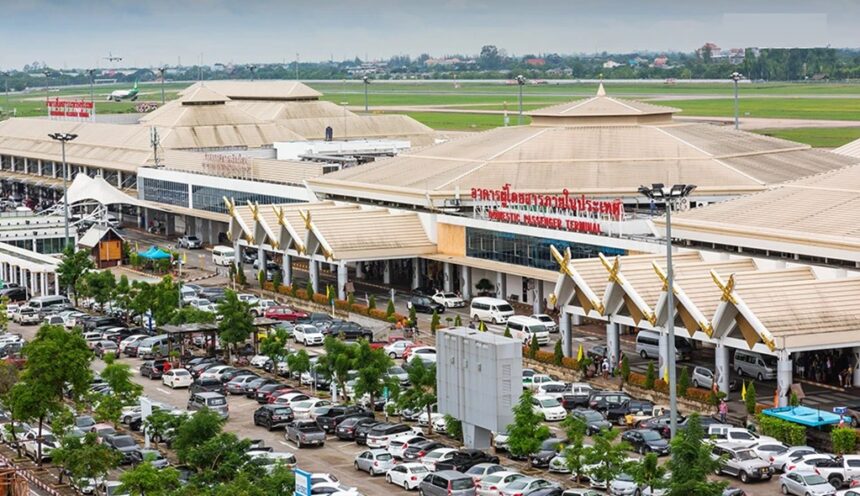
CHIANG MAI, Thailand — Chiang Mai International Airport expects daily passenger traffic to top 40,000 during peak days of the Yi Peng lantern festival next week, prompting urgent warnings for travelers to arrive hours early.
Acting airport director Group Capt. Sakkan Udon said packed terminals and heavy road congestion will collide with strict flight schedule adjustments across northern Thailand. Travelers must arrive at least two hours before domestic flights and three hours before international departures to clear security and avoid missing planes that have virtually no same-day rebooking seats.
Key Takeaways• Daily passenger volume at Chiang Mai International Airport will exceed 40,000 people during peak Yi Peng dates, straining terminal capacity and surrounding roads. • Airlines have canceled 52 flights and retimed 137 others between Nov. 23 and Nov. 25 to keep aircraft clear of drifting sky lanterns. • Passengers should arrive two to three hours early, track gate and counter updates on the SAWASDEE by AOT app, and use online check-in or self-bag drop kiosks. |
Digital Tools and Shifting Check-In Counters
Terminal congestion will hit hardest when dozens of domestic and international flights bunch together inside compressed operating hours. Airport staff warned that standard check-in counter assignments may shift on short notice to balance passenger queues across the main concourse.
To bypass long lines, officials urged flyers to complete online check-in before leaving their hotels and use automated self-bag drop machines inside the terminal. Real-time gate changes, security wait estimates, and counter locations are updated directly on the SAWASDEE by AOT mobile application.
Traffic bottlenecks along Mahidol Road and airport access lanes are also expected to peak two hours before major departure waves. Missing a flight carries steep consequences this week, as airlines have added 63 extra flights and deployed larger aircraft, yet nearly every seat remains sold out.
Why Lanterns Force an Eight-Hour Airport Shutdown
The terminal crush stems directly from a clash between centuries-old Lanna heritage and modern aviation safety. Each year during the full moon of the 12th lunar month, residents and tourists release hundreds of thousands of hot-air paper lanterns, known locally as khom loi, into the night sky over Chiang Mai.
Because Chiang Mai International Airport sits just 3 kilometers southwest of the historic Old City, rising lanterns drift straight across active approach and takeoff corridors. A paper lantern sucked into a jet engine can cause catastrophic turbine failure, while bamboo frames can damage aircraft wings and windshields.
To prevent midair collisions, provincial authorities established strict no-fly safety windows during the core festival nights on Nov. 24 and Nov. 25. According to Chiang Mai CityNews, more than 200,000 lanterns are projected to enter the airport’s flight safety zone during the celebrations.
Those safety curfews halt all flights from 10 a.m. to noon on Nov. 24 and from 7 p.m. to 1 a.m. on both festival nights. The restrictions shrink the airport’s normal 20-hour operating day down to just 12 hours, forcing airlines to cram roughly 210 daily flights into narrow daytime and afternoon slots.
Regional Impact and Travel Alternatives
The schedule squeeze ripples across Thailand’s northern tourism corridor. Earlier this month, carriers canceled 52 flights and retimed 137 services specifically for the Nov. 23–25 window, part of a broader weeklong adjustment affecting more than 180 scheduled routes.
Local hoteliers and tour operators in Chiang Mai have adjusted checkout times and airport shuttle schedules to match the compressed daytime flight banks. Ground transport providers advised visitors staying in Nimmanhaemin or the Old City to double their normal travel time to the terminal.
Travelers who have not yet booked flights into Chiang Mai during the peak festival window face scarce inventory and elevated fares. Aviation officials noted that passengers with flexible itineraries may find smoother connections by flying into nearby Chiang Rai or Lampang and completing the final leg by road.