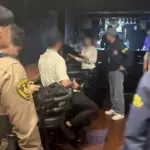
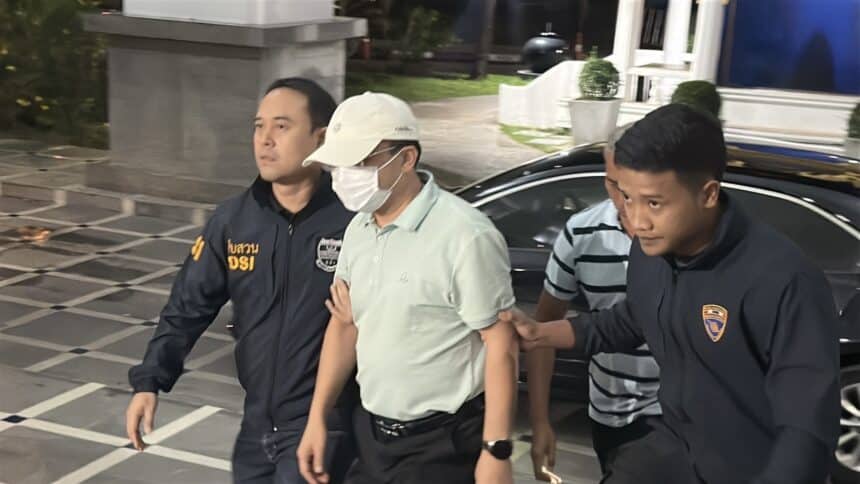
BANGKOK — Thailand’s Criminal Court on Wednesday sentenced a Chinese construction executive and three Thai shareholders to prison for illegally operating a local builder through front owners, dismantling a corporate partner behind the collapsed State Audit Office headquarters.
Judges handed Zhang Chuanling, authorized director of China Railway No. 10 (Thailand) Co., a three-year prison term and a 1 million baht ($29,000) fine for violating Thailand’s Foreign Business Act. The court also fined the firm 1 million baht and ordered it to shut down immediately, marking the first criminal convictions tied to the corporate network that built the 33-story tower before it pancaked during a March 2025 earthquake and killed 96 people.
Key Takeaways
| • Executive Zhang Chuanling received three years in prison, while three Thai nominee shareholders received sentences ranging from two years and four months to nearly five years.
• The Criminal Court fined China Railway No. 10 (Thailand) Co. 1 million baht and ordered the company to cease all operations in the kingdom. • This verdict strictly addresses illegal foreign ownership and stands separate from ongoing criminal and civil trials over the building’s fatal structural failure. |
Shell Ownership Exposed in Court
Special Cases Division 5 prosecutors proved that Thai nationals held 51% of the company’s 100 million baht registered capital on paper solely to bypass statutory ownership caps. Co-defendants Sophon Meechai and Manas Sri-anan, who served as both directors and majority shareholders, pleaded guilty and received commuted sentences of four years, nine months and 18 days alongside 1.6 million baht fines each.
A third Thai shareholder, Prachuab Sirikhet, received two years, four months and 24 days in prison plus an 800,000 baht fine after confessing, according to a Department of Special Investigation statement. Zhang pleaded not guilty, arguing his firm never directly won the state contract, but judges pointed to his sole signing authority on financial statements and joint-venture agreements as proof of foreign control. Judges also barred all three Thai defendants from holding shares or acting on the firm’s behalf. Zhang, Sophon and Manas posted bail pending appeal, while Prachuab remains behind bars serving a prior corruption sentence.
Why Foreign Builders Use Thai Fronts
Under List 3 of Thailand’s Foreign Business Act of 1999, construction sits among protected sectors where lawmakers determined local firms cannot yet compete head-on with foreign capital without strict licensing. Foreign entities cannot hold majority stakes unless granted special Board of Investment privileges or Cabinet exemptions, yet public mega-projects routinely demand deep balance sheets and specialized heavy-engineering capacity.
That regulatory gap has long fueled nominee arrangements across Bangkok’s booming infrastructure sector. By recruiting local proxies to hold 51% equity in exchange for modest director fees, overseas state-linked contractors qualify as domestic companies, bid on taxpayer-funded tenders and sidestep foreign equity vetting. The arrangement shields parent corporations from direct regulatory scrutiny while keeping operational control and profits concentrated abroad.
Separate Collapse Trials Continue
Wednesday’s ruling resolves only how China Railway No. 10 (Thailand) was structured, leaving untouched the separate criminal prosecution over why the 2.14-billion-baht Chatuchak district tower disintegrated. When a magnitude 7.7 earthquake struck central Myanmar on March 28, 2025, soft Bangkok basin clay amplified seismic waves more than 1,000 kilometers away, bringing down only the under-construction audit headquarters.
In a parallel case before Criminal Division 8, prosecutors indicted 23 individuals and corporate entities—including Italian-Thai Development Plc. former executive chairman Premchai Karnasuta—on charges tied to substandard design, supervision and construction. That trial remains in the witness-examination phase alongside a 500-million-baht civil damages lawsuit filed by the State Audit Office and an anti-corruption probe examining 70 public officials over procurement and inspection failures.