When you need a restroom during a sightseeing day or a long trip between cities, Thailand’s facilities can be hard to predict. You may find a Western-style toilet or a squat toilet, a handheld water sprayer, and different instructions for disposing of paper.
Conditions and access vary by location, so a few habits help: check signs, carry tissues and small cash, and plan ahead if you need an accessible restroom. These Thailand travel tips for planning your trip can help with the wider logistics, too.
Here’s what to expect and how to use each facility comfortably and respectfully.
Key Takeaways
- Thailand has both Western-style and squat toilets, and facilities vary in type and condition by location.
- Many restrooms have a handheld water sprayer; test its pressure gently into the bowl to avoid splashing.
- Follow posted paper-disposal instructions. Some facilities require used toilet paper in a bin, as Thailand’s public-toilet rules account for paper and plumbing.
- Carry tissues, hand sanitizer, and small cash, since supplies and fees vary. 7-Eleven stores in Thailand can offer a convenient stop during longer trips.
- Suvarnabhumi Airport has accessible restrooms, but features may differ at other public venues.
Thailand’s Public Toilets: What to Expect at Different Stops
Thailand’s restrooms vary by venue. A modern airport or shopping center may feel familiar, while a basic facility at an older site may have fewer supplies or a different toilet style. Check the setup when you arrive, and don’t assume every restroom has the same features or access rules.
Western toilets and squat toilets both exist
In modern buildings, including many airports, hotels, and shopping centers, you’re more likely to find a Western-style toilet with a raised seat. A squat toilet sits close to the floor and has foot placements on either side of the bowl. If you’re unsure which type you’re looking at, the shape makes it clear before you enter the stall.
Squat toilets may still appear in older or simpler facilities, including some public restrooms at visitor sites. If you haven’t used one before, take a moment to check your footing and balance before you begin. You can also choose another stall if one is available. There’s no need to rush; visitors encounter both types, and facilities vary across the country.
Where travelers are most likely to find a restroom
Airports and large shopping centers are usually practical places to look, with restrooms marked around the building. Suvarnabhumi Airport lists toilets throughout its passenger terminal, and its accessible restroom facilities include features such as grab bars and accessible washbasins. For terminal levels and services, see this guide to Suvarnabhumi Airport restroom locations.
Transport hubs, hotels, and visitor attractions can also have restrooms, but availability and opening hours depend on the venue. At stations, facilities may be limited or require a fee. A hotel restroom is generally intended for guests, while shops and restaurants may reserve facilities for customers. Attractions may restrict access to ticket holders or close facilities outside operating hours. For example, visitors can find restrooms at the White Temple in Chiang Rai within the complex.
When you pass a convenient restroom, consider using it before a long ride or walk. That’s especially helpful when you’re unsure whether the next stop will have a facility open to the public.
How to Use a Thai Toilet and Dispose of Paper
The fixtures and disposal rules can vary between restrooms, so check the stall before you begin. A sprayer, paper dispenser, and waste bin may not all be provided, and posted signs should guide your choices.
Use the bidet sprayer carefully
Handheld water sprayers, often called “bum guns,” are common in Thai restrooms. If you haven’t used one before, point the nozzle into the bowl and squeeze the handle gently to test the pressure. Then aim carefully during use, keeping the spray directed into the bowl to avoid splashing yourself or the floor.
Some facilities provide a sprayer instead of toilet paper, while others offer both. Check what’s available before you start, and carry tissues as a backup. Travelers curious about the custom can read more about Thailand’s bum gun bathroom culture.
Check the sign before flushing toilet paper
Whether paper belongs in the toilet depends on the paper and the plumbing. Follow any sign in the restroom, and use the nearby bin if the instructions say not to flush. When there’s no clear sign, look at the setup in the stall and follow the facility’s directions rather than assuming the rules are the same everywhere.
Avoid flushing paper that isn’t meant to dissolve in water, along with other non-flushable items. Where paper can’t be flushed, Thai public-toilet hygiene rules call for a clean, watertight bin with a lid for disposal. A clean, covered waste bin is also part of broader guidance on hygienic toilet facilities.
Bring tissues and wash or sanitize your hands
Keep a small tissue pack in your day bag. Some restrooms provide paper at a shared dispenser near the entrance rather than inside each stall, and supplies can run out. Having your own tissues means you won’t need to leave the stall to look for them.
After using the toilet, wash your hands with soap when it’s available. Many facilities have a washbasin and soap, though supplies can vary, so carry hand sanitizer as a backup. Check that you have tissues and sanitizer before setting off for a long ride or a day of sightseeing.
What Public Restrooms Cost and How Clean They May Be
Public restroom fees and cleanliness can vary by venue, so plan for some differences rather than expecting one nationwide standard. A little cash and a quick look around can make stops easier, especially at standalone facilities or busy attractions.
Carry small cash in case a restroom charges a fee
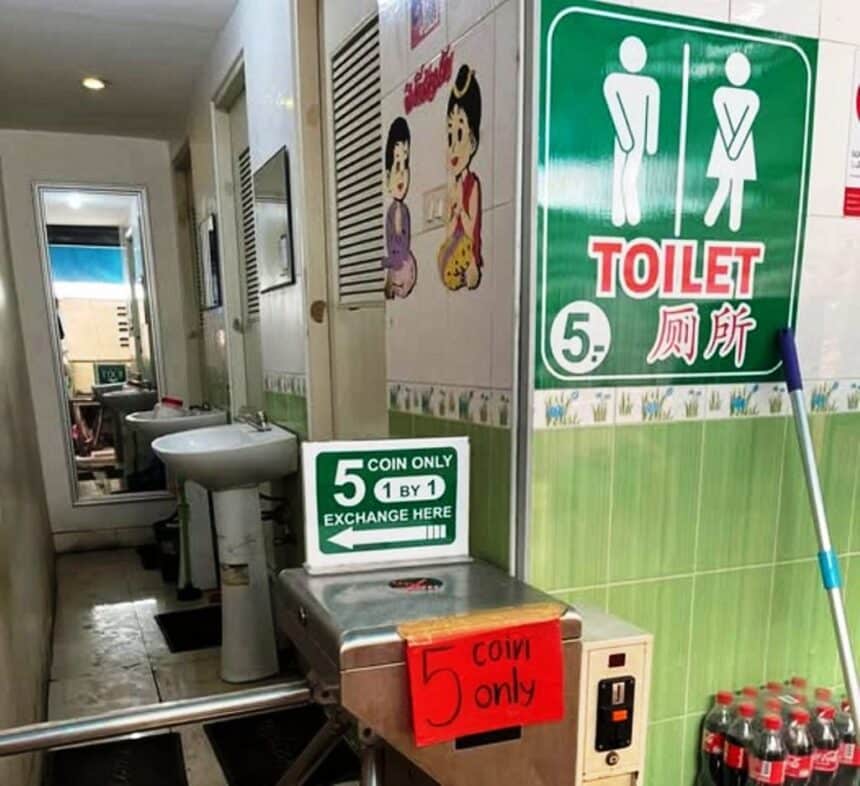
Some standalone public toilets may charge a small fee to enter. However, there’s no reliable nationwide standard amount, and charges can differ between facilities. Check the posted price or ask the entrance attendant before you pay instead of relying on a fixed figure from another traveler.
Keep a few small-denomination baht notes or coins handy. That way, you won’t need to find an ATM or ask a nearby shop to break a large bill just to use a restroom. At attractions, remember that an admission charge is separate from any restroom fee. Some park fees help support site upkeep, including facilities such as toilets, as explained in this overview of park fees and public facilities in Thailand.
Expect conditions to vary, even within the same area
Cleanliness and supplies depend on the venue, how heavily it’s used, and when staff last serviced it. A restroom at a major airport or shopping center may have regular maintenance, while a busy public facility can run low on soap or paper during peak hours. Even nearby restrooms may differ, so check the stall and sink before settling in.
Thai public-toilet hygiene rules call for clean, maintained fixtures, adequate water, hand-cleaning products, waste bins, and ventilation during operating hours. The Thai public-toilet hygiene requirements describe these expectations, but they don’t guarantee that every restroom will be equally clean or fully stocked when you visit.
When possible, choose a facility that looks maintained and has working sinks, soap, and a bin. If the first restroom seems poorly cared for, try another nearby option. Your own tissue pack and hand sanitizer can help when supplies are missing, but they won’t replace handwashing when soap and water are available.
Plan Ahead for Accessibility and Long Travel Days
A restroom stop that works for one traveler may not suit someone using a wheelchair, traveling with children, or managing a health condition. For long rides and day trips, identify likely stops in advance and confirm the facilities you need.
Look for accessible restroom signs at major airports
Suvarnabhumi Airport is a useful example of what to look for. Its official information lists accessible restrooms throughout the passenger terminal, with features that include grab bars, accessible washbasins, sliding doors, and emergency-assistance buttons. The airport also includes accessible restrooms among its wheelchair assistance facilities.
These details confirm what’s available at this airport, not at every airport, station, attraction, or roadside stop in Thailand. Look for accessibility signs when you arrive, and ask staff where the nearest suitable restroom is if the location isn’t clear. If you rely on a particular feature, such as a transfer rail or an emergency call button, check that it’s present before you need it.
Build restroom stops into journeys and outings
Before a long trip, use the restroom at the airport or transport terminal while you have time to find the facility that fits your needs. The same approach helps before a tour, a long walk, or an excursion where restrooms may be farther apart or available only inside ticketed areas.
When planning a bus journey, check the route and onboard facilities rather than assuming every service has a toilet. For example, Thailand’s long-distance bus options vary by operator and service, so confirm amenities and scheduled stops before booking. Families may also want to make a stop before boarding, even when a restroom is available onboard.
If you need step-free access, space for a mobility aid, grab bars, or another specific feature, contact the venue or transport provider ahead of time. Ask where the restroom is, whether it’s open during your visit, and whether the access route includes stairs. That quick check is more reliable than counting on the nearest public toilet to meet your needs.
Frequently Asked Questions
A few practical details can make restroom stops easier, especially when you’re visiting temples, traveling late, or away from larger venues. Use these answers as a guide, then follow the directions at each location.
Are restrooms at temples open to visitors?
Temple restroom access depends on the site and the area you’re visiting. Look for signs or ask staff whether visitors can use the facilities, and follow any rules about restricted areas. Since temples are active religious spaces, dress respectfully and observe local customs; Thailand temple visitor etiquette and the official Thai temple travel guide offer useful guidance.
Can I use a restroom in a café or restaurant without buying anything?
Policies vary, and some businesses reserve restrooms for customers. Ask a staff member politely before heading to the restroom rather than assuming access is allowed. If you’re making a purchase anyway, ordering a drink or snack can be a considerate way to use the facilities.
Are public toilets usually open late at night?
Opening hours depend on the venue, so a restroom that’s available during the day may close or restrict access at night. Transport hubs and businesses may also limit entry outside their operating hours. Before a late journey, check the hours of likely stops and use an open facility before setting off.
Will every restroom have soap and toilet paper?
No, supplies can vary, and busy restrooms may run out before staff restock them. Some stalls may have toilet paper while others don’t, and soap may not be available at every sink. Carry a small tissue pack and hand sanitizer as backups, but wash with soap and water when they’re provided.
Should I carry my own toilet paper in Thailand?
A small packet of tissues is useful, particularly on outings away from airports, shopping centers, and other large venues. Tissue may be available at a shared dispenser, but you can’t count on finding it in every restroom or stall. When you use paper, follow posted disposal instructions, since some facilities require it to go in a bin rather than the toilet.