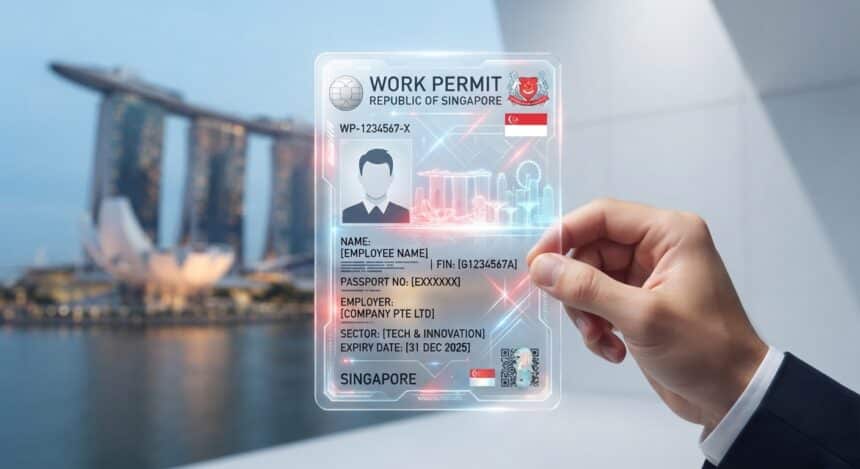
SINGAPORE — Starting Nov. 29, foreign workers entering Singapore on newly submitted Work Permit applications can no longer begin working with only an in-principle approval letter. Under updated rules from the Ministry of Manpower, affected workers must hold an issued Work Permit or a Temporary Permit before stepping onto a job site.
The policy shift closes a long-standing operational gap for non-Malaysian hires, who previously started jobs on their second day in Singapore using initial approval letters alone. Employers who overlook the change risk illegal employment penalties, while incoming workers face immediate work delays if their paperwork is incomplete.
Key Takeaways
- Hard Stop on Approval-Only Starts: From Nov. 29, an in-principle approval letter no longer authorizes any new Work Permit applicant to start working in Singapore.
- Unified Permit Rules: Employers must secure either a full Work Permit or apply online for an instant Temporary Permit before workers begin duties.
- Immediate Levy Billing: Daily foreign worker levy charges start the exact day a Temporary Permit is granted, requiring tighter arrival scheduling.
Who Faces the New Requirement
The rule applies strictly to Work Permit applications and appeals submitted on or after Nov. 29, 2026. Applications lodged before that date follow legacy rules, meaning non-Malaysian workers in the older pipeline can still start work one day after arriving in Singapore on an in-principle approval letter.
For new submissions, the ministry is standardizing rules across all nationalities. Malaysian workers already required a full permit or a Temporary Permit before starting work. Now, non-Malaysian hires—who form the backbone of Singapore’s construction, marine, manufacturing, and process sectors—must meet the exact same threshold. An approval letter now serves solely as an entry clearance document, not a license to work.
Why Officials Tightened Entry-to-Work Rules
For years, Singapore allowed non-Malaysian workers to start jobs almost immediately upon arrival because issuing physical cards took days or weeks. That buffer gave contractors and factories instant labor while mandatory medical exams, thumbprint registrations, and security bonds cleared the system.
Digital upgrades have since compressed full permit issuance times, making the old grace period unnecessary. According to Envoy Global, the overhaul consolidates scattered legacy tools from the older WP Online system into a single digital workflow. By requiring explicit permit issuance before work begins, regulators eliminate ambiguity over insurance coverage, workplace injury liability, and levy billing dates—issues that frequently sparked costly disputes when workers started jobs before their permits were finalized.
How to Apply and Verify Guidance
When employers need an incoming hire to start urgently before full issuance steps finish, they must log into the Work Permit eService on the myMOM Portal using Corppass and select the “Apply for TP” function. No supporting documents are required during this step.
Timing depends on nationality. Employers can request a Temporary Permit for non-Malaysian hires on the day work starts or in advance before arrival, though the pass activates no earlier than the second day after landing in Singapore. For Malaysian workers, companies must wait until the worker holds an approval letter and is physically in Singapore. Eligible requests receive instant approval, generating a downloadable letter that employers must pass directly to the worker.
Companies should watch their budgets closely. Foreign worker levies start ticking the day a Temporary Permit is granted, even if the worker has not yet finished mandatory onboarding programs or safety orientations.
Human resources teams can verify live procedural updates, check security bond statuses, extend approval validity dates, and review official employer briefing decks directly on the Ministry of Manpower’s Work Permit eService portal before booking incoming worker flights or assigning shifts.