
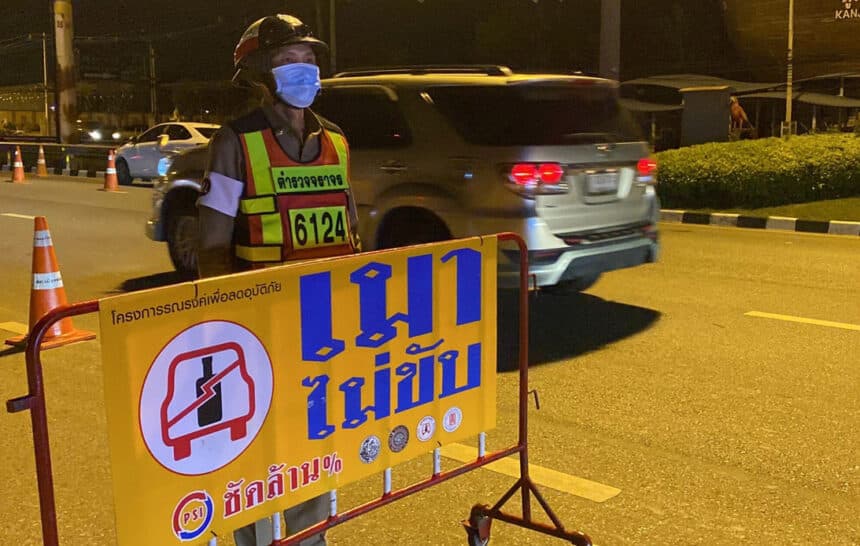
A drunk driving charge in Thailand can mean jail, a fine, and losing your driving privileges, whether you live there or are visiting. Repeat offenses and crashes that injure or kill someone carry much tougher penalties.
The rules set different consequences based on the offense, the alcohol limit that applies to you, and what happened on the road. Here’s how the penalty ranges work, though the outcome in any case depends on its facts. This is general information, not legal advice.
Key Takeaways
- Most drivers face a 0.05% blood alcohol limit in Thailand; drivers under 20 and some restricted-license holders have a lower 0.02% limit.
- A first offense can bring up to one year in jail, Suspension of a Drivers Licence, a 5,000 to 20,000 baht fine, or both
- Repeat the offense within two years, and penalties rise to as much as two years in jail and 50,000 to 100,000 baht in fines.
- Causing injury or death brings harsher penalties, including longer prison terms and fines; a fatal crash also requires license revocation.
- Courts may suspend or revoke a license even for a first offense. See more on Thailand’s drunk-driving penalties.
The Penalties for Drunk Driving Charges in Thailand Depend on the Outcome
Thailand’s Land Traffic Act sets different penalties for a basic offense, a repeat offense, and a crash that injures or kills someone. The 2022 amendment took effect on September 5, 2022, and added tougher penalties for repeat offenses. The ranges below are statutory limits, not a prediction that every case will receive the maximum sentence.
A first offense can bring jail, a fine, or both
For a basic first offense, the court can impose up to one year in prison, a fine of 5,000 to 20,000 baht, or both. It may also suspend the driver’s license for up to six months or revoke it.
The law gives the court a range, so the outcome can vary by case. For more on the rules behind a drunk-driving charge, see this overview of Thailand’s drunk-driving laws and BAC limits.
A second offense within two years carries tougher penalties
A person who commits the same offense again within two years of the first offense faces up to two years in prison and a fine of 50,000 to 100,000 baht. Unlike the first-offense penalty, the court must impose both imprisonment and a fine. The driver’s license must be suspended for at least one year or revoked.
The revised penalties are part of Thailand’s tighter drunk-driving rules, which include changes to alcohol testing and blood-alcohol limits.
Injuries or death raise the possible sentence
When impaired driving causes a crash, the penalties depend on the harm suffered. The law sets separate ranges for ordinary injury, serious injury, and death:
| Outcome | Prison term | Fine | License consequence |
|---|---|---|---|
| Non-serious physical or mental injury | 1 to 5 years | 20,000 to 100,000 baht | Suspension for up to 1 year or revocation |
| Serious injury | 2 to 6 years | 40,000 to 120,000 baht | Suspension for up to 2 years or revocation |
| Death | 3 to 10 years | 60,000 to 200,000 baht | Revocation |
These are statutory ranges, and the facts of the crash affect the sentence. A fatality requires license revocation, while injury cases allow a suspension or revocation.
Know Thailand’s Alcohol Limits Before You Drive
Thailand sets different blood alcohol concentration (BAC) limits depending on the driver and license. Police can treat you as legally intoxicated if your BAC reaches the threshold that applies to you, even if you feel sober or believe you can drive safely. Alcohol affects people differently, so a drink count can’t reliably tell you whether you’re under the limit.
Most drivers face a 0.05% BAC limit
For most drivers, Thailand’s legal limit is 50 milligrams of alcohol per 100 milliliters of blood, equal to 0.05% BAC. The rule measures the alcohol in your blood, not how impaired you feel. A person may feel fine and still exceed the legal threshold.
The amount of alcohol that raises BAC varies with factors such as body size, how quickly someone drinks, and whether they have eaten. Because there’s no dependable way to calculate your BAC from a number of drinks, don’t use drink counts to decide whether you can drive. The Thai government’s alcohol-testing regulations describe testing standards and the lower threshold for some drivers.
Some drivers must stay at or below 0.02%
A stricter limit of 20 milligrams per 100 milliliters of blood, or 0.02% BAC, applies to drivers under 20 and certain restricted or provisional license holders. Legal summaries also identify commercial and professional drivers as a category subject to this lower threshold. Check which rules apply to your license and vehicle, especially if you drive for work or hold a temporary license.
Your license status can affect which BAC limit applies, so don’t assume the general 0.05% threshold covers you. Thailand’s rules also cover circumstances such as driving a vehicle class your license doesn’t authorize. For practical guidance on what may happen at a roadside stop, see this guide to Thai police checkpoints and BAC limits. When you’re unsure which limit applies, the safest choice is not to drink before driving.
What Can Make a Drunk Driving Case More Serious?
A drunk driving case in Thailand can carry added consequences when the driver lacks a valid license or the offense causes injury or death. These factors can change the statutory penalty, but they don’t automatically prove every part of the charge.
Driving without a valid license can increase the penalty
Under Thailand’s Land Traffic Act, the applicable drunk-driving penalty may increase by one third if the driver has no license or drives while their license is suspended or revoked. If the offense causes injury or death, the reported increase is one half. The increase applies to the penalty for the drunk-driving offense; it is separate from any charge for driving without a license, which has its own consequences under Thailand’s traffic rules.
License status can therefore matter even when the driver’s alcohol level and the events of the stop are not in dispute. However, the exact charge and how the increase applies depend on the case facts. Get advice from a lawyer familiar with Thai traffic law before relying on a general summary.
A crash can change the charge and the license outcome
When impaired driving causes harm, the case moves into a more serious statutory penalty tier. Thailand’s law sets distinct ranges for non-serious injury, serious injury, and death, with longer prison terms and higher fines as the consequences become more severe. A fatal case also requires the court to revoke the driver’s license.
A crash alone doesn’t establish every element of a drunk-driving offense or prove that the driver caused the injuries. Investigators and the court must assess the evidence and the specific circumstances. For more on the consequences tied to injury and fatal crashes, see Thailand’s drunk-driving penalties for injury and death.
What Happens After a Drunk Driving Stop in Thailand?
A stop may lead to alcohol testing, police action, and a court case. Paying a fine on the spot does not necessarily resolve the charge, and the outcome depends on the evidence and circumstances.
Do not assume paying a fine ends the case
Police may ask you to take an alcohol test and record the results as part of their investigation. If they suspect an offense, the matter may proceed through the criminal justice system rather than end at the roadside. Refusing a test without a reasonable justification can also create legal consequences, as explained in this guide to Thailand breath tests and suspected drunk driving.
A drunk driving charge can involve court proceedings, possible imprisonment, a fine, and a court order suspending or revoking your license. Arrest or bail is not automatic in every case. The police response and next steps depend on the facts, including whether a crash occurred. Chiang Rai Times has also reported on Thailand’s drunk driving crackdown, and its warning about drunk driving penalties discusses the serious consequences a case can carry.
Visitors should act quickly and keep case records
If police stop you, stay calm and follow lawful instructions. Keep copies of any paperwork you receive, including test records, charge documents, and court notices. Then contact a qualified Thai lawyer promptly, especially if police ask you to attend an interview or court hearing. A lawyer familiar with local criminal and traffic procedures can explain what applies to your case.
Travel insurance and consular assistance do not replace legal representation or erase a criminal penalty. If you are a foreign visitor, contact your embassy or consulate for help understanding available consular support. For example, the U.S. Embassy’s legal assistance information explains that embassy staff cannot provide legal advice. Consular staff may offer support, but you still need a local lawyer to advise you on the case.
Frequently Asked Questions
These answers address common concerns that can remain after reviewing Thailand’s drunk driving penalties. For case-specific advice, speak with a qualified Thai lawyer.
Can I go to jail for a first drunk driving offense in Thailand?
Yes. A first offense can carry up to one year in jail, a fine of 5,000 to 20,000 baht, or both. The actual outcome depends on the circumstances and the court’s decision.
How long does a second-offense rule apply?
The repeat-offense provision applies when a new offense occurs within two years of the first offense. A repeat conviction in that period carries tougher penalties, including jail time and a higher fine.
Can I refuse a breath test?
Refusing a breath test can have legal consequences, but the rules and their application depend on the circumstances. Ask a Thai lawyer what applies to your situation; Thai coverage of breath-test refusals also discusses the issue.
Will a drunk driving conviction affect a foreign driver’s license?
Thailand can impose local consequences, including suspending or revoking driving privileges in Thailand. Any effect on a license issued by another country depends on that issuing authority’s rules and any other applicable requirements.
Are drunk driving penalties different for motorcycles?
Drunk driving rules can apply to motorcycle riders as well as car drivers. Riding a motorcycle does not make it lawful to drive above the alcohol limit that applies to you.
Where can I check the current rules?
Confirm the requirements with Thai authorities or a qualified local lawyer, especially before relying on an English translation. Laws and translations can change, so check that any information reflects the rules in force when your case arises. For updates, see Thailand’s traffic fines and drunk-driving rules.