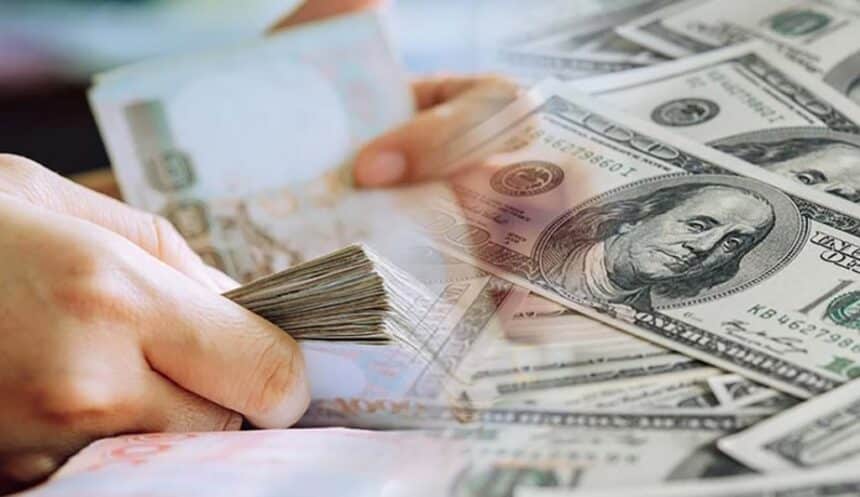
BANGKOK — The Thai baht tumbled to roughly 33.93 per U.S. dollar this week, marking its weakest level in 19 months and deepening a year-to-date decline of 6.7%. Major financial institutions warn the slide is not over, with analysts at both Kasikorn Research Center and Japanese banking giant MUFG forecasting the currency to weaken further to 34.10 by the end of 2026.
The currency slump comes as Thailand’s central bank chief warns of sluggish economic expansion through 2027, driven by heavy household debt and soft domestic demand. While the softer baht raises import costs for local businesses, it delivers an immediate windfall for foreign retirees, digital nomads and expatriate workers whose pensions and salaries are paid in dollars or euros.
Key Takeaways• The baht reached 33.93 per dollar, its lowest point in 19 months, extending its 2026 loss to 6.7%. • Kasikorn Research Center and MUFG both project the Thai currency will hit 34.10 per dollar by year-end. • Bank of Thailand Gov. Vitai Ratanakorn expects weak economic growth to persist into 2027, even as the exchange rate boosts expat purchasing power. |
Global Pressures and Structural Drag
Thailand’s currency trouble reflects a collision between external market shocks and stubborn domestic bottlenecks. Rising global energy prices amid Middle East tensions have driven up import bills for Thailand, a net oil importer, eroding its trade balance. At the same time, elevated U.S. Treasury yields continue to draw foreign capital away from emerging Southeast Asian markets toward dollar-denominated assets.
Inside the kingdom, economic momentum remains fragile. The Bank of Thailand Gov. Vitai Ratanakorn warned that structural headwinds will keep annual economic growth subdued at roughly 2.1% in 2027, down from a projected 2.4% this year. High household debt and four straight years of contracting credit for small and midsize businesses have blunted domestic spending.
To cushion the slowdown, the Bank of Thailand lowered its benchmark policy rate to 1.00% earlier this year. That wide interest rate gap against the U.S. Federal Reserve leaves the baht vulnerable whenever global investors seek safer, higher-yielding returns.
Expat Windfall vs. Local Import Costs
Currency swings cut two ways across Thailand’s economy. Expatriates living in hubs such as Bangkok, Chiang Mai and Phuket are seeing their monthly budgets stretch noticeably further. A U.S. retiree drawing a $2,500 monthly pension now receives roughly 84,825 baht, compared with about 79,300 baht at the start of January—an extra 5,500 baht a month without any change in dollar income.
Tourism operators and export manufacturers also welcome the relief. A cheaper baht makes Thai hotel rooms, restaurant meals and factory goods more competitive against regional rivals in Vietnam and Malaysia, helping offset softer spending from Chinese tour groups.
Local consumers and import-reliant firms face the opposite reality. Fuel, imported electronics, fertilizers and foreign raw materials cost more in local currency terms. Even Thailand’s booming technology assembly sector relies on imported components for up to 70% of its production inputs, according to central bank estimates, limiting the net currency gain from higher export volumes.
What Markets Are Watching Next
Currency traders are now focused on whether the baht breaches the psychological threshold of 34.00 per dollar in the coming weeks. Strategists at Kasikorn Research Center and MUFG point to year-end corporate dollar demand and fourth-quarter capital outflows as the primary catalysts that could push the exchange rate to 34.10 before January.
Central Bank officials have signaled they will tolerate currency weakness so long as daily swings do not become disorderly. Gov. Vitai has emphasized that interest rate cuts alone cannot fix Thailand’s aging workforce or sluggish productivity, shifting the focus toward targeted debt restructuring and credit guarantees rather than aggressive currency defense.