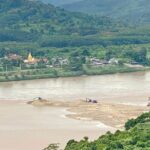

BANGKOK – Thailand’s Ministry of Public Health issued an urgent toxic water alert for communities along six major border rivers after laboratory tests detected abnormal arsenic spikes and high raw water turbidity. The warning covers the Sai, Ruak, Kok, Mekong, Salween and Kraburi river basins, where heavy contamination is actively disrupting municipal tap water production and distribution across border provinces.
Public Health Minister Pattana Promphat ordered immediate medical surveillance and emergency water coordination across affected provinces. Health officials warned that boiling or chlorinating the river water will not neutralize the poison, leaving thousands of border residents at immediate risk of heavy metal exposure and acute water shortages.
Key Takeaways
- Six border waterways—the Sai, Ruak, Kok, Mekong, Salween and Kraburi rivers—exceeded safety thresholds for arsenic and raw water turbidity, disrupting local tap supplies.
- The Department of Health confirmed that neither boiling nor adding chlorine eliminates inorganic arsenic, urging residents to rely strictly on government-approved reserve water.
- Authorities prohibited swimming and eating locally caught fish or shellfish in high-risk zones until follow-up laboratory tests verify water safety.
Household Restrictions and Medical Guidance
Arsenic does not evaporate when heated. Instead, boiling contaminated water concentrates the chemical toxin as clean steam escapes into the air. The Department of Health instructed households in affected districts to stop using river water directly for drinking, cooking rice, preparing meals or washing fresh fruits and vegetables, even after boiling or chemical disinfection.
Pattana emphasized that prolonged arsenic accumulation in the human body increases the risk of severe, chronic health conditions, including skin lesions, cardiovascular damage and internal cancers. Vulnerable populations—specifically young children, pregnant women and the elderly—face heightened physiological risks even from low-level exposure over time, requiring households to prioritize certified clean water reserves and bottled supplies.
Provincial health teams are now tracking water quality continuously from raw river intake points to household taps. Residents who recently swam in suspect waterways or consumed local aquatic animals must seek prompt medical evaluation if they experience nausea, abdominal pain, numbness or unusual skin changes. Fishing, foraging and recreational water activities remain strictly discouraged across the six basins until environmental agencies verify safety.
Upstream Mining Drives Cross-Border Contamination
The Nov. 12 health advisory follows months of escalating water quality crises across northern Thailand. Earlier this month, severe arsenic contamination cut tap water supplies to 14 villages in Chiang Rai’s Mae Sai district after heavy seasonal rains washed toxic sediment into the Sai River. Provincial waterworks officials reported that contaminant concentrations in the waterway surged to 28 times the national safety limit in August before settling at persistently elevated levels.
Environmental investigators trace the heavy metal surge to unregulated gold and rare earth mining operating inside Myanmar’s Shan State, directly upstream from Thailand’s northern river networks. Chemical leaching from hillside extraction sites enters the Sai, Kok and Ruak tributaries before flowing into the main Mekong channel.
Similar cross-border runoff threatens the Salween basin along the northwestern frontier and the Kraburi River separating Thailand and Myanmar in the south. In October, epidemiologists tracking the Sai River public health response noted that subsistence fishers and rural families without piped water bear the heaviest exposure burden.
The crisis has forced urgent diplomatic action alongside emergency water trucking. Thai officials announced plans to raise arsenic-tainted river pollution in talks with Myanmar and regional partners to establish joint watershed monitoring and supply chain tracing.
Meanwhile, the Provincial Waterworks Authority is accelerating infrastructure projects to divert cleaner water from alternative rivers, aiming to permanently decouple border communities from poisoned transboundary waterways and protect long-term public health across rural border districts.
Trending News:
Chinese Cargo Ship Splits in Two at Mekong Rapids
Thailand Weighed Down By Toxic Rivers: New Curbs Planned