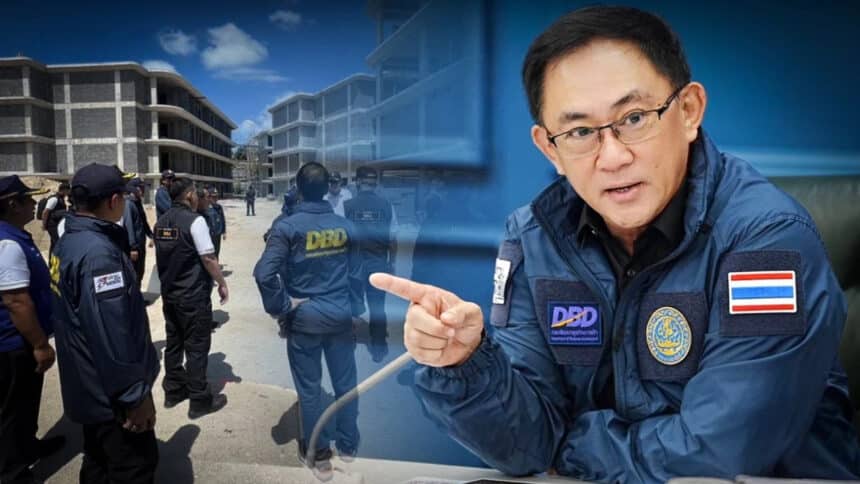
BANGKOK – Thailand’s Department of Business Development has flagged 1,932 companies for formal investigation over suspected illegal nominee shareholder arrangements, targeting foreign-linked firms that may be using Thai proxies to skirt ownership limits.
Officials identified the high-risk firms after screening 16,504 active businesses that list naturalized Thai citizens as shareholders or directors. Joint field inspections with police and anti-money laundering agencies are set to begin immediately, signaling tougher enforcement of the Foreign Business Act across key commercial hubs.
Key Takeaways• Regulators screened 16,504 active Thai firms involving naturalized citizens and flagged 1,932 for deeper inspection. • Authorities are preparing coordinated on-site raids with law enforcement to uncover hidden foreign control and proxy equity. • Real estate, construction, hospitality and trading firms in Bangkok and major resort provinces face the heaviest scrutiny. |
Data-Driven Enforcement Follows Nationwide Crackdown
The sweep reflects a sharp escalation in how Bangkok polices corporate registries. Under Prime Minister Anutin Charnvirakul’s nationwide nominee crackdown, commerce officials deployed an artificial intelligence screening platform to cross-check shareholder filings against tax, immigration and social security records.
Earlier probes in Phuket, Chonburi and Koh Phangan exposed single Thai individuals holding shares on paper in dozens of foreign-backed companies while earning modest wages. The latest batch of flagged firms clusters heavily in Bangkok and coastal tourist hubs, where land-holding restrictions often tempt overseas buyers into using local stand-ins.
Illegal Proxies vs. Lawful Foreign Ownership
Under the Foreign Business Act of 1999, foreign nationals are generally capped at 49% equity in restricted service, trading and land-linked sectors. A nominee arrangement occurs when a Thai citizen holds the remaining 51% strictly on paper, using money supplied by a foreign partner while exercising zero voting power or financial risk.
Convictions carry up to three years in prison, fines reaching 1 million baht and court-ordered dissolution. Real estate brokerages, construction contractors, restaurants and wholesale traders sit at the top of the inspection list.
Lawful operators do not need workarounds. Foreign investors can secure 100% ownership through Thailand Board of Investment promotion, apply for a Foreign Business License or claim treaty protections. Companies partnering with Thai nationals must keep clear bank trails proving local shareholders funded their own shares and actively participate in board decisions.