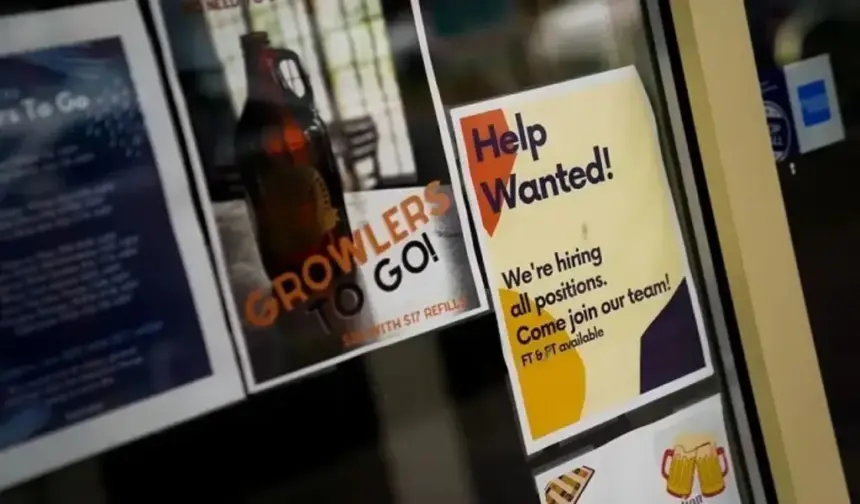
US employers added jobs at the fastest pace in eight months in September, strengthening the case for the Federal Reserve to keep interest rates high or raise them again.
The Labor Department’s employment report showed that nonfarm payrolls grew well beyond economists’ expectations. It also revised job gains for July and August sharply higher, adding to evidence that economic activity picked up in the third quarter.
The report followed other signs of continued labor demand. Applications for unemployment benefits remained low in September, while job openings rose in August. Eighteen months after the Fed began raising rates to cool demand, the figures suggest monetary policy may stay restrictive for some time.
Treasury yields rise
Long-term US Treasury yields have reached their highest levels in 16 years. As a result, many economists believe the Fed may have finished raising rates.
“There’s a new tightening of financial conditions that does some of the work for the Fed, so it’s not a done deal for the Fed to hike rates again,” said Kathy Bostjancic, chief economist at Nationwide.
Nonfarm payrolls increased by 336,000 in September, the biggest monthly gain since January. The economy added 119,000 jobs across July and August, while economists surveyed by Reuters had forecast a gain of 170,000 for September. About 100,000 new jobs a month are needed to keep pace with growth in the working-age population.
Some economists suggested that data adjustments related to education workers returning to work may have lifted the payroll figure. However, private-sector employment also rose by 263,000.
“The surge in teachers hired in September cannot be compared to the strength in payrolls now stretching back to July,” said Chris Low, chief economist at FHN Financial in New York.
Leisure and hospitality added 96,000 jobs, including 61,000 in restaurants and bars. Employment in that industry returned to its pre-pandemic level. State and local governments, including education, added 73,000 jobs, though government employment remained 9,000 below its pre-pandemic level. Healthcare gained 41,000 jobs in hospitals, nursing homes, and residential care facilities.
Employment also grew in professional, scientific, and technical services. Transportation and warehousing, retail, and construction added jobs despite high mortgage rates.
The United Auto Workers’ strike against General Motors, Ford, and Stellantis began after the government surveyed businesses for the report, so it did not affect September payroll figures. Manufacturing employment rose by 17,000. Meanwhile, the Hollywood writers’ strike, which lasted for months, ended after costing the industry 7,000 jobs.
Wall Street stocks rose, while the US dollar weakened against a basket of currencies. Yields on 10-year and 30-year Treasury bonds reached levels last seen in 2007, pushing bond prices lower.
“It feeds into the higher (rates) for longer story,” said Gina Bolvin, president of Bolvin Wealth Management.
Unemployment rate holds steady
Slower wage growth offered some relief to policymakers seeking signs that labor-market pressures are easing. Average hourly earnings rose 0.2% in September, matching August’s increase. Annual wage growth slowed to 4.2% from 4.3%.
The moderation may partly reflect the large number of lower-paying jobs added during the month. Wages are still rising faster than the Fed’s 2% inflation target, although fewer workers are quitting their jobs for better opportunities, which could help slow wage growth.
Markets expected the Fed to hold rates steady at its October 31 to November 1 policy meeting, though the chance of another increase had grown. Inflation data due the following week could provide further clues. Since March 2022, the Fed had raised its benchmark overnight rate by 525 basis points.
Household employment rose modestly in September as more people entered the labor force, leaving the unemployment rate unchanged at 3.8%. However, the number of people working part time fell by 156,000.
The broader unemployment rate, which includes people who want work but have stopped looking, declined to 7.0% from 7.1% in August. The duration of unemployment also fell for some workers.
Economists estimated that the US economy would grow at a 4.9% annualized rate in the third quarter, more than twice the roughly 1.8% pace Fed officials consider consistent with stable inflation.
“Despite slower wage growth for most workers, the still-solid rate of hiring suggests that aggregate incomes from the labor market continue to grow at a decent clip, which should help consumers spend more,” said Sarah House, a senior economist at Wells Fargo in Charlotte, North Carolina.