
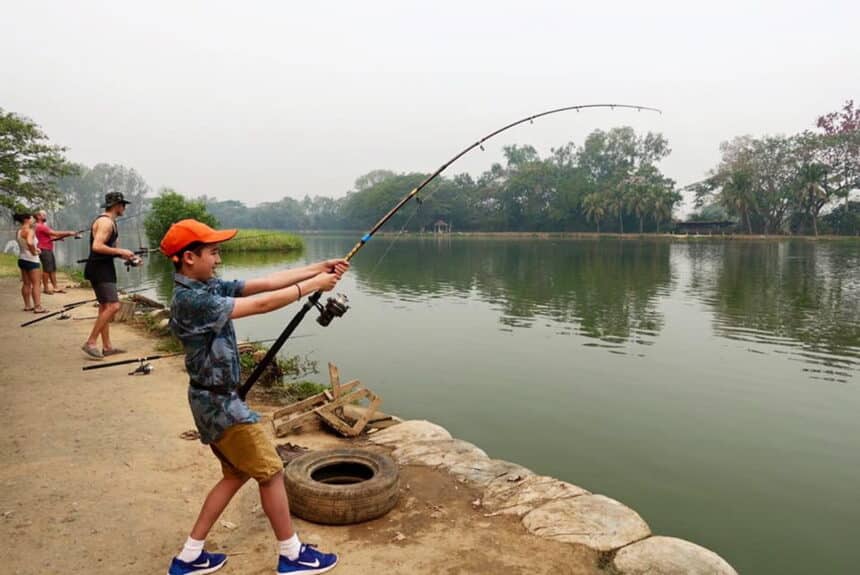
A stocked lake in Northern Thailand can make for an easy day outdoors, whether you want to cast a line on your own or book a guided session. Each park sets its own prices and rules, and what’s included, from rods and bait to guide support, can vary along with the fish species.
Public lakes and rivers offer a different kind of outing than a managed fishing park, so it helps to know what you’re booking. For example, Chiang Saen Lake’s birdwatching area is a public wetland setting, not a stocked fishing park. Compare the costs and practical details before choosing a lake that fits your plans.
Key Takeaways
- Northern Thailand fishing parks set their own rates, so compare the total cost before choosing a lake. Check whether the price covers admission, fishing gear, bait, and guide support.
- Confirm the booking details directly with the park, including session length, fish species, catch rules, and what you need to bring.
- Guided trips can simplify planning, but ask whether transport, equipment, and meals are included before paying.
- Fishing rules can vary by location and season. Check for local closures before you go, including the annual spawning-season restrictions reported for Chiang Rai and Chiang Mai.
Fishing Parks in Northern Thailand: Prices and Tips
Fishing parks around Chiang Mai and Chiang Rai offer a managed alternative to casting in public lakes or rivers. Each venue sets its own rates, booking terms, and facilities, so compare the full cost and ask what your session includes before you travel.
What a day at a stocked fishing lake is like
A typical visit takes place at a private lake stocked with fish for recreational angling. Local staff may provide bait, arrange equipment hire, or help visitors choose a fishing spot. Some venues also offer an optional guide, which can be useful if you’re unfamiliar with the lake or local fishing methods.
The setup varies by park. One may have shaded seating and food service, while another keeps things simple with basic facilities and gear available to rent. Fishing rules differ too, including which bait or tackle you can use, whether you can keep a catch, and how long a session lasts. Confirm those details when booking, along with the fish species, equipment costs, and whether transport is included.
Because public waters don’t operate like stocked commercial lakes, check that a listing is actually a fishing park before you plan around it. Public lake access may have different local restrictions and won’t necessarily provide staff, rental gear, or stocked-fish expectations.
How to choose between Chiang Mai and Chiang Rai
Start with your base, then look for a venue that fits within a comfortable day trip. A park near your hotel can save hours on the road and make it easier to arrive for an early session. That convenience may matter more than choosing a particular city.
Chiang Mai and Chiang Rai also suit different itineraries. If you’re already staying in Chiang Mai, consider a nearby lake and keep the rest of the day for local activities. Chiang Rai makes more sense when it fits your lodging or planned stops. The road trip between the cities takes several hours, so a fishing session in one city is rarely a simple side trip from the other. Check Chiang Mai to Chiang Rai travel options before building that transfer into your schedule.
When comparing parks, ask for the total price per person and confirm the session length, gear and bait fees, guide availability, and deposit or cancellation terms. A clear written confirmation helps prevent surprises on arrival.
How much do fishing parks in Northern Thailand cost?
Fishing park prices depend on what the session includes. A package with transport, gear, bait, and a guide costs more upfront than a basic lake entry, but it can make the total easier to predict. As of November 16, 2026, one Chiang Mai park lists a specific full-day package; prices at other parks should be confirmed directly.
Compare entry, rod hire, bait, and guide fees
Go’B Fishing Park lists its 9 a.m. to 5 p.m. fishing package at 2,500 THB. The park’s package page says that price includes hotel pickup and drop-off, one rod, bait, tackle, an English-speaking guide, meals, and soft drinks. Check the full-day Go’B fishing package for the listed inclusions and booking terms before paying.
That package is a useful example, not a standard rate for Northern Thailand. Other parks may charge separately for entry or a session, then add equipment rental, bait, guide service, or food. They may also include some of those items in a bundled rate. Ask whether the quoted price is per angler, whether a second rod costs extra, and whether non-fishing guests pay an admission or meal fee. Go’B’s page also lists a 100% reservation deposit, so confirm the payment and cancellation terms when booking.
Plan for the full cost of your fishing day
Start with the park’s confirmed price, then add any costs it excludes. If transport isn’t included, ask the venue for a pickup quote or check the cost of getting there and back. Add meals and drinks only if the package doesn’t cover them, and budget separately for any extra guest or equipment charges. This simple calculation helps compare a low entry fee with a higher all-inclusive package:
Fishing price + transport + food and drinks + extras = estimated day cost
For a separate Chiang Rai outing, the Chiang Rai backpacking budget can help you estimate everyday meals and local transport. Treat those figures as general travel costs, not fishing-park rates or a taxi quote to a specific lake. Before booking, request a written total that names the session length, included services, deposit, and any extra fees.
How to book the right fishing park for your trip
The right fishing park depends on what you want to catch, how much support you need, and how easily you can reach the lake. Before paying, compare the park’s current details with your skill level and travel plans. Listings can become outdated, and fish stocks, facilities, and conditions may change.
Check fish species, facilities, and access
Ask which species are being caught lately, not only which fish the lake stocks. A park may have several species, but activity can vary with season, water conditions, and recent stocking. If you have a target fish in mind, confirm it’s present and ask what tackle or bait works there.
Check the rules for keeping or releasing a catch, including any handling instructions. Park policies can differ, and Thailand’s fisheries guidance warns that releasing some aquatic species may be restricted. Ask staff what to do with each catch, and review the guidance on releasing aquatic species if you need more context.
Facilities also shape the day. Confirm whether the lake has shade, seating, restrooms, food, and drinking water, especially if you’re bringing children or spending several hours there. Then check the exact location and transport options. A park that looks close on a map may require a private car or a long taxi ride. If Chiang Mai is part of your route, use this Chiang Mai travel guide to plan around your stay and other activities.
Ask these questions before you reserve
Contact the park directly before sending a deposit. Recent reviews can flag changes in service or access, but confirm important details with staff because reviews may describe a different season or package.
Ask about:
- Opening hours, session length, and whether you need to book ahead.
- Deposit requirements, accepted payment methods, and cancellation or rescheduling terms.
- Whether rods, reels, tackle, and bait are included, and what extra gear costs.
- Guide support, including whether someone can help beginners choose tackle or fish a spot.
- Rules for non-fishing guests, including whether they can watch and whether they pay an entry fee.
Request the total price and inclusions in writing, especially if you’re booking through a tour operator. That confirmation gives you a clear record of the agreed session, equipment, and payment terms before you travel.
Simple tips for a smooth fishing day
A little preparation can make a long session at a Northern Thailand fishing park more comfortable. Pack for the weather, confirm what the park provides, and follow staff instructions once you arrive.
Pack for heat, rain, and a long session
Fishing often means spending hours outdoors, so bring sun protection, a wide-brimmed hat, and enough drinking water for the session. Insect repellent can help around lakeside areas, while a light rain jacket or poncho is useful if showers are in the forecast. Choose breathable clothing and comfortable footwear that can handle damp ground.
Before packing rods or tackle, ask the park whether your booking includes them. Some venues provide gear and bait, while others charge extra or expect anglers to bring certain items. Confirm what is supplied, including hooks and any recommended tackle, so you avoid carrying unnecessary equipment or arriving without something required.
If you plan to use sunscreen or insect repellent near the water, choose products with lower environmental impact where possible. These eco-friendly travel tips for Chiang Rai include ways to reduce waste and choose river-safe toiletries.
Follow fish handling and park rules
Rules can differ from one fishing park to another, even within the same region. A venue may require barbless hooks, restrict certain bait or rigs, or set specific procedures for releasing fish. Ask staff about these rules before your first cast, and check whether the park requires catch-and-release for particular species.
When releasing a fish, follow the staff’s instructions and handle it gently. Keep it in the water as much as possible, avoid squeezing or holding it by the gills, and return it promptly. Some parks publish detailed handling guidance, such as Exotic Fishing Thailand’s fishery rules, but treat those as that venue’s policies, not a region-wide standard.
Listen to staff if they ask you to change tackle, move spots, or stop fishing in an area. Their directions reflect the park’s rules and the needs of its fishery. When in doubt, ask before handling a catch or changing your setup.
Frequently Asked Questions
Before you reserve a session, check the details that affect your group and your plans for the day. Fishing parks set their own rules, so confirm answers directly with the venue rather than relying on assumptions or old listings.
Do I need fishing experience to visit a park?
No. Some venues welcome beginners and may provide basic instruction, recommend a fishing spot, or offer equipment hire. However, support and rental gear aren’t guaranteed, so ask what help is available and whether it costs extra when you book. If you’ve never fished before, mention that in advance so staff can recommend a suitable session.
Can I bring my own rod and bait?
Often, but park policies vary. One venue may allow personal rods while restricting certain hooks, rigs, or bait; another may require anglers to use its own tackle. Check the rules for each item before you pack, and ask whether staff can inspect or approve your gear when you arrive. That prevents a last-minute change to your setup.
Is fishing in a park suitable for children?
It can be, if the venue allows children and your group can supervise them closely. Ask about age limits, adult supervision requirements, barriers or other safety measures near the water, and whether children can fish or only watch. Also check for shade and seating, since a long session in the sun may not suit younger kids.
Do fishing parks provide transport from Chiang Mai?
Transport depends on the venue and booking package. Some parks may arrange a pickup for an additional fee, while others expect visitors to travel independently. Before confirming, ask whether pickup is available from your hotel or neighborhood, what time the driver collects guests, and how much the round trip costs.
Can I keep the fish I catch?
Don’t assume you can take a fish home. Many stocked parks require catch-and-release or set limits on which fish anglers may retain, and staff may give instructions for handling each species. For example, Thailand-Fishing’s venue FAQ says most fish there follow a catch-and-release policy. Ask your chosen park what applies before casting.