
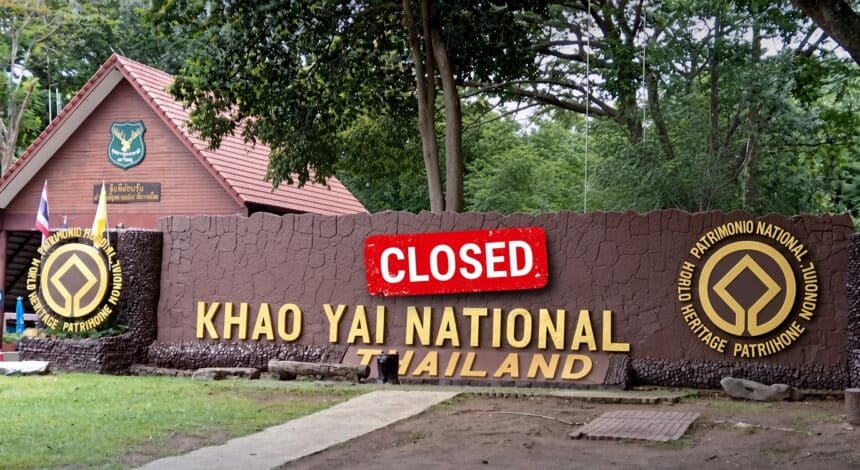
A national park or attraction in Thailand can be closed even when the rest of the country is open. Some closures follow a seasonal schedule, while others affect only a trail, waterfall, island, or bay; bad weather can also trigger restrictions at short notice.
Before you book or set out, check the latest status for the exact place and activity you have planned. A guide to checking Thailand national park closures can help you understand why a park’s general status may not tell the whole story.
Key Takeaways
- Thailand has no single annual shutdown calendar. The official seasonal closure guidance says dates vary by park and local weather.
- Check the exact attraction, since a park may stay open while a trail, waterfall, bay, or accommodation closes.
- Treat seasonal dates as a starting point, then confirm with the park or its Protected Areas Regional Office, especially near a scheduled change.
- Heavy rain or rough seas can trigger short-notice restrictions, even after a seasonal reopening date.
- Before traveling in the rainy season, review how weather affects park access in Thailand and check for a newer notice about your planned route.
Thailand National Park Closures Vary by Park and Attraction
Thailand has no single closure calendar for all national parks. Seasonal schedules, temporary safety decisions, and site-specific restrictions can affect access in different ways, so check the exact park and attraction before you travel.
Seasonal closures protect islands, trails, and wildlife
Some parks close during the rainy season, when rough seas make boat trips unsafe or heavy rain raises the risk of flash floods and landslides. These breaks can also give habitats time to recover and protect wildlife during sensitive periods. A seasonal closure may cover a marine park, a popular trail, or selected visitor activities rather than every area within a park.
Dates can differ between parks and change from year to year. For example, past rainy-season closures in Chiang Rai offer useful context, but those dates do not confirm current access. Treat old schedules as planning clues, then verify the latest notice with the park or its responsible Protected Areas Regional Office.
Bad weather can trigger short-notice restrictions
A park may also close a particular waterfall, trail, viewpoint, or bay after flooding, rough seas, or other unsafe conditions. These temporary restrictions can happen outside the site’s usual seasonal closure period. Officials may keep the rest of the park open while blocking access to the affected area.
That distinction matters when you’re planning a day trip: a closed trail or bay does not always mean the entire park is closed. Check the status of the specific place and activity you intend to visit, not just the park’s general listing. Then check again close to departure, since conditions and local notices can change after heavy rain.
How to Check Thailand National Park Closures Before You Travel
Once you know why closures happen, check the status of the place and activity you have planned. Start with the Department of National Parks, Wildlife and Plant Conservation (DNP), then confirm details with the park or its responsible Protected Areas Regional Office. The official seasonal closure guidance notes that dates vary by park and location.
Search for the specific trail, island, or bay
Look up the exact attraction, not just the park name. A park may remain open while a trail, waterfall, island, or bay is off-limits. Restrictions can also apply to only certain activities, such as boat visits, overnight stays, or access to a specific route.
Read the notice closely to see what it covers. For example, a statement that a marine park is open may not confirm that every bay is accessible or that boats can land there. If the notice is unclear, ask the park whether your planned activity is allowed on your travel date.
Confirm dates directly when schedules disagree
Check with the park or its regional office if your visit falls near a seasonal opening or closing date. Do the same when two online schedules list different dates. Published information can vary, and a planned reopening date does not guarantee that officials have cleared every site for visitors.
Use contact details published by the DNP, the named park, or the responsible Protected Areas Regional Office. Avoid relying on old posts or third-party listings as final confirmation. Ask about the exact attraction, activity, and date, especially if your plans depend on a boat trip or overnight stay.
Check again before departure and on the day
After booking, look for newer weather and safety notices. Check again the day before travel and before leaving, since heavy rain, flooding, or rough seas can prompt short-notice restrictions. For broader rainy-season planning, see this advice on traveling in Thailand during the rainy season.
If you’re taking a boat or guided tour, ask the operator to confirm that official access remains open. However, use that confirmation alongside a current park notice, not as a replacement for one. When the latest official status is unclear, contact the park before setting out.
What 2026 Closure Dates Mean for Popular Parks
Published 2026 schedules show why park closure dates need checking at the site level. Some dates conflict, and a seasonal reopening does not guarantee access if weather or local conditions prompt new restrictions.
Similan and Surin Islands reopen after the monsoon season
Published schedules list the seasonal closure for Mu Ko Similan and Mu Ko Surin as beginning May 15 or May 16, 2026, and ending October 14 or October 15. The parks were reported reopened on October 15, but that date alone doesn’t confirm boat access or conditions for your planned visit. Check the seasonal opening dates for the Similan Islands and confirm with the park before booking.
Mu Ko Ang Thong has conflicting November end dates
One 2026 schedule lists tourism and accommodation at Mu Ko Ang Thong National Marine Park as closed from November 1 through December 15. Another gives November 1 through November 30. Because the dates disagree, November travelers should contact the park directly before booking a visit. A 2026 Thailand travel schedule lists the longer closure period, but it shouldn’t replace confirmation from park officials.
Doi Inthanon and Khao Yai can have site-specific closures
Doi Inthanon’s 2026 schedule listed Kew Mae Pan Nature Trail and Namtok Lan Sadet as closed from June 1 through October 31. That restriction applied to those sites, not the entire park. Flooding can also lead officials to close individual attractions, as reported for Doi Inthanon trails and waterfalls.
Parts of Khao Yai have also faced temporary flood-related restrictions. Check the latest park notice for the specific attraction and access route, even if the park is generally open. A Khao Yai flood closure report illustrates how quickly severe weather can affect access.
Keep Your Trip Flexible if a Park or Attraction Is Closed
A closure can affect one trail or activity without shutting the whole park. Keep room in your itinerary for a change, and check booking terms before you commit to tickets, transport, or a tour.
Ask what your booking covers before paying
Confirm whether your booking includes park entry, transportation, accommodation, or access to a specific attraction. Then ask what happens if an official closure prevents the planned visit. Depending on the ticket or tour terms, you may be able to reschedule, request a refund, or choose another stop, but these options vary by provider.
Get the answer in writing and save your confirmation, receipt, and the booking’s cancellation terms. If the closure also disrupts transport or a prepaid stay, check your policy carefully. Travel insurance for disrupted Thailand trips may explain what a policy covers, but a park closure alone does not guarantee reimbursement.
Choose a backup that is open and safe
Leave a flexible day or a few open hours in your itinerary, especially during the rainy season. If your planned attraction closes, consider a different activity or a nearby site only after checking its current status with the responsible park or official source. Thailand’s official seasonal closure guidance notes that closure periods vary, so don’t assume a nearby attraction is open just because the main park is closed.
If a trail, bay, waterfall, or island is restricted, follow the closure notice. These limits protect visitors and natural areas; they are not an invitation to enter by an unofficial route. Ask your operator or accommodation about an allowed alternative, then verify that destination independently before changing plans.
Frequently Asked Questions
A closure notice can leave practical questions, especially when you have already booked or a holiday falls during your visit. These answers can help you decide what to verify before you go.
Can a tour operator take me into a closed park area?
No. A tour operator cannot override an official closure, even if the trip is already scheduled or an alternative route seems available. Follow park staff instructions and don’t enter a restricted area by boat, trail, or another unofficial route.
Does a national park closure always affect overnight stays?
No. Restrictions can apply differently to day visits, overnight accommodation, and particular activities. Read the notice to confirm exactly what it covers, and ask the park or your accommodation provider if the wording is unclear.
Can a park close after I have already booked?
Yes. Officials may restrict access after you book if weather or safety conditions change. Check the park’s latest notice, then review your tour, hotel, or ticket provider’s change and refund terms, since options depend on your booking.
Are national parks open on public holidays?
A public holiday doesn’t guarantee access. Opening depends on the park’s current schedule and any safety restrictions in effect that day. For example, Chiang Rai park opening schedules and visitor guidance notes that access and reservation rules can differ by location.
Should I trust an old closure notice I found online?
Treat an old notice as historical information, since it may describe a past season or dates that no longer apply. Compare its dates with a current official seasonal closure schedule, then confirm with the park if your visit falls near a listed closure or reopening date.