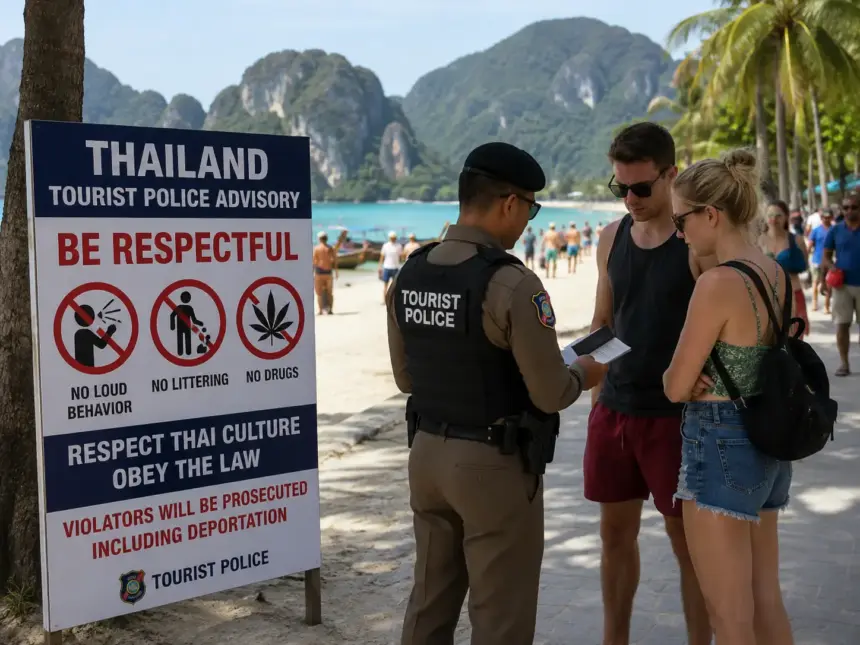
BANGKOK — Thailand’s Tourist Police Bureau launched a nationwide high-season enforcement operation on Nov. 14 targeting travel scams, overcharging and theft across major destinations. Officers are also monitoring crowded venues for water accidents and fireworks injuries as peak-season arrivals surge.
Tourist Police Commissioner Pol. Lt. Gen. Phongsiam Meekhanthong initiated the drive during a live broadcast from Hua Hin linking all 33 stations nationwide, deploying 115 officers into local markets at the start of the push. While commanders outlined clear enforcement targets ahead of seasonal festivals, officials released no arrest totals, seizure counts or crime reduction figures in their initial report.
Key Takeaways
- Patrols began Nov. 14 across all 33 Tourist Police stations to curb scams, price gouging, theft, water hazards and fireworks injuries.
- Authorities have announced operational goals only; no verified arrest numbers or enforcement outcomes have been published.
- Visitors and foreign residents can reach multilingual dispatchers around the clock by dialing 1155 or using the official mobile app.
Why High-Season Patrols Target Festival and Transit Bottlenecks
November marks the sharp pivot from Thailand’s rainy months into the dry peak travel window, coinciding with crowded riverside Loy Krathong gatherings. According to a government public safety briefing, the bureau coordinates closely with the Immigration Bureau and local police to manage seasonal bottlenecks at piers, night markets and transit hubs.
Historically, dense holiday crowds create prime conditions for opportunists running “closed attraction” detours, unmetered taxi markups and unlicensed tour bookings. At the same time, packed waterways and informal firecracker sales elevate physical injury risks near canals and beaches, prompting commanders to pair anti-fraud patrols with crowd and water-safety checks.
That distinction between patrol deployment and proven results matters for local businesses and residents. Announcing visible street sweeps deters brazen street touts, yet without published prosecution data or fine tallies, community observers cannot yet measure whether repeat offenders are being permanently removed from major tourist zones.
Practical Steps for Foreign Residents Hosting Visitors
Long-term foreign residents often serve as the first line of defense when friends or relatives visit Thailand. If a guest is overcharged, robbed or pressured at a storefront, call the 24-hour Tourist Police hotline at 1155 immediately. Dispatchers operate around the clock in eight languages, including English, Chinese, Japanese, Korean and Russian, and can route nearby officers to mediate disputes or escort victims to file formal reports.
Speed and documentation determine how effectively police can act. Guidance from the U.S. Embassy in Thailand advises victims to preserve receipts, vehicle license plate numbers, business cards and exact street locations before leaving a scene. Residents can also help guests submit geo-tagged incident reports through the Thailand Tourist Police smartphone application.
Before booking excursions or boat charters, verify that operators display a valid Department of Tourism license number and confirm total prices in writing. Avoid street touts claiming a temple or market is closed for a special ceremony, and rely on metered taxis or established ride-hailing apps with upfront fare tracking. If a dispute involves credit card charges, contact the card issuer immediately alongside filing a 1155 police log.