Exchange money rates and fees in Thailand can vary widely, so the most convenient counter may give you less baht than one a short walk away. Independent exchange counters in major cities, including SuperRich and Vasu Exchange in Bangkok, are worth comparing, but the best deal depends on the day, branch, and currency.
Before you exchange, compare how much baht you’ll receive after any fees, not just the posted rate. A small amount from an airport counter can cover immediate expenses; for a larger exchange, use these tips to find a better quote and avoid unnecessary costs. Learn more about today’s Thai baht exchange rate as you compare your options.
Key Takeaways
- Compare the total baht you’ll receive for the same amount of cash, including any commission or other fees, instead of relying on the posted rate.
- Airport counters are convenient for a small amount of spending money; airport exchange counters near Bangkok’s Airport Rail Link may offer better rates than some terminal desks.
- For larger exchanges, compare rates at established counters such as SuperRich or Vasu Exchange, and check the specific branch and your bill denominations.
- If you withdraw cash, include ATM and card issuer fees in the cost; review tips for comparing Thai baht exchange rates and fees.
- Use licensed exchange counters, count your baht before leaving, and keep the receipt.
Where to Exchange Money in Thailand for the Best Rates
Independent exchange counters in major cities often offer better rates than hotel desks or airport counters, especially when you’re exchanging a larger amount. Still, no provider guarantees the best quote every time. Rates change by currency, location, branch, and day, so compare the amount of baht you’ll receive before choosing a counter.
Compare SuperRich, Vasu Exchange, and other trusted counters
In Bangkok, SuperRich and Vasu Exchange are established options to check alongside other licensed exchange counters. SuperRich’s familiar green and orange brands are separately operated businesses, not branches of one company. Their quotes can differ, and rates may also vary between branches of the same brand.
Vasu Exchange is another well-known Bangkok counter. Its quote, like any provider’s, depends on the currency and current rate. Before making a special trip, check the branch’s hours and location, then compare the latest posted rates. SuperRich also publishes current exchange rates online, but confirm the rate at the branch before handing over cash.
Compare the same amount of the same currency at each counter, and ask about any commission or fee. The posted rate may apply only to certain bill denominations or conditions. Check that your foreign notes are clean and undamaged, since a counter may refuse worn or marked bills. For a quick refresher on local cash, see this guide to Thai currency notes and coins.
Use the airport for convenience, not a large exchange
Airport desks can help you get enough baht for a train ticket, taxi, or meal after landing. However, their rates are often less competitive than city counters, so exchange only what you need right away if the quote looks poor.
At Bangkok’s Suvarnabhumi Airport, travelers often compare counters in the lower-level exchange area near the Airport Rail Link. Check the actual posted quote before exchanging, since rates and branch availability can change. The airport counter’s displayed rate, rather than a rate you saw online, determines how much baht you receive.
Know when a bank or hotel counter makes sense
Banks and hotel counters can be convenient when you’re nearby or need an exchange outside a specialist shop’s hours. However, convenience may come with a less favorable quote, and banks may require identification or additional paperwork. Policies and rates vary by provider, branch, and currency, so don’t assume every bank charges the same way.
Hotel desks are useful when you need cash quickly, but compare their quote with a nearby licensed counter before exchanging a larger amount. If the difference is small, saving the extra trip may make sense. For a substantial exchange, check the total baht offered after fees and choose the option that gives you the clearest, best-value transaction.
How Thailand’s Money Exchange Options Compare
The best option depends on where you are, how much cash you need, and the full cost of getting baht. Exchange counters can suit larger cash exchanges, while ATMs and cards offer convenience if their fees and conversion rates are clear.
Exchange foreign cash at a licensed counter
At a licensed counter, check the posted buy rate for the currency you’re selling. Then compare nearby counters using the same currency and amount, since even branches of one company may quote different rates. Ask whether any commission or other charge applies before handing over your notes.
Some counters offer better rates for clean, undamaged bills or larger denominations, but policies vary by provider and currency. A counter may reject notes with tears, stains, or writing, so inspect your cash before the transaction. If staff request your passport, show it and complete the exchange. Finally, count the baht and check your receipt before leaving.
Withdraw baht from an ATM only after checking the fees
ATMs are easy to find, but a withdrawal can include a local ATM fee, a charge from your home bank, and a currency-conversion cost. Check the ATM screen for the local fee before accepting, and confirm your bank’s foreign withdrawal and transaction fees before traveling. Fee amounts can change, so don’t rely on an old quoted figure. For more detail, see Thailand ATM fees for foreign cards.
If the ATM offers to convert the withdrawal into your home currency, choose to be charged in Thai baht instead. That lets your card network or bank handle the conversion, rather than accepting the ATM operator’s rate, which may include a markup. The guide to saving on Thai ATM fees also explains why choosing the local currency can help avoid an extra conversion charge.
Pay by card when the total cost is clear
Cards are practical at hotels, larger shops, and restaurants that accept them. Small vendors, market stalls, and taxis may prefer cash, so keep some baht on hand even if you plan to pay by card.
When a terminal offers a choice between Thai baht and your home currency, select baht. The home-currency option is dynamic currency conversion, where the merchant or payment processor sets the exchange rate and may add a markup. Before confirming, check the displayed total and remember that your card issuer may also charge a foreign transaction fee.
How to Get a Better Exchange Rate in Thailand
A better exchange rate comes from comparing the final amount of baht, not from chasing the highest number on a board. Use the same amount and currency at each counter, check fees and bill requirements, then exchange only what you need.
Compare the amount of baht you will actually receive
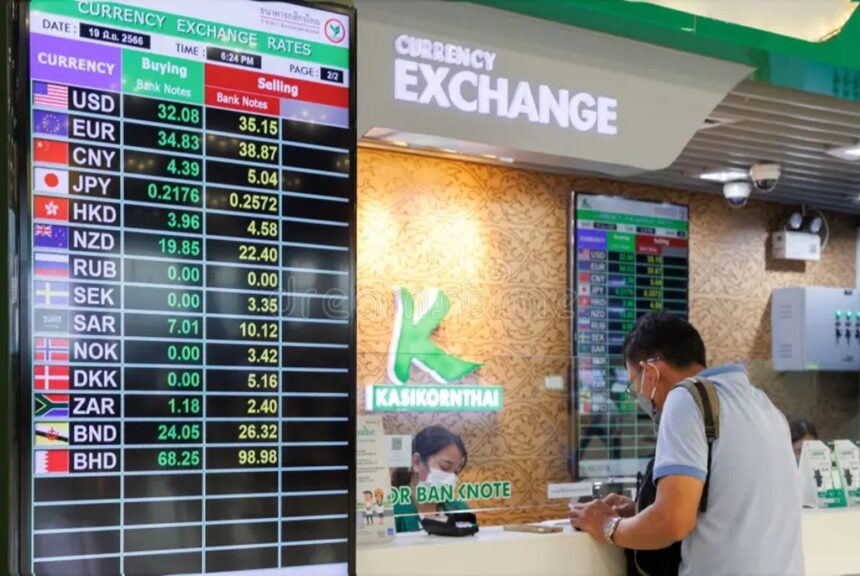
Exchange boards may list separate rates for buying and selling a currency. If you’re handing over US dollars or another foreign currency, look for the buy rate, which is the rate the counter offers to buy your cash. Ask staff to confirm the total baht you’ll receive after any commission or fee.
For example, suppose you’re exchanging $500. One counter quotes 35 baht per dollar but deducts a 100-baht fee, leaving you with 17,400 baht. A nearby counter quotes 34.9 with no fee, giving you 17,450 baht. The lower posted rate is the better deal in this case. Compare the same amount at two or three nearby counters, and compare cash exchange rates in Chiang Mai if you’re exchanging there.
A small difference may not justify a long detour. Compare nearby options, consider the time and transport involved, and choose a clear offer that gives you a fair total.
Exchange only what you need and keep a backup payment method
Exchange a modest amount at a time, especially before leaving Bangkok or another large city. That gives you enough cash for everyday purchases without carrying more than you need. Keep a card or a separate cash reserve in a different place, so one lost wallet doesn’t leave you without a way to pay.
Smaller towns and islands may have exchange services, but rates, locations, and opening hours can be less convenient. Check your options before you travel onward, and avoid relying on one counter being open when you arrive.
Bring the right cash and documents
Before visiting a counter, check that it accepts your currency and ask what identification it requires. Carry your passport, since some providers request it for an exchange. For instance, Linda Exchange’s currency exchange FAQ lists a passport as accepted identification; requirements can differ, so confirm with your chosen counter.
Keep your foreign notes clean and untorn. Providers may set different rules for note condition and denominations, and some may offer different rates for larger bills. Ask about those rules before handing over cash, then check the baht and receipt before you leave.
Common Money Exchange Mistakes to Avoid
A rushed exchange can cost you money even when the posted rate looks reasonable. Avoid making a large conversion before checking nearby options, and take a moment to confirm every transaction before you leave.
Do not exchange a large amount at the first airport counter
Airport counters are convenient after a flight, but their rates may be less favorable than those at city exchange shops. Exchange only enough for immediate expenses, such as transport or a meal, then compare rates in town before converting more.
Also, check the counter’s hours before you rely on it. A desk may be closed when your flight arrives, especially late at night or early in the morning. If you need cash right away, have a backup payment method ready. For safer transactions, use a staffed, established counter and follow these tips for exchanging cash safely in Bangkok.
Check the receipt and count your baht before leaving
Before handing over your foreign cash, confirm the exchange rate and ask whether the counter charges a separate fee. Once staff complete the transaction, check the receipt for the currency exchanged, rate, fees, and total baht.
Then count the notes at the counter, where staff can correct a discrepancy immediately. Keep the receipt until you’ve confirmed the amount and finished checking the transaction. If anything looks wrong, raise it with the staff before leaving rather than trying to resolve it later.
Avoid accepting a conversion into your home currency
A card terminal or ATM may ask whether you want to see the charge in your home currency instead of Thai baht. This is dynamic currency conversion, or DCC. The merchant or ATM provider sets the conversion rate, which may be less favorable than the rate your card issuer applies.
Choose Thai baht or the option to continue without conversion. Your card issuer will then handle the exchange, though it may charge a foreign transaction or cash withdrawal fee. Check those fees before traveling, and review the conversion details on the screen before you confirm. Visa’s explanation of dynamic currency conversion outlines the information a terminal should display.
Frequently Asked Questions
A few practical details can make it easier to decide when to exchange cash and how much to carry. These answers cover common questions that may come up before or during a trip.
Should I exchange money before traveling to Thailand?
You can bring a small amount of baht for transport or a quick meal after landing, but you can compare exchange options once you arrive. The right choice depends on your arrival time, available payment methods, and how comfortable you feel carrying cash. If you land late, having some baht ready can be convenient.
Can I exchange leftover Thai baht after my trip?
Some exchange counters outside Thailand accept baht, but availability and rates vary by country and provider. Check the exchange shop’s rules before relying on a return exchange, since it may not accept Thai currency or offer a favorable rate. To avoid being left with a large amount, exchange only what you need near the end of your trip.
Is it better to exchange money in Bangkok or on the islands?
Bangkok and other major cities generally have more counters to compare, while smaller islands may offer fewer locations or less convenient hours. Before heading to an island, exchange enough for your initial expenses, but avoid carrying more cash than you can safely manage. Keep a card or another backup payment method separate.
Do Thai exchange counters accept every foreign currency?
No. Counters are more likely to accept commonly traded currencies, but each provider and location sets its own list. Check the branch’s accepted currencies and current quote before making a special trip. For example, Siam Commercial Bank’s foreign exchange rates show rates for specific currencies, but a branch’s services may differ.
Is it safe to carry cash in Thailand?
Carry only the amount you expect to need that day, and split larger sums between secure places rather than keeping everything in one wallet. A money belt or hotel safe can help protect extra cash, while a separate backup card gives you another way to pay if your wallet goes missing. Stay alert in crowded areas, and see these Bangkok cash safety tips for more ways to keep money secure.