
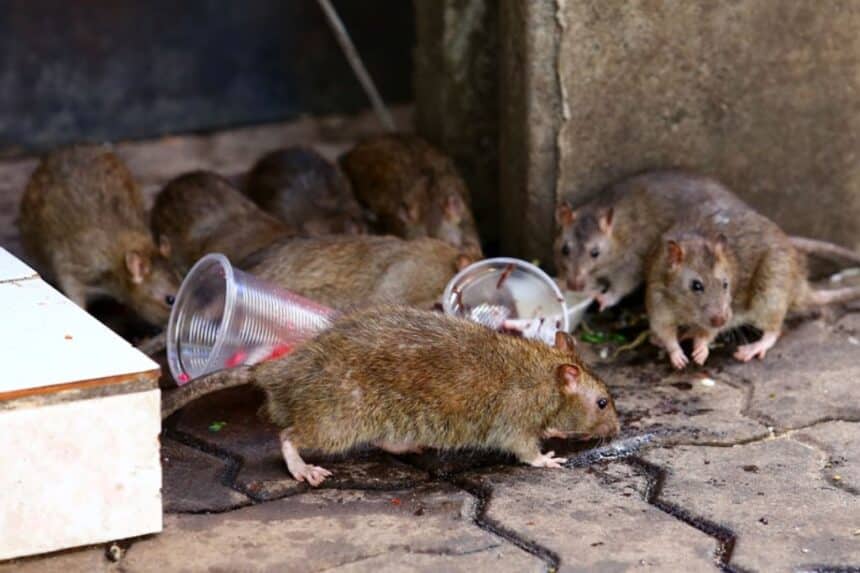
BANGKOK — City officials have launched a targeted rat-control trial across Silom, Yaowarat, Banthat Thong and Sukhumvit, with Din Daeng also joining the effort to curb street-level rodent populations.
According to the Bangkok Metropolitan Administration, uncollected food scraps left on sidewalks overnight provide an easy buffet for urban rats. Crews will deploy surveillance cameras and traps in the five zones to track whether tighter waste rules and targeted trapping actually reduce rodent numbers before City Hall decides on a citywide rollout.
Key Takeaways• Five trial zones — Silom, Yaowarat, Banthat Thong, Sukhumvit and Din Daeng — are testing coordinated trapping and waste enforcement. • City crews are using cameras and traps to measure results, and officials will expand the program only if data shows a clear drop in rats. • Restaurants, street vendors and residents in pilot neighborhoods must use covered bins and keep food waste off curbs overnight. |
Measuring Results Before Any Expansion
City Hall is avoiding promises of an overnight fix. District teams are setting baseline counts using trail cameras and physical traps along busy commercial strips and residential blocks. Officials say the pilot will only move into other Bangkok districts if monitoring proves the strategy works.
The trial matters directly to restaurant owners, street-food vendors, office workers and residents across these dense corridors. Silom and Sukhumvit draw heavy late-night foot traffic, while Yaowarat and Banthat Thong rank among the capital’s busiest dining streets. In Din Daeng, high-density public housing blocks have struggled with persistent infestations for years.
Why Bangkok’s Curbside Trash Feeds the Problem
Bangkok’s rodent problem is tied closely to how garbage moves from kitchens to collection trucks. For decades, shops and apartment buildings stacked tied black plastic bags directly on sidewalks hours before dawn pickups. Rats easily chew through thin plastic, dragging leftovers into storm drains and hollow utility conduits.
Past cleanups show how quickly rodents rebound when food stays accessible. In July 2022, housing officials and city crews caught 118 rats in one week at Din Daeng flats after viral videos showed rodents overruning walkways, prompting Bangkok Governor Chadchart Sittipunt to order emergency sweeps.
The current pilot pairs trapping with City Hall’s broader waste-sorting push, following an October 2025 fee hike to 60 baht a month for households that fail to separate rubbish. Without cutting off the midnight food supply, trapping alone only clears space for neighboring colonies to move in.
How Residents and Vendors Can Cut Rat Food Sources• Separate wet food scraps: Drain liquids and place leftover food into dedicated organic bags rather than mixing scraps with dry paper, plastics or packaging. • Use rigid, covered bins: Store garbage inside hard-sided containers with tight-fitting lids. Thin plastic bags left on pavement offer zero barrier to foraging rats. • Time your curbside drop-off: Hold waste indoors until shortly before scheduled district collection trucks arrive instead of leaving bags out overnight. • Clear alley clutter: Keep cardboard stacks, crates and grease traps away from building walls where rodents nest and travel unseen. |
Trending News:
Why Bangkok Is Sinking and What’s Causing it
Brazilians Busted at Bangkok Airport With 6.8kg of Cocaine