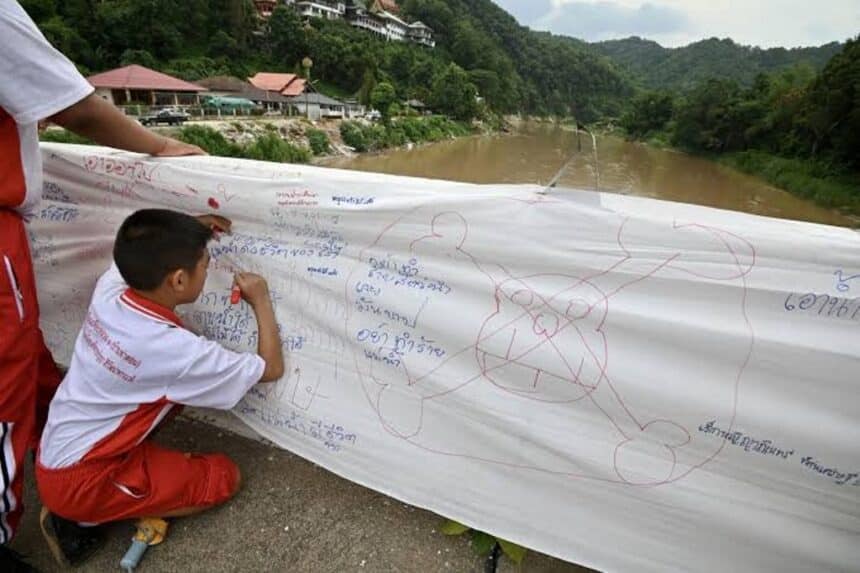
MAE SAI – Residents of Chiang Rai province are rallying today at Wat Tham Pha Chom before marching to the Mae Sai–Tachileik bridge to protest cross-border river pollution. The march starts at 1 p.m. local time, with a deputy prime minister expected at the border crossing to receive their petition.
Protesters want bilateral talks scheduled for Nov. 25 moved from Bangkok to Mae Sai so negotiators see the toxic river firsthand. Mae Fah Luang University lecturer Suebsakul Kitnukon has urged officials to relocate the Thai–Myanmar meeting to the border town and make its terms of reference public.
Key Takeaways• Residents gather at 1 p.m. today, Nov. 22, at Wat Tham Pha Chom and march to the Mae Sai–Tachileik bridge to hand a petition to a deputy prime minister. • Mae Fah Luang University lecturer Suebsakul Kitnukon asked officials to move the Nov. 25 Thai–Myanmar meeting from Bangkok to Mae Sai and publish its terms of reference. • Official water tests found arsenic levels up to 28 times above safety limits in the Sai River, disrupting tap water for over 20,000 households. |
Demands for Open Border Talks
Civic leaders say closed-door talks in Bangkok have failed to stop toxic runoff from entering northern Thailand. Bringing diplomats to Mae Sai forces negotiators to confront the polluted waterway and hear directly from affected families. Suebsakul, a lecturer in Mae Fah Luang University’s School of Social Innovation, said publishing the meeting’s mandate will let citizens verify whether delegates address chemical controls and cross-border mineral trade.
Thai lawmakers have echoed those calls. A House subcommittee on cross-border river pollution recently proposed moving the joint working group meeting from Bangkok to Chiang Rai. Organizers also notified district police of today’s march route from Wat Tham Pha Chom, a hillside temple complex roughly 2.5 kilometers west of the checkpoint, to the First Thai–Myanmar Friendship Bridge.
Upstream Mining Fuels Downstream Crisis
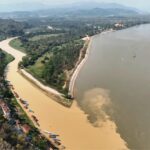
The Sai River forms the natural border between Mae Sai and Myanmar’s Tachileik township before flowing into the Ruak and Mekong river basins. For nearly two years, Thai agencies and residents have tracked heavy-metal contamination linked to unregulated rare-earth and gold mining upstream in Myanmar’s Shan State. Severe monsoon floods in 2024 and 2025 washed mining waste into the river, compounding damage across border neighborhoods.
Laboratory tests reported by Thai media found arsenic levels in the Sai River reaching 28 times the national safety standard. Those spikes forced municipal utilities to suspend tap water production, leaving more than 20,000 Mae Sai households reliant on bottled water and emergency tanks. Irrigation bans along the Kok and Sai basins also threaten 16,000 hectares of rice land, while local markets report vegetable sales plunging by half.
Bangkok has stepped up regional diplomacy ahead of next week’s talks. Thai officials recently raised the river crisis with Beijing through the Lancang-Mekong Cooperation framework, seeking Chinese help to curb discharge from foreign-backed mines in Shan State.
Local residents say diplomatic pledges mean little without cleanup deadlines and trade checks. Suebsakul has urged Thailand to review and suspend mineral imports tied to polluting mines. When the deputy prime minister accepts today’s petition at the bridge, protesters will demand a firm commitment to hold Tuesday’s talks beside the Sai River.