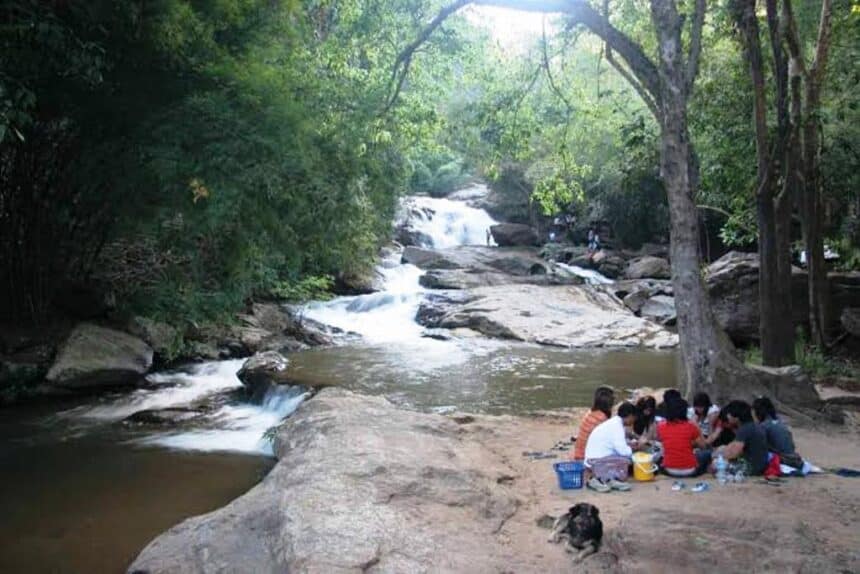
Mae Sa Waterfall slips through a shaded forest near Chiang Mai, with a stream linking a series of cascades inside Doi Suthep–Pui National Park. Visitor information describes 10 numbered tiers, but you can enjoy the lower falls without committing to the full uphill walk.
Use this guide to plan your trip, choose how far to walk, and make safer choices near the water. Fees and operating details can change, so check what’s posted at the park before you set out. For more ideas nearby, browse these Chiang Mai waterfalls and nature spots.
Key Takeaways
- Mae Sa Waterfall has 10 numbered tiers in Doi Suthep–Pui National Park, northwest of Chiang Mai.
- The lower falls are close to parking, while reaching upper tiers requires a steeper uphill walk.
- A signed path links the cascades across roughly 1.07 kilometers, with steps and uneven, slippery sections.
- Visitor listings report entrance fees and daily hours, but confirm current details at the park before traveling.
- Heavy rain can make the pools dangerous or prompt closures, so check Mae Sa Waterfall safety updates and Doi Suthep–Pui National Park information before you go.
Mae Sa Waterfall Guide: What to Expect on the 10-Tier Trail
Mae Sa Waterfall sits in Mae Rim, inside Doi Suthep-Pui National Park, northwest of Chiang Mai. Its 10 numbered cascades follow a forested stream, with a signed route connecting the falls. You can see the lower tiers without making the full uphill walk, so choose your stopping point based on the trail and your comfort on wet ground. The Doi Suthep-Pui National Park guide also covers the park’s waterfalls and forest setting.
How the tiers and trail are laid out
The lower falls are closest to the parking area, making them the easiest place to start. From there, the route continues uphill alongside the stream. Steps, bridges, and short connecting walks link the tiers, with shaded sections under the trees.
A visitor trail listing estimates the route at about 1.07 kilometers and rates it easy to moderate. That rating can understate the effort, though. Uneven ground, damp rocks, and uphill sections can make the walk feel more strenuous, especially after rain. Wear shoes with reliable grip, and take your time on steps and bridges.
You don’t need to reach all 10 tiers to enjoy the waterfall. Many visitors choose a few lower cascades, then turn back when the climb or footing becomes uncomfortable. If you continue, keep an eye on trail signs and follow the route rather than stepping onto slick rocks beside the stream.
What you can do at the pools
At each stop, pause to watch the water move over the rocks, take photos, or rest in the shade. Some visitors wade or swim in the pools, and visitor reports often mention tiers four and five as bathing spots. However, those reports don’t confirm which pools the park officially allows visitors to enter.
Before stepping into the water, check posted signs and ask a ranger if the rules aren’t clear. Conditions can change after heavy rain, when currents may strengthen and rocks around the pools become slippery. Leave the water if a ranger gives instructions or the flow looks unsafe. For changing access and weather-related risks, check Thailand national park closure updates before your visit.
How to Get to Mae Sa Waterfall from Chiang Mai
Mae Sa Waterfall is in Mae Raem, Mae Rim, along the Mae Sa Valley northwest of Chiang Mai. A car or hired vehicle is the most direct way to reach the entrance, though you can check local transport options if you don’t plan to drive.
Driving, ride options, and the Mae Sa Valley route
Plan on about 45 minutes by car from central Chiang Mai. Your travel time will vary with traffic and your starting point, especially if you’re leaving from outside the city center. The usual approach follows Route 1096 through the Mae Sa Valley toward Mae Rim. For another overview of the drive, see this Mae Sa Waterfall access guide.
A rental car gives you flexibility to set your own pace, while a hired driver or taxi can take you directly to the waterfall and wait or return at an agreed time. Confirm the pickup and return plan before you leave, since arranging a ride back from the falls may take time.
Public transportation details are limited, so don’t count on a fixed songthaew service without checking first. Ask locally about routes, pickup points, operating times, and return options before setting out. The Chiang Mai transportation guide offers general tips for getting around the city, but verify the waterfall journey with a local driver or accommodation staff.
Parking, restrooms, and nearby basics
Visitor reports mention several parking areas, toilets, and food sellers near the upper parking area. Parking higher up may reduce the uphill climb to the falls, but availability can vary. Current official information doesn’t confirm which facilities are open or where parking will be available on a given day.
Bring water and a small snack rather than relying on vendors. You may find food near the parking area, but sellers and supplies aren’t guaranteed. Also, keep in mind that parking close to the upper tiers can shorten the walk while still leaving uneven, sometimes slippery paths to navigate. Choose a parking spot that suits your comfort and follow posted directions at the entrance.
Entrance Fees, Opening Hours, and What to Confirm
Mae Sa Waterfall’s entrance fees and hours can help you plan a day trip, but online listings don’t confirm the park’s current official rates. Use the figures below as a budget estimate, then check at the entrance or with park staff before setting out.
Reported admission and parking costs
Visitor listings report admission at about ฿100 for foreign adults and ฿20 for Thai visitors. Reported child rates are around ฿50 for foreign children and ฿10 for Thai children, though the age ranges or eligibility rules may vary. These are reported figures, not a confirmed current tariff.
Listings also put vehicle parking at roughly ฿20 to ฿30. Since that charge may depend on the vehicle or current park rules, confirm it when you arrive. For a rough budget, a foreign adult visiting by car might set aside about ฿120 to ฿130 for admission and parking, before food or other expenses.
The difference between reported Thai and foreign visitor rates is common at some attractions. For context, see this guide to Thailand’s dual pricing for foreign visitors. Still, don’t assume the rates or child categories listed online will apply on your visit. Check the posted fee schedule at the entrance, and ask staff if a listed category is unclear.
Hours, closures, and last-minute checks
Visitor listings report daily opening hours of 08:30 to 16:30. Treat that schedule as a guide rather than a guarantee. Park hours, entrance fees, trail access, and temporary closures can change, and a late arrival may leave too little time to walk the tiers before closing.
Before driving out, check current notices from Doi Suthep-Pui National Park, then confirm details with park staff at the entrance. This matters most after heavy rain, when water levels and trail conditions can change, or before a late-day visit. Rain can also affect access elsewhere in Thailand, so review Thailand’s green season weather guide when planning around wet-season conditions.
At the entrance, ask whether all sections of the trail are open and whether staff have restricted access to any pools or tiers. If conditions have changed, follow posted signs and ranger instructions rather than relying on an older listing.
Best Time to Visit and How to Stay Safe
Mae Sa Waterfall changes with the weather. July to November often brings stronger flow, while hot months can leave the falls much lower. Since rainfall varies from year to year, check the forecast and recent local updates before you travel, then adjust your plans to match conditions on the day.
Choosing a season and time of day
For a fuller waterfall, the rainy season is often a good time to visit, but heavy rain can also make the stream rise quickly and the trail slick. The months alone can’t tell you what conditions will be like, so check the Thai Meteorological Department’s Chiang Mai forecast before leaving. You can also review Northern Thailand’s flood and landslide risks when planning a trip during the wet season.
During hotter, drier months, expect less water, though the route may still be enjoyable. Rainfall patterns vary, so recent conditions matter more than a seasonal rule of thumb. In any season, an earlier start usually means a cooler walk and fewer people on the path. Give yourself time to enjoy the lower falls, and avoid arriving close to the park’s posted closing time.
Footwear, slippery rocks, and swimming safety
Wear closed-toe shoes or sturdy sandals with reliable grip. The trail includes steps and uneven ground, and wet stone can be slick even when the path looks manageable. Take short, careful steps near the stream, use handrails where available, and stay on the signed route rather than crossing rocks to get closer to a cascade.
After heavy rain, currents can grow stronger with little warning. Pool edges may also be slippery, and water that looks calm from the path can still move quickly. Skip swimming if the flow is fast, you can’t judge the conditions, or signs and rangers say to stay out. If rain starts while you’re there, leave the water and follow staff instructions promptly.
Planning a comfortable visit for your group
You don’t have to hike all 10 tiers to enjoy Mae Sa Waterfall. The lower falls are closer to parking, so choose a comfortable turnaround point and head back when the climb or footing feels difficult. This gives visitors with different fitness levels a way to enjoy the site without treating the upper tiers as a goal.
Families should keep children close around steps, bridges, and water, especially when the rocks are wet. Bring drinking water, and allow extra time for breaks and photos rather than rushing between tiers. If anyone in your group feels tired, turn back together; the walk is more enjoyable when everyone can manage the pace and footing.
Frequently Asked Questions
Mae Sa Waterfall can suit a short nature stop or a longer outing, depending on the route and conditions. These answers cover a few practical details to help you plan the visit.
How long does it take to visit Mae Sa Waterfall?
For a quick visit to the lower tiers, allow about 30 to 60 minutes, including time to pause and take photos. Walking farther uphill can turn the visit into a 1.5- to 2.5-hour outing, especially if you stop to rest or spend time near the pools. These are flexible estimates, not official trail times. Wet footing, the uphill sections, and your group’s pace can all add time.
Do you have to hike to all 10 tiers?
No, you can turn around at any point that feels right for your group. The numbered tiers help you track your progress, but there’s no need to treat the highest one as a finish line. Since the climb gets more demanding farther uphill, decide on a comfortable turnaround point before anyone feels worn out. You can also pause at a lower tier and let the group decide whether to continue.
Can you swim at Mae Sa Waterfall?
Visitor reports describe wading and swimming in some pools, particularly around tiers four and five, but they don’t confirm which spots the park permits. Before entering, check the signs and ask a ranger if the rules aren’t clear. Conditions can change after rain, so stay out if the current is strong or the pool edge looks unsafe. Reports of temporary Mae Sa waterfall closures after flash flooding are a reminder to follow on-site directions.
Is Mae Sa Waterfall suitable for children?
Families can keep the outing short by visiting lower tiers, but children need close adult supervision throughout. Steps and paths may be wet or uneven, while rocks beside the pools can be slippery even when the water appears calm. Keep kids away from fast-moving water and don’t let them climb onto slick rocks for a closer look. Follow posted directions, and turn back if the footing or climb becomes uncomfortable.
What should you bring for the visit?
Pack drinking water, grippy footwear, and sun protection; a light rain layer is useful when showers are possible. If you plan to wade where permitted, bring a change of clothes and a small bag to keep them dry. Insect repellent can also help on a shaded forest walk. For more ideas, see this Thailand packing list for waterfall hikes.
Conclusion
Mae Sa Waterfall works for different kinds of outings: enjoy a short stop at the lower cascades or take on a longer climb along the tiered stream. The 10 falls make the route rewarding, but you don’t need to reach the top to enjoy your visit.
Before heading out, check current park information and the weather. Then choose a safe pace that suits your group and the trail conditions.