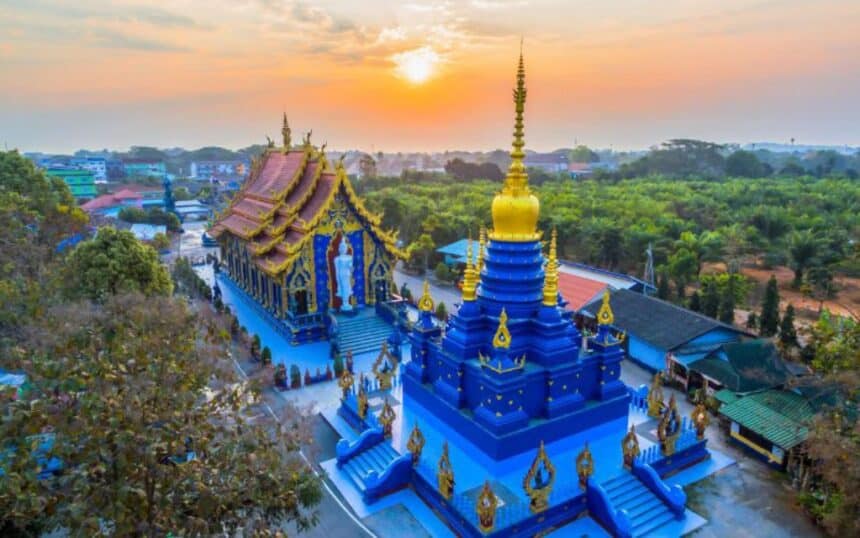
Wat Rong Suea Ten, Chiang Rai’s Blue Temple, draws the eye with its vivid blue-and-gold design and striking white Buddha image. It’s also an easy visit from central Chiang Rai, making it a practical stop even if you have only part of a day.
Because it’s an active place of worship, a little planning helps you enjoy the temple while respecting local customs. This guide covers what to see, visitor etiquette, transport, and how to fit the Blue Temple into a Chiang Rai itinerary. For more tips on temple etiquette in Chiang Rai, keep these basics in mind as you plan your visit.
Key Takeaways
- Wat Rong Suea Ten, Chiang Rai’s Blue Temple, is known for its deep-blue surfaces, gold details, and large white Buddha.
- Admission is free, and visitor listings give daily hours as 7 a.m. to 8 p.m.; check for changes before you go.
- The main hall was completed in 2016. The Chiang Rai and Phayao tourism page offers more background.
- Allow 30 to 60 minutes, then plan a 10-to-15-minute taxi or tuk-tuk ride from central Chiang Rai. See this practical Chiang Rai guide for transport tips.
- Cover your shoulders and knees, remove shoes before entering the main hall, and keep your voice low.
Blue Temple Chiang Rai: What to See at Wat Rong Suea Ten
Wat Rong Suea Ten is an active Buddhist temple in Rim Kok, north of central Chiang Rai. Its vivid blue-and-gold design draws visitors, but the site is also a place of worship, so take time to notice its architecture and murals respectfully.
Why it’s called the Temple of the Dancing Tiger
Wat Rong Suea Ten (วัดร่องเสือเต้น) is commonly translated as “Temple of the Dancing Tiger.” The name refers to a local story about tigers that once leapt across a stream in the area. The temple sits in Rim Kok, near the Kok River, on a site associated with an older, abandoned temple.
Today, the Blue Temple is a working religious site as well as a popular Chiang Rai attraction. Worshippers may be praying or making offerings during your visit, so keep your voice low and give them space. For context on how it fits among the area’s other religious landmarks, see this Chiang Rai temple guide.
How the blue-and-gold design came together
Artist Phuttha Kabkaew, also known as Sala Nok, designed the temple. He is reported to have studied under Chalermchai Kositpipat, the artist behind Chiang Rai’s White Temple, Wat Rong Khun. The Blue Temple’s contemporary design uses deep blue surfaces and gold ornament, with detailed stucco work throughout.
Construction began in 2005, and the main hall was completed in 2016. Those dates help place Wat Rong Suea Ten among Chiang Rai’s newer temple projects. The Tourism Authority of Thailand’s temple profile also describes its distinctive blue tones and stucco craftsmanship.
The main hall, Buddha image, and details to notice
Inside the main hall, deep-blue walls and columns frame gold detailing and colorful murals. Look around the room rather than focusing only on the central image: the painted surfaces and ornamental details continue across the interior.
A large white Buddha image anchors the hall, creating a striking contrast with the surrounding colors. Visitor sources commonly give its name as Phra Buddha Ratchamongkol Bodi Trilokanat and its height as about 6.5 meters. Treat the measurement as a reported detail, since displays and visitor guides may vary.
Because the hall is a place for prayer, remove your shoes before entering and avoid interrupting worshippers for photos. The temple’s visual appeal is clear, but its religious purpose deserves the same attention as its design.
What to Know Before Visiting the Blue Temple
A little planning makes a visit to Wat Rong Suea Ten easier and more respectful. Check the latest visitor information before you travel, then leave enough time to see the main hall without rushing.
Opening hours, entry, and time needed
Visitor listings commonly show the Blue Temple open daily from 7:00 a.m. to 8:00 p.m. The Tourism Authority of Thailand listing gives those hours, but temple schedules can change, so confirm locally before setting out.
Admission is listed as free, and donations are optional. These details come from visitor information, not a guarantee that every policy or schedule will remain unchanged. Allow 30 to 60 minutes to see the main hall and grounds. Add time if you want to take photos or visit at a slower pace. For other planning ideas, see this Chiang Rai rainy-day itinerary.
What to wear and how to show respect
Wear clothing that covers your shoulders and knees. Before entering the main hall, remove your shoes and follow any signs or directions from temple staff. Keep your voice low, and give worshippers space to pray without interruption.
Near the Buddha image, sit or stand respectfully and avoid pointing your feet toward it. Photography is generally reported as allowed, but that does not mean every moment is suitable for a photo. If people are praying or a ceremony is underway, put your camera away and wait until the activity has finished.
Best time to visit and photo etiquette
Consider visiting earlier or later in the day for a calmer experience. Crowd levels and light can vary, so treat those times as a planning preference rather than a promise of quiet or ideal photo conditions.
When taking pictures, check your surroundings before stopping. Keep walkways clear, avoid getting between worshippers and the Buddha image, and leave room for other visitors to move through the hall. If someone is praying nearby, frame your photo without including them unless they have agreed to be photographed. A considerate visit gives you time to appreciate the temple while allowing others to worship in peace.
How to Get to Wat Rong Suea Ten from Chiang Rai
Wat Rong Suea Ten is in Rim Kok, about 3 kilometers from central Chiang Rai, depending on your starting point. The short trip is easy to arrange, but transport options and fares can vary, so confirm the details before setting off.
Taxi, ride-hailing, tuk-tuk, and songthaew options
A taxi or ride-hailing trip from central Chiang Rai often takes about 10 to 15 minutes, depending on traffic and where you’re picked up. Ride-hailing can be convenient if you want to see the fare estimate before booking. With a taxi or tuk-tuk, agree on the fare with the driver before you leave.
Songthaews may also run toward the temple, but don’t assume every vehicle follows the same route. Ask the driver whether they’ll take you to Wat Rong Suea Ten and confirm the fare before boarding. Quoted prices vary by source and by the trip, so treat any estimate as a guide, not a fixed rate. For more ideas on keeping local transport costs manageable, see these budget travel tips for Chiang Rai.
If you’re driving, parking is reported near the temple. The Tourism Authority of Thailand’s Wat Rong Suea Ten listing places it in Rim Kok, north of the city center.
Finding the entrance and planning your return
The temple sits in a residential area, and its entrance may not be obvious from the main road. Save a map pin for Wat Rong Suea Ten before leaving, then use it for the final stretch rather than relying on road signs alone.
Before you head out, consider how you’ll get back. If you’re taking a songthaew, check its route and return availability with the driver. For a taxi or tuk-tuk, ask whether the driver can wait or arrange a pickup time. Ride-hailing may be an option, but don’t count on finding a car immediately once you’re ready to leave.
A little coordination can save time, especially if you’re visiting outside the busiest parts of the day. Confirming your ride plan before leaving central Chiang Rai makes the return trip easier to manage.
Plan a Blue Temple Visit with Other Chiang Rai Sights
Wat Rong Suea Ten is easy to visit on its own from central Chiang Rai, but it can also fit into a day with other landmarks. The best choice depends on how much time you want at each stop and how you plan to travel between them.
Pair the Blue Temple with the White Temple and Black House
Wat Rong Suea Ten, Wat Rong Khun, and Baan Dam Museum offer very different visits. The Blue Temple is an active place of worship, known for its blue-and-gold details and large white Buddha. The White Temple is a contemporary artistic interpretation of a Buddhist temple, with bright white surfaces and mirrored details. Baan Dam, often called the Black House, is an art museum and collection of dark wooden buildings, not a temple.
These are separate attractions, so you’ll need transportation between them. Before choosing a route, check the distances from your starting point, travel times, and how long you want to spend at each site. A Wat Rong Khun visitor guide can help you plan that stop, while this Chiang Rai temple tour guide compares the area’s better-known landmarks.
Don’t assume a group tour that visits the White Temple and Black House also includes Wat Rong Suea Ten. Check the listed stops with the operator before booking, and confirm whether the itinerary allows time at the Blue Temple. If you’re arranging transport yourself, plan the route in advance rather than expecting to walk between attractions.
Choose a visit length that fits your day
Allow about 30 to 60 minutes for the Blue Temple itself. That gives most visitors time to see the main hall and grounds without rushing. If you want to study the murals, take photos, or pause quietly, allow longer.
You can also add nearby stops around Chiang Rai, but account for the travel between them when setting your schedule. The time on site is only one part of the day, and traffic, pickup arrangements, or waiting for a ride can affect how smoothly the route works. A simple plan with fewer stops may feel more relaxed than trying to fit every landmark into one outing.
Frequently Asked Questions
These quick answers cover a few practical details that can make a visit to Wat Rong Suea Ten easier to plan.
Is the Blue Temple worth visiting?
Yes, especially if you enjoy contemporary temple architecture and detailed interior artwork. The vivid blue walls create an unusual setting for the gold accents, murals, and large white Buddha image. Plan for a calm visit rather than a full-day attraction, and remember that Wat Rong Suea Ten is an active temple where people come to worship.
Can you visit the Blue Temple without a tour?
Yes. You can arrange a taxi, tuk-tuk, ride-hailing car, or local transport from central Chiang Rai and navigate with a saved map pin. Before leaving, confirm the fare and agree on how you’ll get back. For another overview of the stop, see this Blue Temple visitor guide.
Is there an entrance fee at Wat Rong Suea Ten?
Visitor guides list entry as free, with donations optional. Policies can change, so check for updated information before your visit. If you choose to donate, treat it as a contribution rather than a required admission payment.
Can visitors take photos inside the temple?
Photography is commonly reported as allowed, but worshippers and ceremonies take priority. Avoid interrupting prayers or including people in close-up photos without permission. Follow any signs and instructions from temple staff, since rules may vary by area or occasion.
How long should you spend at the Blue Temple?
Most visitors need 30 to 60 minutes to see the main hall and grounds at an unhurried pace. Add extra time if you want to photograph details or pause to look closely at the murals. The Blue Temple also fits easily into a broader Chiang Rai outing, alongside the city’s top attractions.
Conclusion
Wat Rong Suea Ten is a memorable Chiang Rai stop, with its vivid blue-and-gold hall and white Buddha offering plenty to take in without requiring a full day. Since it’s an active temple, dress respectfully and give worshippers space.
Before you go, check the current hours and arrange your ride from the city. With those details sorted, you can enjoy the Blue Temple at an easy pace and fit it into a wider Chiang Rai sightseeing plan.