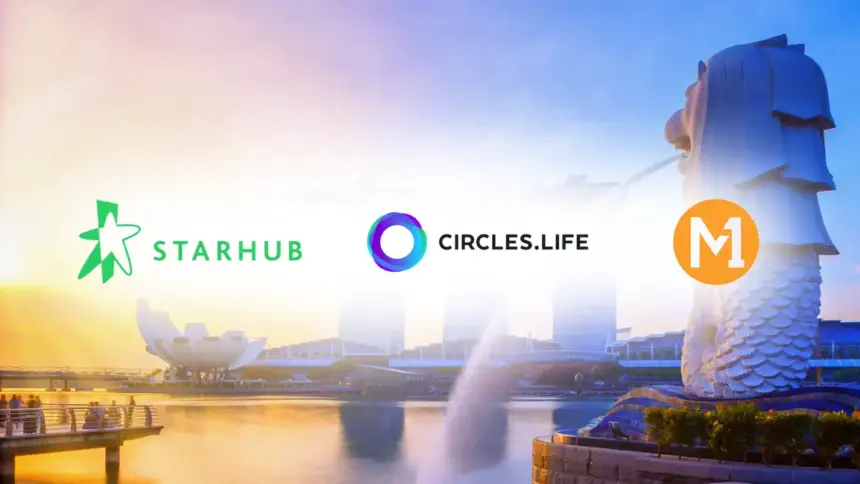
SINGAPORE — StarHub and M1 will merge by the first half of 2027 in an all-stock deal that creates a telecom giant with an enterprise value of 5 billion Singapore dollars ($3.87 billion). In a parallel move announced Tuesday, StarHub exercised an option to buy the Singapore operations of digital mobile brand Circles.Life.
The twin deals mark the biggest shake-up in Singapore’s telecommunications market in three decades, uniting the city-state’s second- and third-largest operators alongside a major virtual network. The combined group will serve 4.1 million mobile subscribers and over 750,000 broadband users, leaving consumers watching closely for shifts in monthly plan prices and service perks.
Key Takeaways
- StarHub and Keppel-owned M1 will combine in an all-share transaction expected to close in the first half of 2027, pending regulatory and shareholder approvals.
- StarHub will separately acquire Circles.Life’s Singapore mobile business, bringing its subscriber base, staff and brand assets under the enlarged group.
- Existing customer contracts, mobile plans and prices will remain unchanged until the deals close, though analysts expect long-term pressure to lift industry profits.
Why Four Networks Struggled in a Saturated Market
For nearly 30 years, Singapore’s telecom playbook relied on adding competitors to drive down consumer bills. M1 launched commercial mobile services in 1997 to break Singtel’s monopoly, and StarHub followed in 2000. Things changed sharply after Australia-listed Tuas entered the market via Simba Telecom in 2020, sparking a fierce price war alongside low-cost mobile virtual network operators.
In a compact island nation of roughly 6 million people, four full-scale mobile networks proved too crowded to fund expensive 5G upgrades and artificial intelligence infrastructure. “Four operators competing for the same mature market will no longer deliver the infrastructure Singapore needs next, and consolidation is the answer,” StarHub Chief Executive Nikhil Eapen said in a statement. Keppel CEO Loh Chin Hua echoed that strain during a Tuesday briefing, noting that Singapore’s four-player sector has been operating under heavy financial pressure.
The agreement also follows a failed bid earlier this year by Simba Telecom to buy Keppel’s stake in M1 for SG$1.43 billion, a proposal stalled after regulators suspended their review. By pivoting to StarHub, asset manager Keppel will hold an effective 23% stake in the merged entity while clearing M1’s debt from its balance sheet.
What Subscribers Can Expect on Plans and Pricing
Nothing changes on monthly bills right away. Both telcos confirmed they will operate and compete independently until the merger closes, keeping existing contracts, SIM cards and customer service channels intact.
Once completed, however, the deal will concentrate a massive stable of budget sub-brands under one roof. StarHub already runs Giga, Eight and MyRepublic’s mobile arm, while M1 operates Maxx. Adding Circles.Life’s Singapore operations places five major digital brands inside a single corporate family, leaving Singtel and Simba as the primary rivals.
Market watchers warn that fewer independent bidders could gradually cool the aggressive SIM-only discounts Singaporeans have enjoyed for years. StarHub executives said the merger aims to generate SG$110 million in annual cost savings by 2030 by merging overlapping cell towers, IT systems and retail operations, rather than hiking prices immediately. Still, industry analysts note that higher average revenue per user remains a top priority for telecom investors across Southeast Asia.
Regulatory Hurdles Ahead of 2027 Closing
Before the companies can combine networks, the transaction must clear strict antitrust reviews. The Infocomm Media Development Authority said it will evaluate the proposal under Singapore’s Telecom and Media Competition Code to ensure fair market access and service quality. Approvals are also required from the Ministry of Digital Development and Information, alongside separate shareholder votes at StarHub and Keppel.
M1 Chief Executive Manjot Singh Mann said combining the two networks’ technology stacks will allow the enlarged operator to handle heavy data traffic more efficiently while expanding enterprise cloud and cybersecurity services. If regulators sign off on schedule, Singapore’s telecom landscape will officially shift from a crowded four-way race to a three-player contest by mid-2027.