
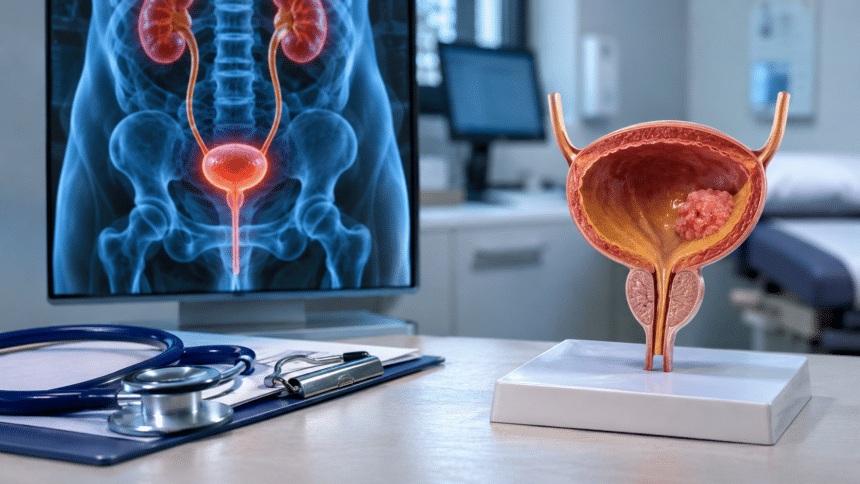
Changes in urinary habits can sometimes indicate an underlying health problem. Although symptoms such as frequent urination or discomfort may have several explanations, they should not be ignored, particularly when accompanied by blood in the urine.
Bladder cancer is a condition that requires careful medical assessment and individualized treatment. Depending on the type and extent of the disease, patients may require surgery, medication, radiation therapy, or a combination of treatments.
Understanding the warning signs, associated risk factors, and diagnostic procedures can help individuals make informed decisions about their health. It can also help patients and their families prepare for discussions about treatment and ongoing care.
What Is Bladder Cancer?
Bladder cancer develops when abnormal cells grow within the bladder, the organ responsible for storing urine before it leaves the body. Different forms of the disease are classified according to the cells in which the cancer begins.
Identifying the cancer type helps medical professionals understand its characteristics and determine which treatment options may be appropriate.
Understanding the Different Types of Bladder Cancer
There are three main types of bladder cancer, each originating in different cells.
| Cancer Type | Characteristics |
|---|---|
| Urothelial carcinoma | Begins in the bladder’s inner lining and accounts for more than 90% of bladder cancers. |
| Squamous cell carcinoma | May develop following prolonged bladder irritation or inflammation. |
| Adenocarcinoma | An uncommon form originating in glandular cells. |
Early Warning Signs That Require Medical Attention
Bladder cancer symptoms can resemble those associated with other urinary conditions. This makes professional assessment important rather than attempting to identify the cause independently.
Blood in the urine is one of the warning signs that should prompt a medical consultation. Other possible symptoms include painful urination, increased urinary frequency, and difficulty passing urine.
When arranging an appointment, patients can prepare information about when their symptoms began, how frequently they occur, and whether they have changed over time.
Experiencing these symptoms does not automatically indicate cancer. However, obtaining medical advice allows the underlying cause to be investigated instead of relying on assumptions.
Common Risk Factors Associated With Bladder Cancer
Several factors may increase the likelihood of developing bladder cancer. While individuals cannot control every risk factor, understanding their medical history and everyday habits can support more informed healthcare discussions.
Smoking is a major risk factor that individuals can address through lifestyle changes.
Medical History and Personal Risk
Age, previous bladder cancer, certain chemotherapy medications, earlier radiation exposure, and recurring urinary tract conditions are among the recognized risk factors. Men also face a higher risk of developing the disease.
Sharing relevant medical records with a doctor can help provide a more complete picture of an individual’s health.
Occupational Exposure
Working with certain chemicals in industries such as textile manufacturing, printing, painting, leather processing, and rubber production may increase bladder cancer risk.
Individuals concerned about previous workplace exposure can discuss their occupational history during medical consultations. Knowing about these factors does not establish a diagnosis, but it provides useful background information.
How Doctors Diagnose Bladder Cancer
Diagnosing bladder cancer involves examining the bladder and investigating suspicious abnormalities. Different procedures provide information that helps doctors establish a diagnosis and plan subsequent care.
A urine test may initially be performed to investigate whether an infection is responsible for the symptoms.
Doctors can then examine the bladder using cystoscopy, a procedure involving a narrow viewing instrument. Tissue samples may also be collected for laboratory examination.
Another procedure, known as transurethral resection of bladder tumor (TURBT), allows doctors to remove tumor tissue and assess the cancer’s stage. CT or MRI examinations may be necessary when invasive disease is suspected.
How Bladder Cancer Treatment Decisions Are Made
Treatment decisions depend on the findings gathered during diagnostic assessment. The extent of the cancer is particularly important when determining whether bladder-preserving treatment or more extensive surgery is appropriate.
Bladder cancer treatment in Abu Dhabi can involve several medical and surgical approaches, with specialists developing treatment plans according to individual clinical findings and care requirements.
Patients should discuss the objectives of each recommended procedure, potential side effects, and available alternatives before making treatment decisions. Understanding why an approach has been selected can make the process less confusing.
Understanding the Available Treatment Options
A bladder cancer diagnosis does not necessarily mean that the entire bladder must be removed. Different treatment approaches may be considered depending on the disease stage and individual circumstances.
Surgical Treatment
Early-stage tumors may be removed through TURBT, which allows doctors to access the bladder through the urethra.
Selected patients may qualify for partial cystectomy, involving the removal of part of the bladder. Extensive disease may require radical cystectomy, a procedure that removes the entire bladder.
Chemotherapy and Immunotherapy
Chemotherapy uses medications to destroy cancer cells or interfere with their growth. Immunotherapy works by helping the body’s immune defenses respond to cancer.
Intravesical treatment involves delivering medication directly into the bladder. Depending on the treatment plan, this may involve chemotherapy or immunotherapy.
Radiation Therapy
Radiation therapy uses targeted radiation to damage cancer cells. Combining radiation with chemotherapy may provide a nonsurgical treatment option for suitable patients.
Discussing these approaches with healthcare professionals helps patients understand their suitability, potential benefits, and possible complications.
The Importance of Multidisciplinary Cancer Care
Bladder cancer management can involve several medical specialties. Surgeons, oncologists, radiologists, pathologists, and nursing professionals contribute different areas of expertise to patient care.
At Cleveland Clinic Abu Dhabi, the multidisciplinary approach to bladder cancer care includes specialist collaboration, individualized treatment planning, and ongoing support.
Patients can prepare for these consultations by writing down questions about their diagnosis, treatment objectives, and recovery expectations. Asking for clarification about unfamiliar medical terminology can also help them participate more confidently in healthcare decisions.
Why Ongoing Care Matters After Treatment
Cancer care extends beyond the initial treatment period. Ongoing medical support can help address treatment-related side effects, protect bladder function where possible, and support patients’ quality of life.
Recovery may also introduce practical concerns involving work, household responsibilities, nutrition, and emotional well-being.
Discussing these matters with the care team allows patients to identify appropriate support. Access to nursing professionals, dietitians, physiotherapy, and psychological care may form part of a broader recovery plan.
Patients should also clarify their follow-up arrangements and understand whom to contact if they experience new or concerning symptoms.
In Conclusion
Understanding bladder cancer begins with recognizing unusual urinary symptoms, knowing relevant risk factors, and obtaining timely medical assessment.
Diagnostic procedures help healthcare professionals determine the characteristics and extent of the disease, while individualized treatment planning considers the most appropriate medical and surgical options.
Clear communication, multidisciplinary collaboration, and ongoing support remain important throughout treatment and recovery. By discussing concerns openly and understanding available care options, patients can make better-informed decisions about their health and long-term well-being.