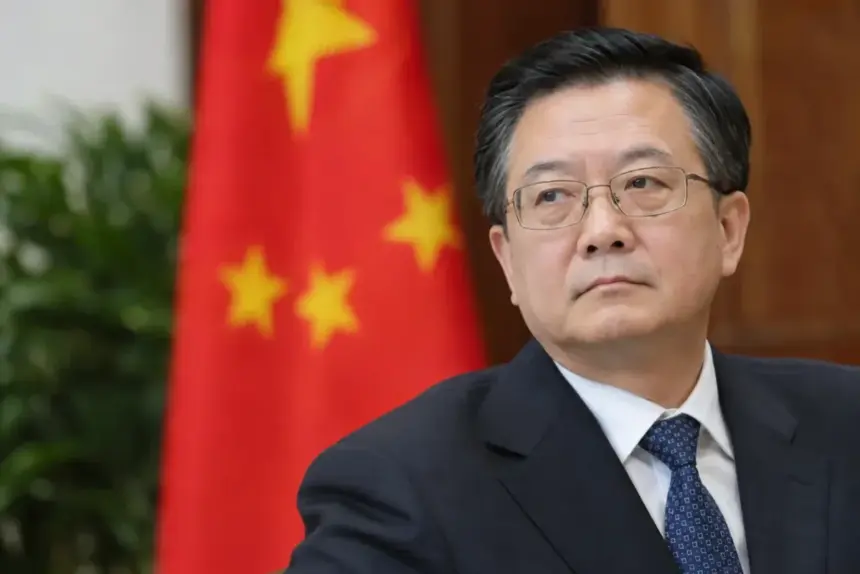
BEIJING — China’s top anti-corruption agency has placed Shanghai Communist Party Secretary Chen Jining under investigation for suspected serious violations of party discipline and state law, state media announced late Tuesday. The abrupt move targets the highest-ranking official in China’s premier financial hub and removes a rising political star from public view ahead of next year’s major leadership reshuffle.
A brief two-line dispatch from the official Xinhua News Agency confirmed that the Central Commission for Discipline Inspection and the National Supervisory Commission are conducting the inquiry. Authorities released no specific allegations, disclosed no evidence and announced no formal criminal charges or legal findings against the 62-year-old Politburo member.
Key Takeaways▪ China’s anti-graft watchdogs opened a formal probe into Shanghai party boss Chen Jining for suspected discipline and law violations. ▪ State media offered zero details on the underlying allegations, and authorities have not announced formal charges, findings or a replacement. ▪ Chen is the fourth sitting member of the ruling 24-seat Politburo targeted since 2025, signaling intensifying political vetting before the 2027 Party Congress. |
A Sudden Fall From Beijing’s Inner Circle
In Chinese political parlance, the phrase “suspected serious violations of discipline and law” serves as the standard official euphemism for corruption. While the notice stops short of a formal indictment, an announcement of this nature by the Central Commission for Discipline Inspection almost always precedes expulsion from the Communist Party and prosecution in state courts.
Chen’s disappearance from official channels began almost immediately after the Tuesday bulletin hit state wires. According to NBC News coverage, municipal web pages documenting Chen’s recent meetings with foreign business executives returned error messages by Wednesday morning, and Tsinghua University scrubbed his name from its online roster of former presidents.
Neither Chen nor his representatives have issued a public statement, and his current whereabouts remain unknown. Under China’s supervision laws, party investigators can detain officials in an extrajudicial system known as “liuzhi” for months without access to legal counsel while building a case.
From Environmental Technocrat to Shanghai Boss
Before Tuesday’s announcement, Chen stood out as one of the most prominent technocrats in President Xi Jinping’s administration. Born in 1964 in Liaoning province, he earned a doctorate in environmental engineering from Imperial College London before returning to China to lead Tsinghua University, Xi’s alma mater.
His ascent through the government ranks moved at unusual speed. In 2015, he became China’s youngest cabinet minister when he took charge of the Ministry of Environmental Protection, later serving as mayor of Beijing from 2017 to 2022, where he helped oversee preparations for the 2022 Winter Olympics.
In October 2022, the party elevated Chen to the 24-member Politburo and handed him the top post in Shanghai, a municipal powerhouse of 25 million people. As The Guardian reported, the Shanghai party secretary role has historically functioned as a direct springboard to the Politburo Standing Committee, the apex of Chinese political power. Both current Premier Li Qiang and Vice President Han Zheng previously held the Shanghai job.
Purges Ahead of 2027 Congress
Chen’s downfall cannot be separated from the widening political purge sweeping Beijing ahead of the 21st National Congress of the Chinese Communist Party, scheduled for late 2027. At the five-year gathering, Xi is widely expected to secure a fourth term while reorganizing the upper tiers of the party and military.
With Chen’s removal, four members of the current Politburo elected in 2022 have now fallen under investigation since 2025. The dragnet previously ensnared senior military leaders Zhang Youxia and He Weidong alongside regional party boss Ma Xingrui, reducing the active body to 21 members.
Analysts note that the Shanghai probe strikes directly at the heart of China’s commercial governance. As Eurasia Group senior analyst Mingda Qiu told CNA, Shanghai is a premier economic center normally reserved for Xi’s most trusted lieutenants. Political observers point out that Beijing’s tightening scrutiny over close ties between local officials and private enterprises has created a climate of bureaucratic paralysis across major cities.
For global corporations operating in the Yangtze River Delta, the sudden leadership vacuum introduces immediate operational uncertainty. Just last month, Chen hosted Apple Chief Executive Tim Cook in Shanghai to encourage deeper foreign investment, and last week he toured local shipping terminals to promote digital trade upgrades. Municipal regulators and state-owned enterprises frequently pause major approvals when a party secretary falls, waiting for Beijing to install a loyalist who will enforce new political priorities.
Local Leadership Rallies Behind Beijing
Within hours of Xinhua’s dispatch, Shanghai’s municipal leadership moved to project stability and political alignment. According to Al Jazeera and local state outlet Jiefang Daily, senior city officials convened an emergency late-night meeting to pledge loyalty to Xi’s central leadership.
In a statement published Wednesday, the Shanghai party committee declared that the investigation proves the anti-corruption drive “will not pause or retreat,” echoing language from the Central Committee’s closed-door fifth plenum held in October.
Beijing has not yet named an acting party secretary for Shanghai or given a timeline for the investigation’s conclusion. Until formal charges are transferred to state prosecutors, the allegations against Chen remain unverified and subject to internal party review.