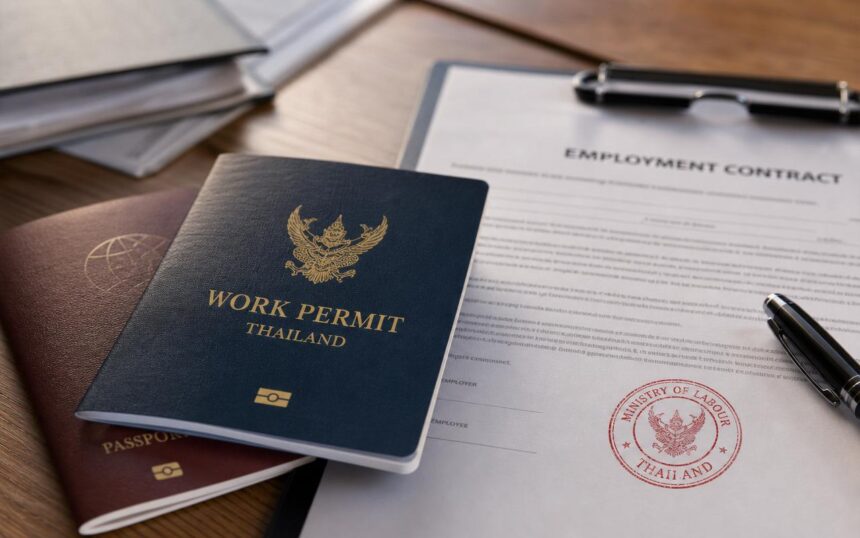
Most foreign nationals need both the right immigration status and a work permit before they can start working in Thailand. The usual employer-sponsored route involves securing a job, getting an appropriate visa, then applying for work authorization through the Ministry of Labour.
Your employer will typically help prepare the application, but you’ll also need to gather personal records and account for fees and processing time. Some jobs and visa routes have specific restrictions, and requirements can vary by application type and local office. For related guidance, see Thailand work visas and permits for foreign employees.
Before you begin, confirm the current requirements with your employer or the Ministry of Labour.
Key Takeaways
- Most foreign nationals need the right immigration status, usually a Non-Immigrant B visa, before applying for a Thai work permit.
- Your employer provides key company records; prepare your passport, qualifications, experience letters, medical certificate, and photos as required.
- After securing the visa, apply through the local Ministry of Labour office. BOI’s OSOS guidance outlines the usual process.
- Processing may take about seven days, but that’s a general estimate, not a guaranteed deadline.
- Wait for authorization before starting work, and confirm your duties are permitted under Thai work permit rules.
How to Get a Work Permit in Thailand: The Main Steps
The standard employer-sponsored process starts with a confirmed job offer, then moves through the visa and work permit applications. Your employer usually handles or supplies key company paperwork, but you’ll need to provide personal documents and wait for authorization before starting work.
Start with a job offer and employer support
Begin by confirming that the employer is prepared to sponsor your application. The company typically provides supporting records for both the visa and permit stages, such as an employment contract and business documents. You’ll usually need to supply your passport, education and experience records, and any other documents requested by the embassy or labor office.
The employer and the proposed position must also meet the applicable requirements. Thai authorities may assess the company, your qualifications, and the duties you’ll perform. Some occupations are restricted or prohibited to foreign workers, so check that the role is eligible before relying on an offer. Teaching jobs, for example, can involve additional school and qualification documents. See this guide to Thailand teaching work permit applications for a role-specific example.
Apply for the right visa before the work permit
For many employer-sponsored jobs, the next step is obtaining a Non-Immigrant B visa. The Thai Board of Investment’s work permit overview describes this as the usual initial visa and outlines the general sequence: secure the appropriate immigration status, then apply for a work permit through the responsible Ministry of Labour office.
However, the route can vary by applicant, employer, and visa category. Some applications require different approvals or follow a separate process, so don’t assume every foreign worker uses the same steps. Confirm with your employer which visa to apply for, where to submit the application, and whether the embassy needs additional approval documents.
Submit the application and wait for approval
After you have the required status, coordinate with your employer to submit the work permit application to the relevant labor office. Follow that office’s current instructions for forms, supporting records, appointments, and fees. Keep copies of what you submit, and ask the office or your employer how it will notify you of a decision.
The BOI gives a general estimate of about seven days for a local Ministry of Labour application. That is not a guaranteed deadline and may not apply to every case, so confirm the expected timing with the office handling your application. Wait until you receive work authorization before performing your job duties; a visa by itself does not authorize employment.
Check Your Job, Employer, and Visa Route Before Applying
Before you accept a role or begin a work permit application, confirm that Thai rules allow a foreign national to perform the specific duties. The job title alone may not tell the full story, and special employer or visa routes can change the process.
Make sure your occupation is open to foreign workers
Thailand restricts some occupations outright and allows others only under specific conditions. The Ministry of Labour’s list includes tour guiding, street vending, clerical and secretarial work, and some legal services. It also lists accounting work, with exceptions, so don’t assume that a profession is either fully open or fully barred.
The official lists and exceptions can differ by legal instrument. For example, government materials don’t always group prohibited and conditionally permitted work in the same way. Check the Ministry of Labour’s occupation rules for your exact duties, and ask your employer to confirm how the rules apply to the position. You can also review examples of jobs foreigners can legally do in Thailand.
Know when a BOI or special visa route may apply
The standard route usually involves an employer sponsoring a foreign worker and applying for work authorization through the Ministry of Labour. However, a company promoted by Thailand’s Board of Investment may use a separate process. Some workers may also qualify for a special program such as SMART Visa.
Each route has its own eligibility criteria, endorsements, and document requirements. For instance, certain SMART Visa holders can work for endorsed companies without a separate work permit, but that does not automatically apply to every visa holder or employer. Check the SMART Visa program’s official criteria and confirm which category and conditions match your situation.
Treat remote work as a separate question
A visa that allows you to stay in Thailand does not, by itself, settle whether your work is permitted. Rules may depend on the visa category, who employs or pays you, and where your clients are based.
If you work remotely for an overseas employer, verify the terms of your specific visa with Thai immigration and labor authorities before relying on assumptions or online summaries. For example, Thailand DTV work rights and restrictions differ from the rules for taking a job with a Thai company.
Prepare the Documents Your Work Permit Application May Need
Document lists vary by applicant, employer, application route, and local labor office. Use the items below to start organizing your file, then ask your employer or the responsible office for the exact checklist before filing.
Gather your personal records and qualifications
Prepare your passport and copies of the pages showing your identity, visa, and relevant entry or stay stamps. You may also need education certificates and records of your work experience. For some applications, the One Start One Stop Investment Center (OSOS) lists recommendation letters from former employers that describe your past positions and duties. Check the OSOS work permit document guidance for examples.
A recent medical certificate and passport-size photographs may also be required. A Bangkok government guide, for example, lists a medical certificate and three 3-by-4-centimeter photos taken within six months. Treat those details as an example, not a nationwide standard. Confirm the required photo size, number, and timing with the office handling your application.
Ask your employer to prepare company documents
Your employer will usually assemble the company records that support the application. A Bangkok government guide gives examples such as the company registration certificate, shareholder list, financial statements, social security evidence, and VAT-related documents. The employer may also need to provide an employment contract or other records about the role.
These items aren’t a universal checklist. Requirements can change with the company, visa route, job, and office. Ask your employer which records apply and whether the office expects recent versions, signed copies, or documents from an authorized company representative. For a related example of how worker and company records may be organized for a different application stage, see Thai work permit renewal documents.
Check translations, copies, and submission details
Before collecting every document, confirm how the office wants each one prepared. Some records may need translation or certification; some applications may require original documents, while others accept signed copies. Photo specifications and the number of copies can also differ.
Ask your employer or the responsible labor office to confirm these details, along with whether forms need signatures or company stamps. Then compare names, passport numbers, job titles, and employer details across the paperwork. Consistent information helps prevent avoidable questions when you submit the application.
Understand Work Permit Costs, Timing, and Ongoing Duties
Budget and schedule for both immigration and work permit steps. The fees and processing times depend on your application route, permit duration, employer, and local office, so confirm the details before filing.
Confirm the fee for your exact application
Don’t treat a fee quoted for one route as the total cost of getting a Thai work permit. BOI-related guidance lists a fee of 10,000 baht per year of visa permission for certain services. That figure is not a universal work permit fee, and it may not apply to your application.
Ask your employer or the responsible office for a current breakdown covering your specific route. Confirm the charges for the initial application, the permit’s approved duration, renewal, and any visa or immigration services. You may also want to compare local examples, such as this guide to Chiang Rai work permit fees and processing times, while checking rates with the office handling your case. For BOI-related information, review the official BOI fee guidance and verify which charges apply to your category.
Allow time for the visa and permit stages
Visa processing and work permit processing are separate steps. For the standard employer-sponsored route, you generally need the appropriate visa before applying for a permit. The BOI’s estimate of about seven days applies as a general guide to a local Ministry of Labour permit application, not to the full visa-and-permit process or every application.
Build in extra time for document preparation, appointments, employer paperwork, and requests for corrections. Before making travel or start-date plans, ask your employer and the relevant office for the latest estimate and whether you need an appointment. A complete file can help avoid delays, but it doesn’t guarantee a decision by a particular date.
Follow the permit conditions and renew on time
Once approved, check that the permit details match your actual job and employer. Follow the approved role and any conditions attached to your authorization, and keep your passport, visa, and employment records current. Store copies of the permit and supporting documents where you can access them.
If your job duties or employer may change, ask the employer and relevant authorities what approval or updated paperwork you need before making the change. Do the same if your stay permission is changing or nearing its end. Track the dates on your documents and confirm renewal steps and timing early, since requirements can vary by route and office.
Avoid the Mistakes That Can Delay or Put Your Application at Risk
Small assumptions can create bigger problems than a missing form. Before you start a job or rely on an online checklist, confirm that your visa, employer, and duties fit the rules for your specific application.
Do not begin work while an application is pending
A job offer, submitted visa application, or pending work permit application does not authorize you to work. Wait until you have the required work authorization before performing job duties, including work for an employer that has already agreed to sponsor you. Thailand’s work-permit law sets out the authorization requirement, and the International Labour Organization’s English translation provides the text of the relevant decree.
Starting early can put both your work authorization and immigration status at risk. If your start date is approaching, ask your employer to confirm the approval status and adjust the date rather than assuming the application will be completed in time. See more on work permit violations and immigration consequences in Thailand.
Do not rely on outdated checklists or broad online claims
Requirements can vary by application route, local office, employer, and job. A checklist written for a different applicant may leave out a document you need or include items that do not apply to you. Before filing, verify the current instructions with the Ministry of Labour, the relevant visa authority, or your employer.
Also, a government webpage’s update date doesn’t necessarily show when a legal rule took effect. If a requirement seems to conflict with another official source, ask which rule applies to your case and when it became effective.
Do not assume every visa permits every kind of work
Immigration permission and work authorization are separate questions. A visa may allow you to stay in Thailand without authorizing the job you plan to do, and permit conditions may depend on the employer and duties.
When your role, employer, or remote-work arrangement falls outside the standard employer-sponsored route, get case-specific guidance before working. Confirm the applicable visa conditions and labor rules with the relevant authorities or a qualified adviser.
Frequently Asked Questions
The right answer can depend on your visa category, employer, and the work you plan to do. Confirm the rules for your specific situation before you accept a start date or change jobs.
Can I work in Thailand while my permit application is pending?
No. Wait until the required work authorization is approved before performing job duties. A submitted application, job offer, or employer sponsorship does not give you permission to work while you wait. If your planned start date comes first, ask your employer to postpone it until your authorization is in place.
Does every foreign worker need a work permit in Thailand?
Requirements depend on the work, your immigration status, and whether a legal exception or special program applies. Some visa categories have distinct work rules, while certain roles may be restricted. Check your specific case with the Ministry of Labour or the authority responsible for your visa. Employers can also review Thai work permit rules for expat business owners, but confirm any requirements directly with officials.
Can I change employers after getting a work permit?
A permit may be tied to details such as your employer, job, or place of work, so don’t assume it transfers automatically. Before resigning or starting a new role, ask the labor authorities and your new employer what approval or permit changes you need. The Board of Investment’s work permit guidance notes that permit holders need prior permission to change occupation or workplace.
Can a tourist visa or long-stay visa let me work?
Permission to stay in Thailand does not automatically grant permission to work. A tourist visa or long-stay status alone may not authorize the specific duties you intend to perform. Verify both your immigration conditions and work authorization before accepting paid work or starting a job.
Can I work online for a foreign company while living in Thailand?
There isn’t one answer that covers every remote-work arrangement. The applicable rules may depend on your visa and the nature of your work, and official guidance does not resolve every setup. Check current immigration and labor rules for your specific visa, employer, and work activities before relying on remote work as permitted.
Conclusion
Getting a work permit in Thailand starts with confirming that the job is open to foreign workers and that your employer can support the application. Then secure the immigration status and work authorization that fit your case, and wait for approval before doing any work. Because the visa and permit are separate parts of the process, review the Thailand work permit requirements for foreign workers as you plan your next steps.
Before submitting anything, confirm the current forms, fees, and document requirements with the Thai office responsible for your application. Details can vary by route and location, so case-specific guidance is the safest way to avoid preventable delays.