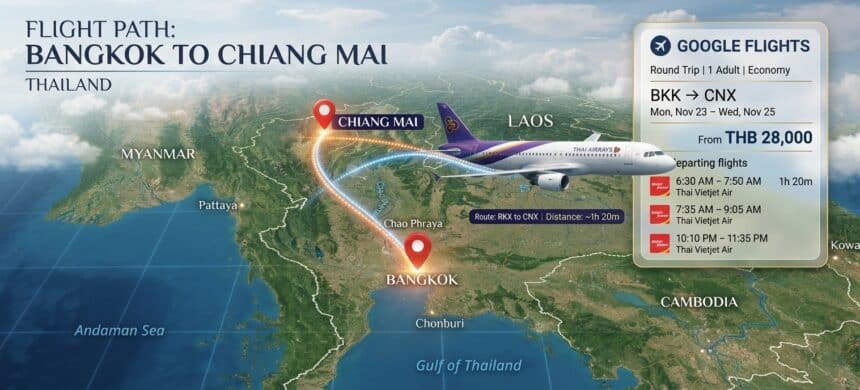
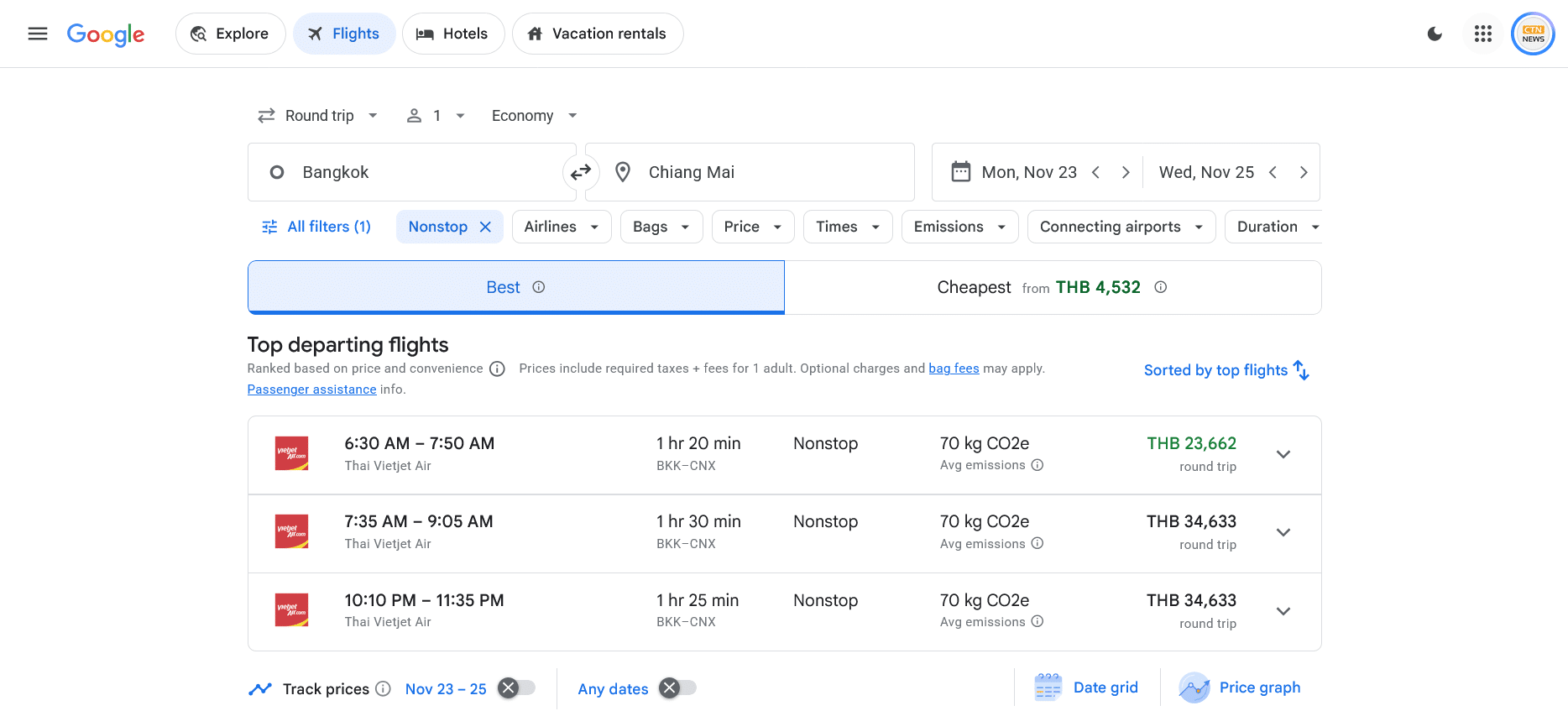
CHIANG MAI – Round-trip airfares between Bangkok and Chiang Mai have surged to 28,000 baht ahead of the annual Yi Peng lantern festival, sparking sharp criticism from travelers and northern tourism operators who warn the spike threatens local business.
Checks on major flight booking platforms for travel between Nov. 23 and Nov. 25 show one-way fares averaging 9,000 baht and round-trip tickets starting at 18,000 baht, according to a report by Thairath Online. Industry leaders say these rates—several times higher than normal domestic averages—undercut national campaigns promoting domestic travel and risk driving short-haul visitors toward cheaper overseas trips.
Key Takeaways
- Bangkok-Chiang Mai round-trip fares for Nov. 23–25 range from 18,000 to 28,000 baht, while one-way tickets average 9,000 baht.
- Chiang Mai expects over 200,000 festival visitors, with airport traffic projected at 591 flights and 92,000 passengers.
- Aviation regulators blame automated pricing algorithms on third-party booking sites rather than direct airline base fares.
Tourism Operators Warn of Lost Revenue
Paisan Sukcharoen, president of the Chiang Mai Tourism Industry Council, said more than 200,000 Thai and international visitors are expected in the northern province during the Loy Krathong and Yi Peng celebrations. While early planners locked in standard seats months ago, last-minute travelers from neighboring Asian markets face steep barriers.
“International tourists making late decisions may change their minds, causing Chiang Mai to lose immediate economic opportunities,” Paisan said. Local hospitality groups have urged carriers to maintain fair pricing structures during peak holidays, yet airlines have announced no concrete fare reductions.
Heavy crowds are already building at Chiang Mai International Airport. Airport officials project 591 flights carrying more than 92,000 passengers between Nov. 23 and Nov. 25, peaking at 33,560 travelers on Nov. 25 and 260 daily flights on Nov. 26.
Airspace Limits and Booking Algorithms Drive Spike
The pricing controversy stems from strict aviation safety rules and automated ticketing software rather than simple carrier markups. Following public outcry, the Civil Aviation Authority of Thailand clarified that the 28,000-baht quotes appeared on third-party online travel agencies when seat inventory dropped to near zero, pushing dynamic algorithms above standard airline fare ceilings.
Operational constraints tighten supply every November. During Yi Peng, thousands of hot-air sky lanterns are released across the Chiang Mai valley, forcing aviation authorities to restrict evening flight slots and cancel or reschedule night departures to prevent engine ingestion hazards.
With fewer evening aircraft rotations available and high demand concentrated into a 72-hour window, remaining seats sell out rapidly. Transport officials, as reported by Khaosod English, have advised passengers to book directly through airline websites—where legal price caps are strictly enforced—or consider overland rail and bus alternatives.