CHIANG RAI – Provincial water authorities are abandoning reliance on cross-border waterways in northern Thailand, shifting primary municipal intake from the Kok River to the domestic Lao River after heavy metal spikes forced emergency shutoffs across border communities.
The Provincial Waterworks Authority rolled out the multi-phase pivot this week after arsenic contamination in the neighboring Sai River reached 28 times national safety limits, cutting tap water to 14 villages in Mae Sai district and exposing fragile links across Chiang Rai’s homes, hospitals, farms and tourism economy.
Key Takeaways• Water engineers are rerouting urban supply from the transboundary Kok River to the domestic Lao River while planning Mekong River diversions for Mae Sai. • Arsenic levels in the Sai River surged to 28 times Thailand’s 0.01 milligram-per-liter limit during monsoon runoff, forcing water truck deployments for 14 villages. • Officials are seeking fiscal 2027 funding for 17 real-time monitoring stations, though full capital budgets and completion deadlines remain unconfirmed. |
Upstream Mining Fuels Cross-Border Water Crisis
The crisis stems from geography outside Thailand’s jurisdiction. Both the Kok and Sai rivers originate in Myanmar’s Shan State, where satellite mapping and field investigations by the Shan Human Rights Foundation identified rapidly expanding open-pit gold and rare-earth mining operations near the headwaters.
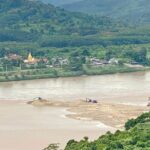
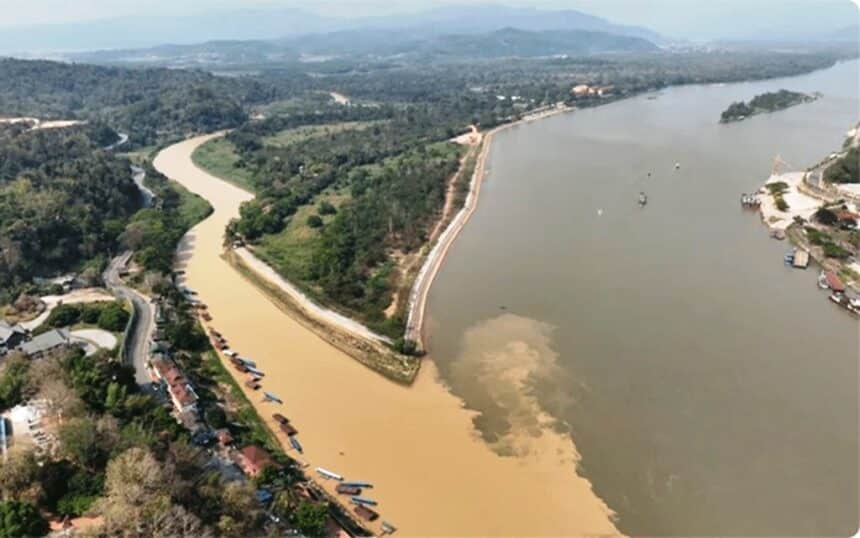
Heavy rains wash loose mine tailings directly into mountain tributaries. Since severe regional flooding in 2024, residents along the Kok River reported that the waterway stopped clearing during the cool season, turning persistently turbid with heavy metal sediment.
In early August 2026, monthly testing by the Pollution Control Department recorded Sai River arsenic concentrations at 28 times the national drinking threshold of 0.01 milligrams per liter. Although September readings in the Kok, Ruak and Mekong rivers returned within legal limits, Thai Natural Resources and Environment Minister Suchart Chomklin acknowledged on Nov. 10 that restoring contaminated riverbeds remains slow and requires diplomatic intervention with Myanmar.
Rebuilding Treatment Capacity and Distribution Grids
Conventional municipal treatment plants built to filter river silt cannot reliably strip dissolved arsenic during sudden turbidity spikes. When raw water turns toxic, operators must shut intake valves entirely to protect treatment membranes and public health.
To eliminate that single point of failure, the Provincial Waterworks Authority is executing a three-stage source transition. First, engineers are expanding distribution lines from the Lao River—a tributary originating entirely within Thailand’s Wiang Pa Pao mountains—to supply central Chiang Rai neighborhoods previously dependent on the Kok River.
Second, crews are preparing emergency pipelines to divert Mekong River water toward border communities in Mae Sai, backed by temporary mobile reserve tanks. Third, planners are designing a permanent intake on the Kham River in Mae Chan district alongside a new Chiang Saen waterworks facility to anchor long-term provincial capacity.
Ripples Across Households, Hospitals and Farms
Water insecurity hits every layer of the provincial economy differently. Across 14 affected Mae Sai villages and riverside settlements like Ban Ruam Mit, families have abandoned shallow household wells and local river fish, spending hundreds of baht monthly on bottled drinking water after learning that boiling fails to remove heavy metals.
Hospitals and district clinics face sharper operational strain. Dialysis units, sterilization wards and inpatient facilities require uninterrupted, ultra-pure water supplies, forcing health administrators to maintain backup storage tankers and strict incoming chemical screening.
Commercial losses are mounting in agriculture and hospitality. Chiang Rai Irrigation Project director Thaweechai Khotrakul noted that farm canals lack chemical sedimentation basins, forcing growers to halt pumping during muddy surges or risk contaminating rice paddies and fish ponds. Meanwhile, boutique hotels, spas and restaurants rely on secondary filtration systems to reassure international guests during peak travel months.
Monitoring Gaps and Unanswered Budget Questions
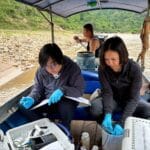
Real-time detection remains the weakest link in Chiang Rai’s defense network. Water officials currently rely on periodic manual sampling, leaving irrigation gate operators blind to fast-moving pollution plumes.
Provincial authorities have requested fiscal 2027 budget allocations to install 17 automated, real-time water-quality stations capable of triggering immediate sluice gate closures. Chiang Mai University researchers and local agencies have also distributed 120 field test kits for rapid soil and well screening.
Key accountability questions remain unresolved. Neither the Provincial Waterworks Authority nor the Interior Ministry has published itemized capital costs, contractor timelines or hard completion dates for the Mekong and Kham river pipelines. Until cross-border mine runoff is halted at its source, Chiang Rai’s multi-river grid remains a costly defensive shield rather than a permanent cure.