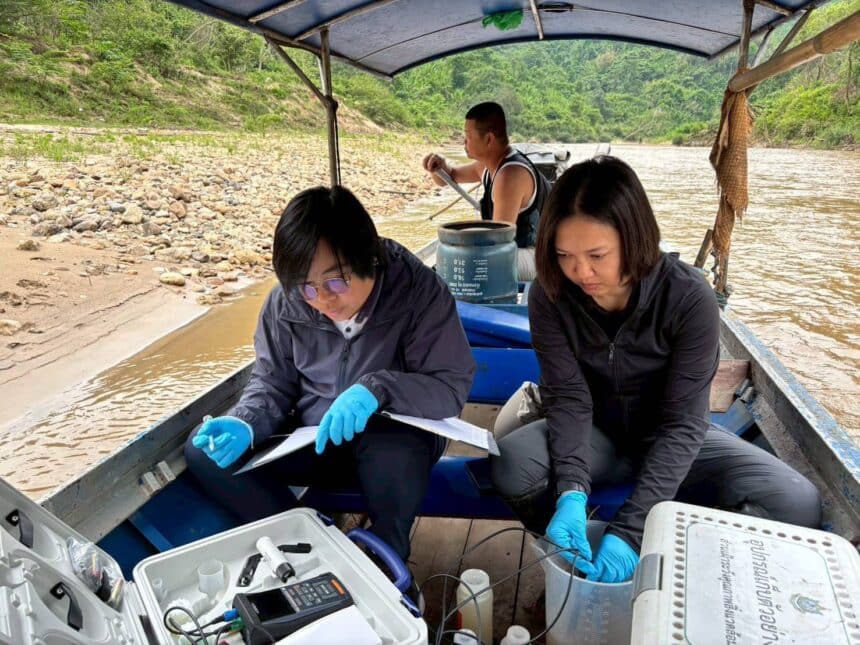
CHIANG RAI – Thailand and China are preparing to sign an agreement this week to establish an advanced environmental toxicology laboratory in northern Thailand to investigate severe river contamination affecting Chiang Rai communities.
The memorandum of understanding, scheduled for signing during Chinese Premier Li Qiang’s Nov. 13–14 visit to Bangkok, identifies Mae Fah Luang University as the host institution, according to Prime Minister’s Office spokesman Ekkapob Pianpises. The facility aims to build independent local testing capacity and produce verifiable scientific evidence as toxic heavy metals threaten border waterways.
Key Takeaways
- Thailand and China plan to formalize a joint environmental toxicology laboratory at Mae Fah Luang University during Premier Li Qiang’s November visit.
- The lab will analyze water, sediment and soil samples for heavy metals, addressing toxic runoff flowing into Chiang Rai’s Kok, Sai and Ruak rivers.
- Officials have not yet disclosed the project’s budget, equipment delivery schedule, testing protocols or whether data will be publicly released.
Upstream Mining Drives Border Crisis
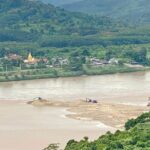
The diplomatic push follows two years of mounting alarm across northern Thailand. After severe flooding in 2024 deposited thick mud along riverbanks, residents noticed the Kok River never returned to its seasonal clarity.
Subsequent sampling by Thailand’s Pollution Control Department detected arsenic and heavy metals exceeding safety limits in the Sai River and neighboring tributaries. Natural Resources and Environment Minister Suchart Chomklin confirmed this week that the contamination originates upstream in Myanmar’s Shan State, where unregulated gold and rare-earth mines have expanded rapidly.
Environmental researchers and satellite analyses from the Stimson Center linked the runoff to active mining operations located in armed-group territories beyond Naypyidaw’s direct enforcement. Thai Foreign Minister Sihasak Phuangketkeow traveled to Myanmar on Nov. 12 to press officials on transboundary water quality, while opposition lawmakers urged Bangkok to seek Beijing’s assistance in tracing cross-border mineral shipments.
Lab Mandate, Standards and Open Questions
Placing the toxicology center in Chiang Rai eliminates the delay of shipping samples hundreds of miles to Bangkok. Under the proposed framework, university scientists and visiting specialists will conduct continuous chemical profiling of river water, riverbed sediment and surrounding agricultural soil, tracking how heavy metals accumulate during wet and dry seasons.
Critical operational details remain undefined ahead of the signing ceremony. Thai officials have not specified the financial split between Bangkok and Beijing, the exact mass-spectrometry instruments China will supply, or the installation and staff training timetable.
Transparency represents another pressing concern for local watchdogs. Environmental advocates and northern academics are seeking clear assurances on whether testing protocols will meet international ISO accreditation standards, whether third-party scientists can independently verify findings and whether raw laboratory data will be published openly rather than restricted to closed diplomatic channels.
Community Impact Along the Rivers
For riverside villages and growers, reliable local data directly shapes daily survival. According to a United Nations Development Programme field report, families in communities such as Ban Ruam Mit have abandoned traditional well water and river fishing after floodwater tainted local groundwater, forcing households to buy bottled drinking water.
Consistent cross-border monitoring would give Chiang Rai provincial authorities, public health officials and farmers timely warnings before irrigating crops or harvesting fish. If paired with mandatory public disclosure, the laboratory could turn scattered local complaints into binding scientific evidence for regional cleanup negotiations.