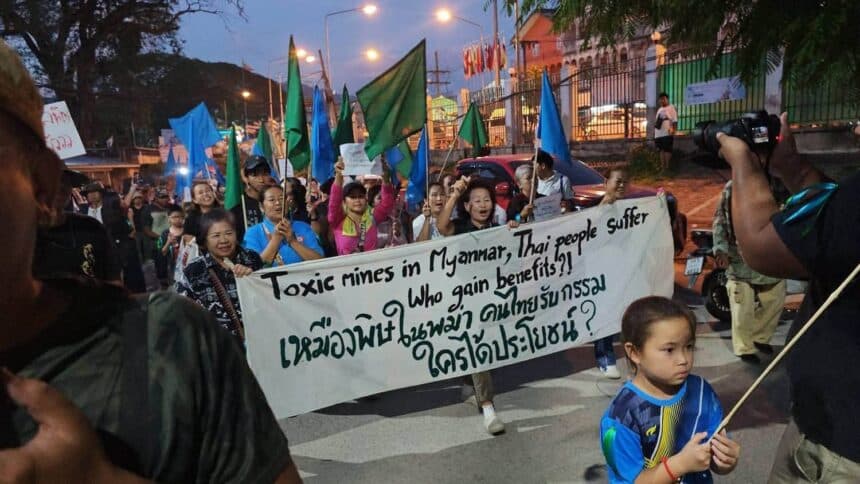
MAE SAI — Deputy Prime Minister Yodchanan Wongsawat pledged full government action Sunday to stop heavy metal pollution flowing from mines in Myanmar into northern Thai waterways, urging border residents and officials to speak with one voice.
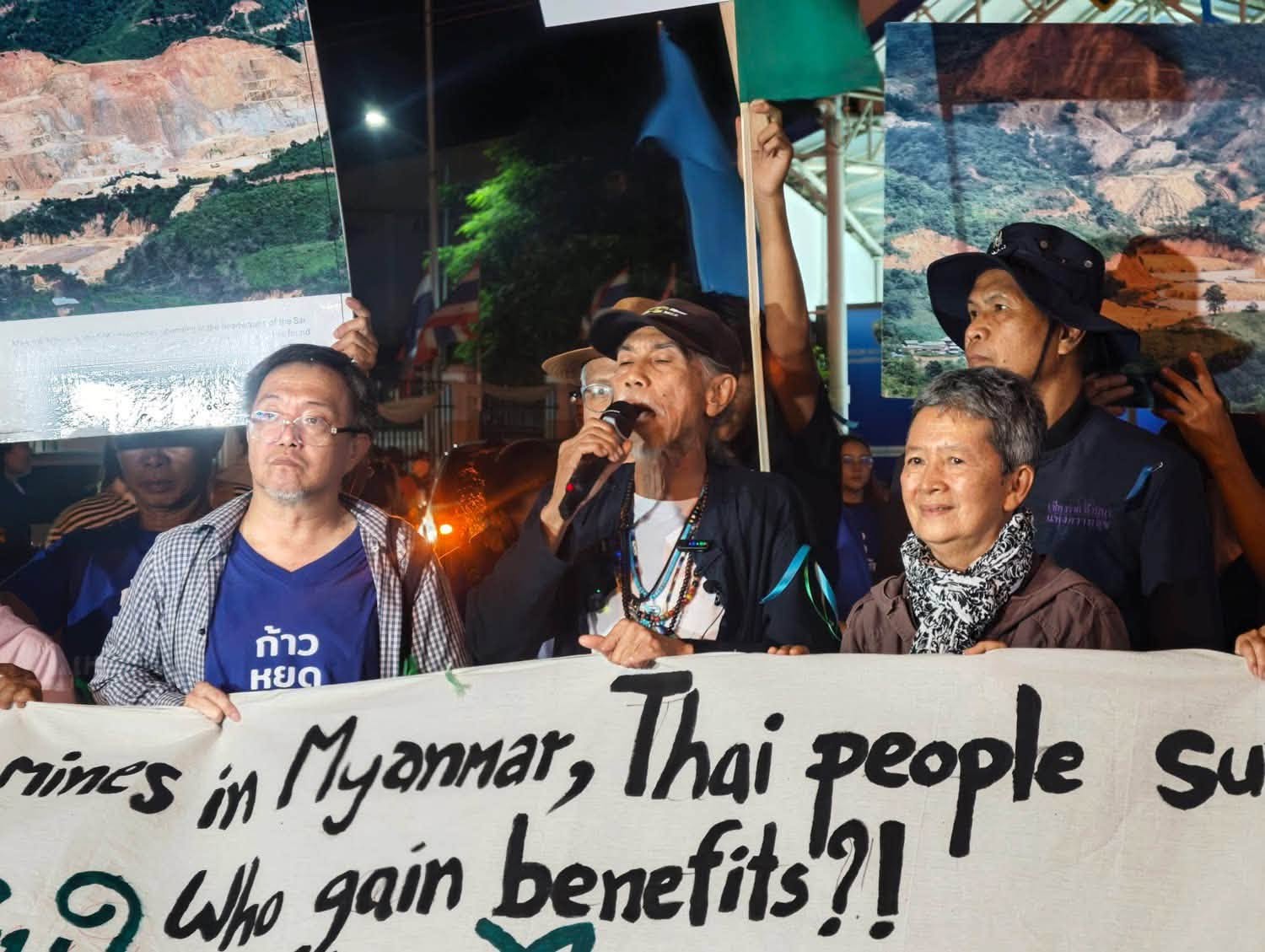
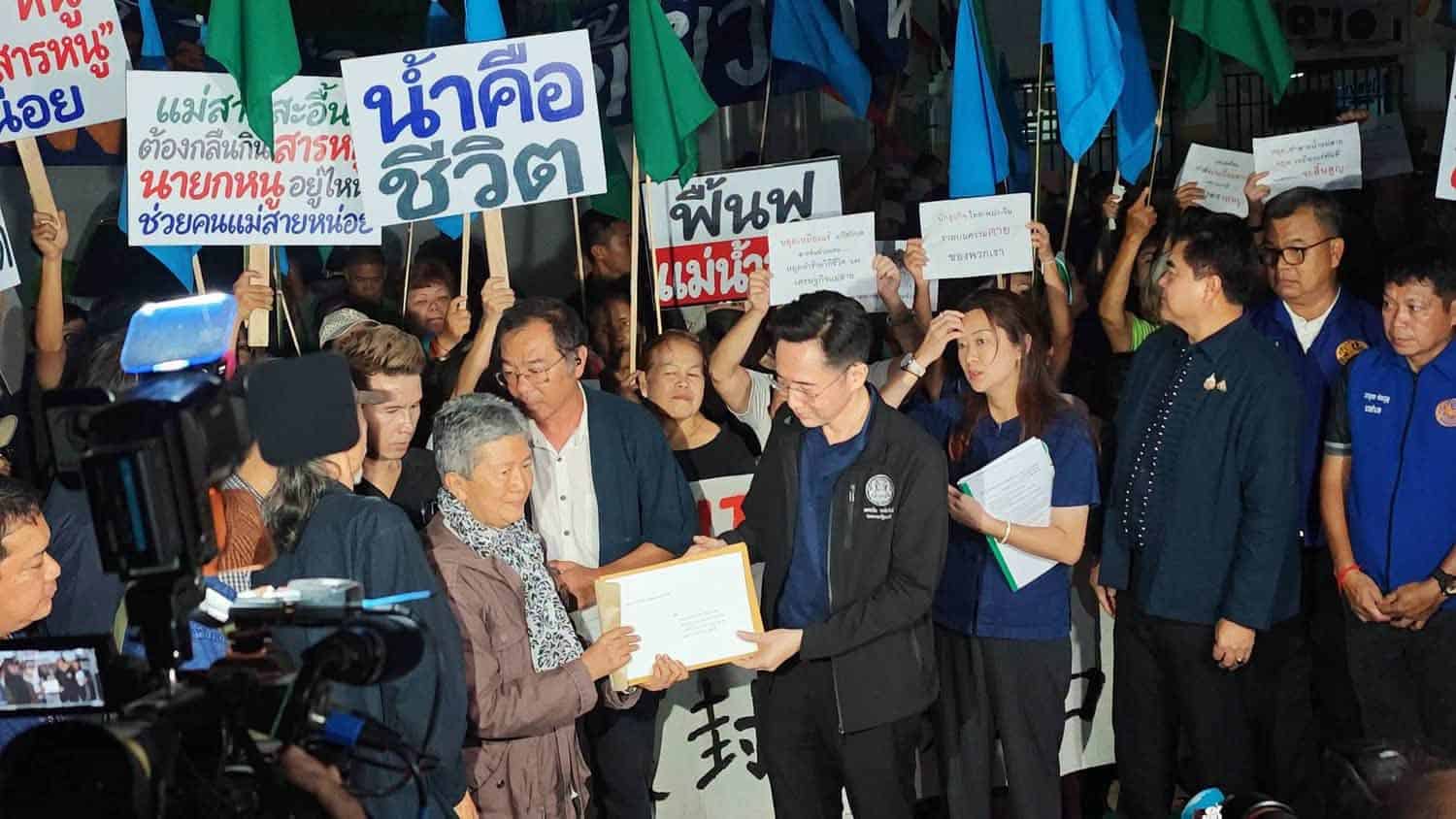
Speaking at the Mae Sai customs checkpoint in Chiang Rai province on Nov. 22, Yodchanan accepted a 17-point petition from a local river protection network representing communities across eight provinces. The toxic runoff threatens drinking water, fisheries and 100,000 rai (16,000 hectares) of irrigated farmland ahead of the December planting season.
Key Takeaways• Heavy metal runoff from mines in Myanmar has contaminated at least six transboundary rivers across eight Thai provinces, including the Kok, Sai, Ruak and Mekong. • Civic groups handed Deputy Prime Minister Yodchanan Wongsawat 17 demands addressed to Prime Minister Anutin Charnvirakul, seeking local testing labs, crop checks and clean farm water by December. • Advocates also urged Bangkok to ban mineral imports and mining chemical exports to Myanmar and convene four-party talks with Myanmar, China and ethnic armed groups. |
Farmers and Rivers Under Strain
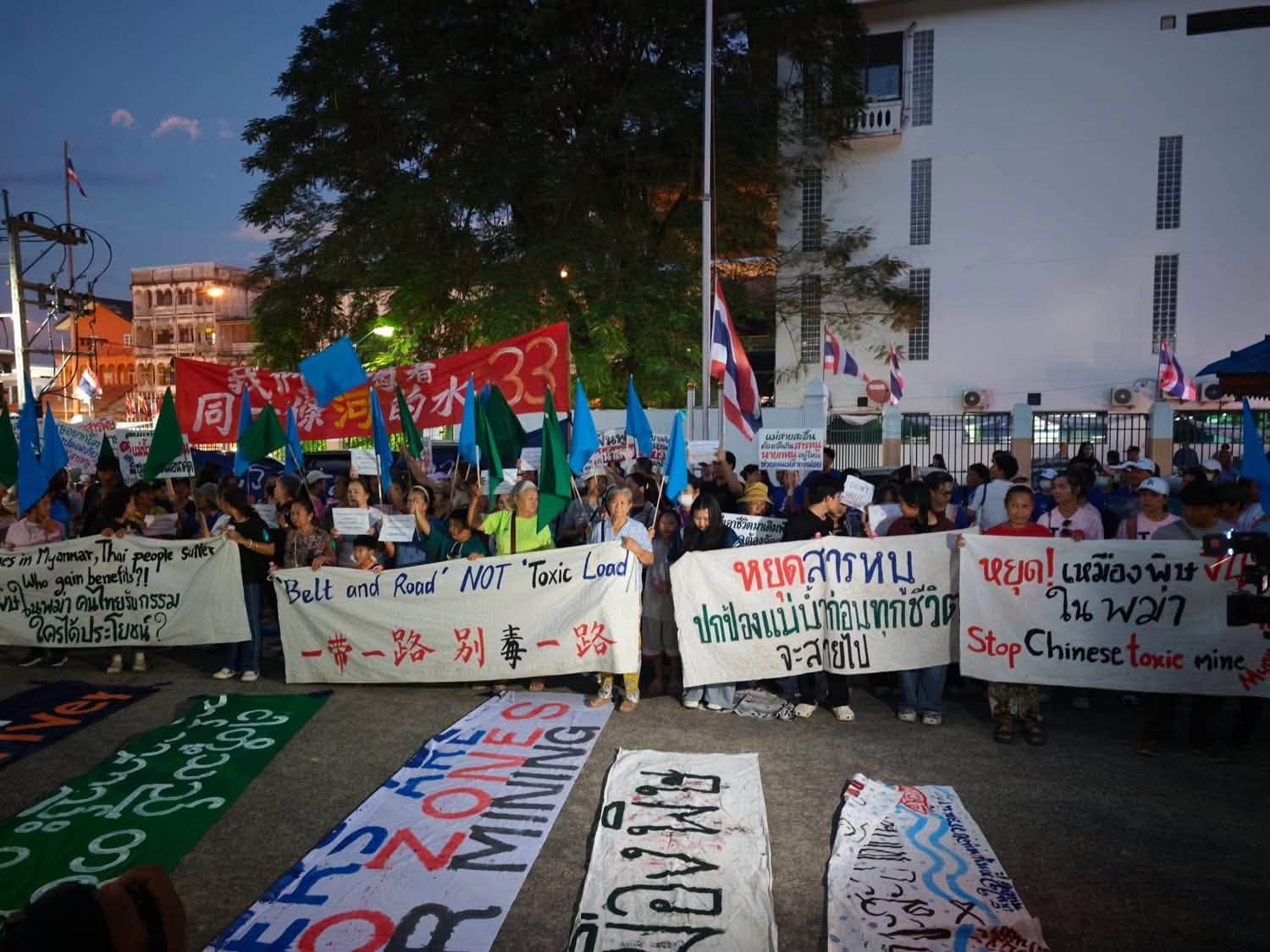
Deputy Agriculture Minister Piyarat Tiyapairat and Chiang Rai Gov. Chucheep Pongchai joined Yodchanan at the border gathering, where members of the Kok, Sai, Ruak and Mekong River Protection Network detailed worsening damage to local livelihoods. The coalition addressed its formal petition to Prime Minister Anutin Charnvirakul, warning that toxic sediment has degraded fish habitats, contaminated riverbank soil and hurt tourism operators along the Kok River.
Contamination now spans at least six cross-border waterways: the Kok, Sai, Ruak, Mekong, Salween and Kraburi rivers. Affected communities stretch across Chiang Mai, Chiang Rai, Mae Hong Son, Loei, Nong Khai, Bueng Kan, Nakhon Phanom and Ranong provinces. Residents told officials that Chiang Mai and Chiang Rai lack provincial heavy-metal testing centers, causing long delays when analyzing soil, water and farm produce. Growers also lack pre-harvest safety screenings and clear agricultural risk maps.
Upstream Mining Fuels Cross-Border Crisis
The dispute centers on a rapid expansion of unregulated rare-earth and gold mining inside Myanmar’s Shan State, just upstream from northern Thailand. Conflict in Myanmar has weakened central oversight, allowing mining operations linked to ethnic armed groups and Chinese supply chains to extract minerals without environmental safeguards. Waste runoff washes directly into mountain tributaries feeding the Sai and Kok rivers before entering the Mekong.
Public alarm has grown across Thailand following official health screenings that detected elevated arsenic levels in urine samples from residents in Chiang Rai and Nong Khai provinces. Civic groups have also criticized earlier bilateral water agreements with Myanmar as too weak to stop pollution at its source, while Chiang Rai hoteliers report booking cancellations driven by water safety fears.
Demands for Trade Curbs and Four-Party Talks
To protect domestic farms, the network proposed 13 internal measures. Key demands include building dedicated testing labs in Chiang Mai and Chiang Rai, testing crops with a five-day turnaround before harvest and compensating affected growers. The group also pressed officials to secure alternative irrigation water for 100,000 rai across the Kok, Sai and Ruak basins before December planting begins, alongside support for safe aquaculture zones.
On foreign policy, advocates called on Bangkok to halt imports of critical minerals from Myanmar and block exports of mining machinery and chemicals across the border. They urged authorities to reconsider building sediment-trapping weirs on the Sai River and to convene four-party talks bringing together Thailand, Myanmar, China and ethnic armed organizations.
Yodchanan, who also serves as minister of higher education, science, research and innovation, promised to review every proposal, including concerns over the Sai River weir project. “We must not divide protesters from the government,” he told the crowd. “We are all Thai, and we must unite our voices in one direction so we carry real weight on the international stage.”