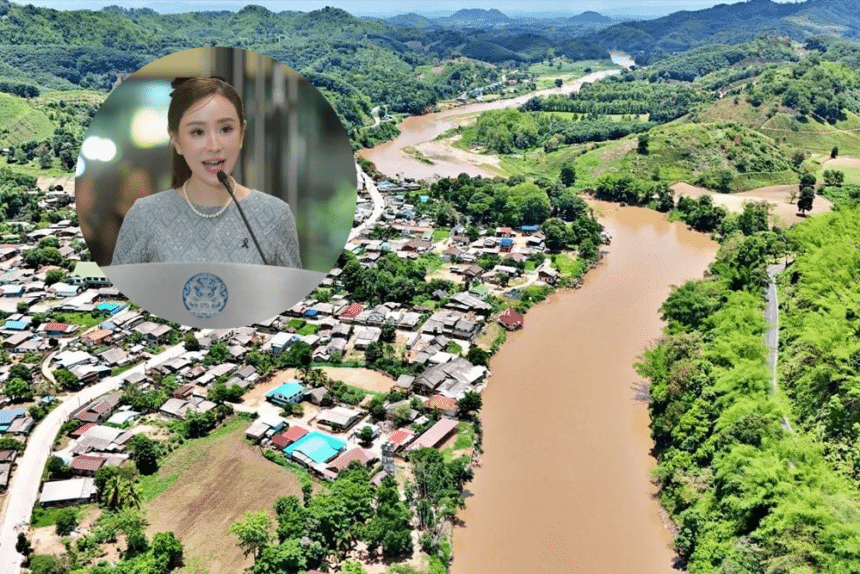
CHIANG RAI— Thailand’s central government will deploy artificial intelligence-controlled sediment weirs to strip up to 94.6% of toxic arsenic from the Kok and Sai rivers, shielding 27,000 rai (10,670 acres) of northern rice paddies ahead of high-stakes regional talks this week.
Deputy government spokeswoman Capt. Phatdarasmi Thongsaluaykorn announced the emergency engineering push ahead of trilateral meetings with Myanmar and China scheduled for Nov. 24–26. Heavy metal runoff tied to upstream mining in Myanmar has repeatedly forced tap water shutdowns in Chiang Rai’s Mae Sai district, threatening drinking supplies and crops for thousands of border residents.
Key Takeaways• An 18-month AI weir pilot in Mae Sai aims to cut arsenic in agricultural runoff by 94%, protecting 3,356 farming households. • Rapid nano-biochar filters already installed in Chiang Rai have slashed raw water arsenic by nearly 95% for under 2 baht per 1,000 liters. • Thai officials will present arsenic isotope “fingerprints” during Nov. 24–26 talks with Myanmar and China to prove upstream origins. |
AI-Guided Weirs Target Toxic Silt
Proposed by the Ministry of Higher Education, Science, Research and Innovation, the smart sediment trap targets fine silt particles that carry arsenic downstream. Researchers from Thailand Science Research and Innovation, Naresuan University and the water consultancy DHI tested the design using a 523-day digital twin simulation of the river.
When river turbidity spikes, automated gates divert muddy water into riverside basins and dose it with coagulants only as needed. Sensors verify arsenic levels before returning clean water to the river, while toxic sludge is weighed, barcoded for traceability and hauled to hazardous waste facilities.
Computer models show three units along kilometers 95 to 99 of the Sai River would keep water within safety limits for 476 out of 523 days, ending periodic waterworks shutdowns. Cabinet officials approved an 18-month sandbox trial at the Mae Sai irrigation headworks spanning the 2027 rainy season, with survey teams scouting Ban Mueang Daeng and the Chiang Rai weir.
Cross-Border Mining Fuels Northern Water Crisis
The emergency engineering push follows months of escalating contamination along Mekong tributaries flowing out of Myanmar’s conflict-ridden Shan State. Unregulated gold and rare-earth extraction across the border has dumped heavy metals into waterways that sustain northern Thai towns and farmland.
Earlier in November, arsenic concentrations 30 times above safe limits forced tap water suspensions across 14 Mae Sai villages, disrupting more than 20,000 households. Public health screenings across Chiang Rai also found elevated inorganic arsenic in 31 of 549 residents tested, turning an environmental dispute into an urgent public health and economic threat for border farmers and tourism operators.
Clean Tap Water, Crop Zoning and Regional Diplomacy
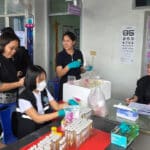
To protect residents immediately, the National Nanotechnology Center deployed M-Sense test kits that detect arsenic within five minutes. All 30 recent samples from bottled water, ice plants, schools and Mae Sai Hospital passed safety checks. Four nano-biochar filtration units are already running in Chiang Rai; at Ban Rim Kok, filters cut raw water arsenic from 0.069 to 0.0035 milligrams per liter—nearly 95%—at a cost below 2 baht per 1,000 liters.
Relief trucks have delivered over 100,000 liters of drinking water to Chiang Mai’s Tha Ton subdistrict, backed by 22.5 million cubic meters of reservoir reserves for Fang and Mae Ai. Longer-term upgrades include 165 million baht for 22 community groundwater systems serving 17,600 Mae Sai residents and a pipeline drawing from the Mae Thalop reservoir.
The Industry Ministry is tightening mineral import-export permits to choke off illegal ore smuggling, while agricultural teams are testing 50 sites in Mae Ai to publish a color-coded Agri-Map by Dec. 15. Clean green-zone crops will receive Good Agricultural Practices certification, whereas tainted harvests will be bought up and destroyed. A central public portal will publish verified soil and water data as Thai diplomats bring isotope “fingerprints” of the arsenic to Beijing and Naypyidaw negotiators this week.