CHIANG RAI – University researchers in northern Thailand announced Friday that rice grown along the polluted Sai and Ruak river basins passed international food safety tests for arsenic, directly refuting market rumors that prompted mills and brokers to freeze grain purchases.
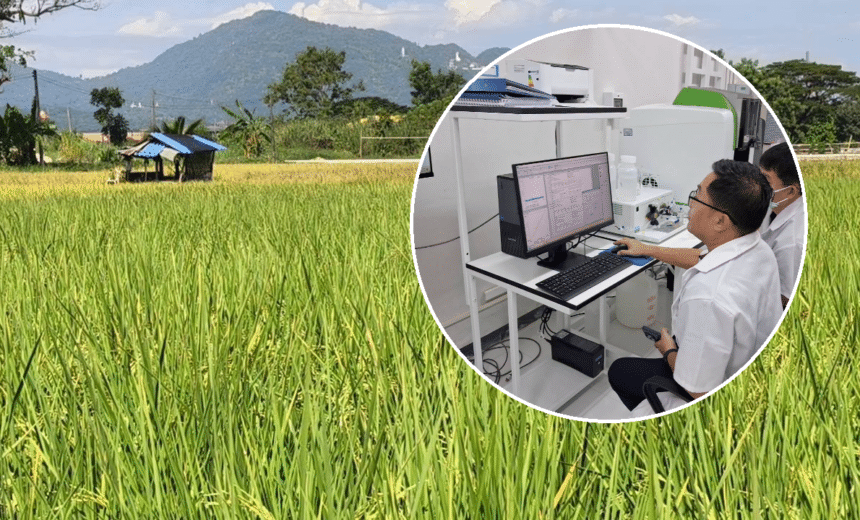
The Faculty of Science and Agricultural Technology at Rajamangala University of Technology Lanna Chiang Rai, working with provincial officials, released laboratory results on Nov. 20 showing all 10 tested grain samples fell well below Codex Alimentarius safety thresholds. The findings offer immediate relief to border farmers whose harvest stalled after buyers cited heavy metal contamination fears to slash prices or halt procurement.
Key Takeaways
- All 10 rice samples from Mae Sai and Chiang Saen districts tested between 0.052 and 0.157 milligrams per kilogram, meeting international Codex inorganic arsenic limits.
- Researchers collected the grain and soil samples on Nov. 17 at the Mae Sai Agricultural Cooperative and completed testing on Nov. 19.
- Provincial authorities and scientists plan expanded sampling with national rice agencies to restore trader confidence across domestic and export supply chains.
Laboratory Results Defuse Market Panic
Assistant Professor Dr. Subin Jaitha, head of the Scientific Instruments and Services Unit at Rajamangala University of Technology Lanna Chiang Rai, detailed the testing timeline. Provincial officials and university scientists collected the samples on Nov. 17 at the Mae Sai Agricultural Cooperative, Sri Mueang Chum branch, before completing laboratory screening.
The batch included seven white rice samples and three brown rice samples harvested from Ko Chang, Wiang Phang Kham and Sri Mueang Chum subdistricts in Mae Sai district, alongside Sri Don Mun subdistrict in neighboring Chiang Saen district. Investigators also analyzed one paddy soil sample, which registered 23.584 milligrams of arsenic per kilogram.
Under international Codex standards, inorganic arsenic cannot exceed 0.35 milligrams per kilogram in brown rice or 0.20 milligrams per kilogram in polished white rice. Every tested batch cleared those ceilings by wide margins. Brown rice samples measured 0.091, 0.136 and 0.133 milligrams per kilogram. White rice samples ranged from a low of 0.052 milligrams per kilogram to a peak of 0.157 milligrams per kilogram, with remaining batches recording 0.059, 0.087, 0.117, 0.119 and 0.122 milligrams per kilogram.
Upstream Mining Drives Cross-Border Contamination Fears
The market panic did not emerge in a vacuum. Water quality tests along the Sai River and Ruak River have repeatedly detected arsenic concentrations above national safety limits throughout 2026. Environmental monitors and Thai authorities trace the heavy metal runoff to unregulated rare earth and gold mining operations across the border in Myanmar’s Shan State, where toxic tailings wash directly into tributaries feeding northern Thailand’s primary agricultural plains.
Extreme sediment loads have strained local infrastructure for months. Earlier in November, turbidity in the Sai River spiked to 14,000 nephelometric turbidity units, temporarily overwhelming municipal water treatment plants in Mae Sai. As reports of contaminated river water and stalled grain orders circulated online during peak harvest season, central Thai rice mills and export brokers feared shipments from Chiang Rai would fail strict foreign customs inspections.
Agronomists note that soil arsenic levels do not automatically translate into toxic grain, depending on soil chemistry, water management and rice cultivars. Yet without verified crop data, local cooperatives and private drying yards suspended buying or demanded steep discounts, leaving border growers holding unsold paddy.
Government and Researchers Expand Testing Push
The university laboratory clearance coincides with broader diplomatic and public health interventions from Bangkok. On Nov. 19, Prime Minister Anutin Charnvirakul ordered the Ministry of Natural Resources and Environment to accelerate cross-border water talks with Myanmar and establish joint river monitoring before the end of the month. Simultaneously, provincial health officials screened more than 6,200 residents across Chiang Rai to track human exposure.
Subin said the research team will partner with national rice department agencies to collect additional grain and soil samples across wider cultivation zones. Provincial leaders expect the expanded dataset to reassure domestic millers and international importers that Chiang Rai rice remains safe for consumption.