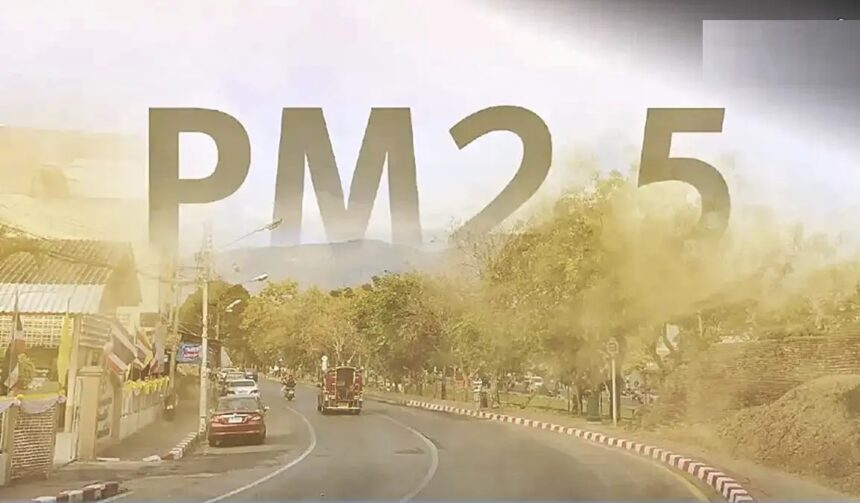
CHIANG RAI — Provincial authorities across Chiang Rai and Chiang Mai are locking in zero-burning enforcement zones, mobile alert networks and farm subsidies ahead of northern Thailand’s annual dry-season smoke crisis following a direct order from the prime minister.
The nationwide directive targets a minimum 15% cut in burned farmland before temperature inversions trap hazardous fine particulate matter, known as PM2.5, inside mountain valleys between February and April. Under the Royal Thai Government’s tightened agricultural controls, governors in upper northern provinces must deploy joint forestry patrols, enforce strict bans on open-air crop and forest fires, and connect residents to real-time air quality warnings.
Key Takeaways• Provincial governors in Chiang Rai and Chiang Mai are activating strict open-burning bans and joint patrols to cut burned farmland by at least 15%. • More than 250 million baht in state funding supports zero-burn farming alternatives, backed by import restrictions and crop traceability rules. • Residents can track live PM2.5 readings via Air4Thai, receive Cell Broadcast emergency alerts, and report illegal fires through the 1362 forestry hotline. |
Strict Bans and Farm Alternatives Take Shape
Local task forces in Chiang Mai and Chiang Rai are establishing multi-month bans on open burning across agricultural land and state forest reserves, pairing village-level firebreaks with criminal penalties for violators. District officials and Department of National Parks, Wildlife and Plant Conservation rangers are mapping high-risk forest fringes to intercept unauthorized clearing before dry undergrowth ignites.
Enforcement alone cannot clear the skies if smallholders lack affordable ways to process crop residue. According to the Thai Public Relations Department, Bangkok has allocated more than 250 million baht toward zero-burn farming programs, prioritizing major economic crops such as maize and rice. Local agricultural offices are distributing bio-decomposer microbes, subsidizing tractor-mounted balers to convert stalks into livestock feed, and enforcing traceability rules that block mills from buying corn harvested from burned fields.
Why Northern Valleys Trap Hazardous Smoke
The early mobilization reflects lessons from spring 2026, when prolonged dry spells and soaring fire counts pushed Chiang Mai to the top of global air pollution rankings. During the 2026 northern haze emergency, PM2.5 concentrations in several districts exceeded 300 micrograms per cubic meter—eight times Thailand’s 24-hour safety threshold of 37.5 micrograms—forcing the Ministry of Interior to declare disaster zones across Chiang Mai, Lamphun and Phayao.
Geography compounds every spark lit in the region. Chiang Mai and Chiang Rai sit inside steep mountain basins where cool night air gets pinned beneath warm upper-atmosphere layers, creating a meteorological lid that stalls wind dispersion for weeks. Satellite tracking during past haze peaks has also shown that 30% to 40% of northern Thailand’s fine dust drifts across borders from neighboring Myanmar and Laos, meaning local bans must work alongside regional diplomatic coordination to protect hospital wards and tourism economies.
Live Monitoring and Public Alert Channels
To track fires in real time, the Geo-Informatics and Space Technology Development Agency is transitioning its satellite hotspot surveillance to NOAA-20 orbital sensors, feeding daily thermal anomaly maps directly to provincial war rooms. Ground-level air stations operated by the Pollution Control Department complement those satellite passes with hourly dust measurements across urban centers and border districts.
Residents can monitor neighborhood air quality and file rapid reports through several official channels:
• Check hourly readings: Download the Pollution Control Department’s Air4Thai mobile app or visit the official Air4Thai monitoring portal for color-coded PM2.5 levels and health advisories.
• Receive emergency warnings: Keep mobile phones enabled for government Cell Broadcast alerts, SMS warnings in red-zone districts, and automated updates via the @linealert Line account.
• Report active smoke or fires: Call the Department of National Parks forestry hotline at 1362, the Pollution Control Department at 1650, or provincial Damrongtham complaint centers at 1567 to dispatch local fire crews.