
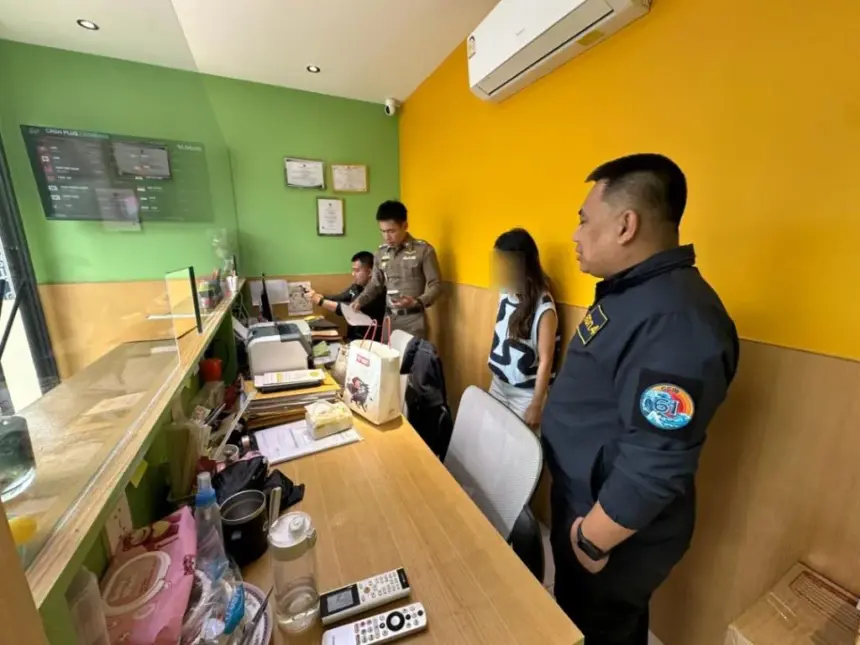
CHIANG MAI — Thai cybercrime investigators dismantled a transnational money-laundering ring on Friday that used a tourist-district currency exchange in Chiang Mai to convert more than 9.4 million baht ($275,000) in online scam proceeds into cryptocurrency for a Chinese syndicate boss.
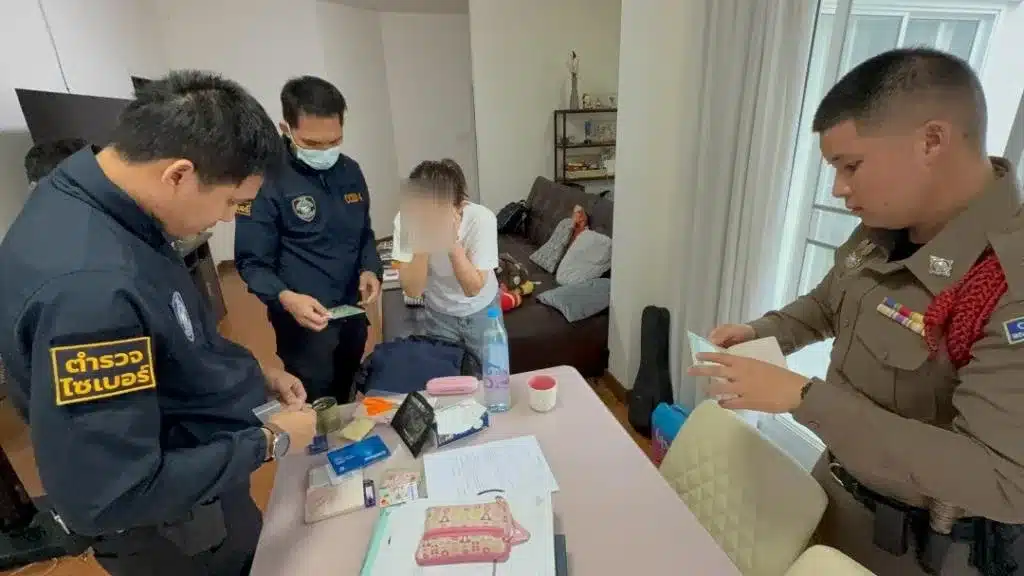
Officers with the Cyber Crime Investigation Bureau arrested a 36-year-old Chinese woman, identified as Yaning, and raided two properties in Chiang Mai following a multi-month probe into fraudulent social media investment schemes.
Police said her 42-year-old Chinese partner, Wenjun, known as “Tiger,” fled Thailand before officers could serve a warrant issued by the Nan Provincial Court, leaving behind a digital wallet trail showing 92 million baht in Tether (USDT) transactions.
Key Takeaways• Police traced 9,435,607.97 baht stolen from four online investment fraud victims through 24 mule bank accounts into a Chiang Mai currency exchange. • Investigators detained a 36-year-old Chinese suspect at the Chiang Mai Women’s Correctional Institution and charged a 35-year-old Thai woman with acting as an illegal corporate nominee. • Primary suspect Wenjun, 42, escaped abroad prior to raids, though blockchain records tied his personal crypto wallet to 2,749,566 USDT in total volume. |
The investigation began after one victim reported losing 7.15 million baht across 14 transfers to scammers who built trust on social media before pitching fake investment returns. According to police, Pol. Maj. Gen. Arut Sangchan, deputy commissioner of the Cyber Crime Investigation Bureau, announced at a Friday briefing in Nonthaburi that financial forensics linked the case to three additional victims, pushing documented losses above 9.43 million baht.
Speed defined the laundering pipeline. Syndicate runners routed stolen funds through 24 mule accounts and immediately withdrew physical banknotes at bank counters to sever digital banking trails. Couriers then delivered the cash to Wenjun at public spots across Chiang Mai, including golf courses, shopping malls and coffee shops. Brokers took a 2% to 3% commission per transaction to swap the cash into USDT and wire the tokens to upstream bosses.
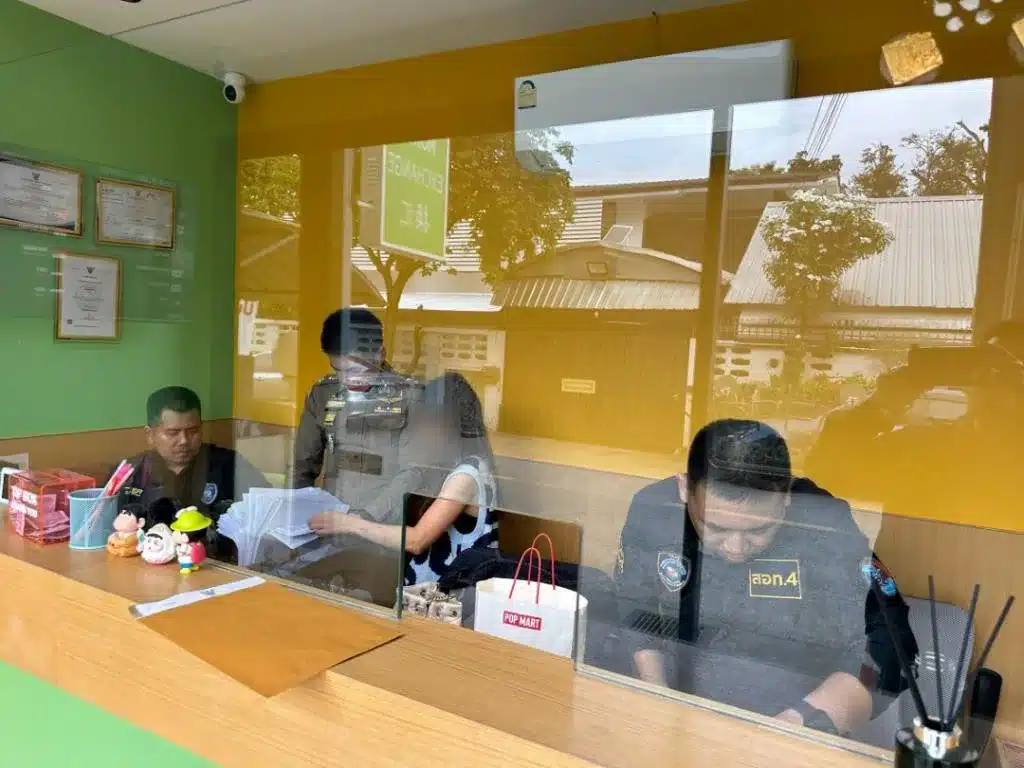
Storefront and Nominee Trail
Armed with Chiang Mai Provincial Court search warrants, Police Col. Putthipat Phanomchaijirakul led raids on Nov. 10 at Wenjun’s residence in Doi Saket district and a foreign exchange shop on Nimmanhaemin Road Soi 13. Officers seized 31 items, including computers, laptops, mobile phones, security camera footage and bank passbooks. Police reported that corporate filings listed a 35-year-old Thai woman, Juthamas, as sole director and majority shareholder while she worked the shop counter.
Bank records exposed glaring mismatches behind the storefront. Over nine months, the exchange reported just 443,025 baht in official revenue, yet Yaning’s personal accounts moved more than 22 million baht, including 11 million baht in over-the-counter cash withdrawals. Wenjun transferred 5.7 million baht to Yaning across more than 30 transactions, and Yaning sent 1.1 million baht to Juthamas — far exceeding the Thai clerk’s 19,000-to-24,000-baht monthly salary. Prosecutors charged Yaning under the Foreign Business Act and remanded her to custody, while Juthamas answered a summons on nominee and false-statement charges.
Tourist Hubs Attract Crypto Laundering
Nimmanhaemin Road’s dense concentration of international visitors makes high-volume cash exchanges look routine, giving criminal syndicates natural cover to wash illicit baht before moving funds across borders. The Chiang Mai bust mirrors a broader October 2026 crackdown in which police arrested 39 suspects tied to a 173-million-baht fake stock-trading app that converted cash into USDT for border scam compounds.
Regulators have moved to close those loopholes. In October 2026, the Bank of Thailand introduced stricter reporting rules requiring physical branches and currency exchanges to scrutinize cash transactions of 5 million baht or more — and flag smaller swaps inconsistent with customer profiles.
For Chiang Mai’s legitimate tourism businesses, heightened Anti-Money Laundering Office audits mean stricter source-of-funds checks, even as immigration authorities coordinate with foreign counterparts to track down Wenjun.