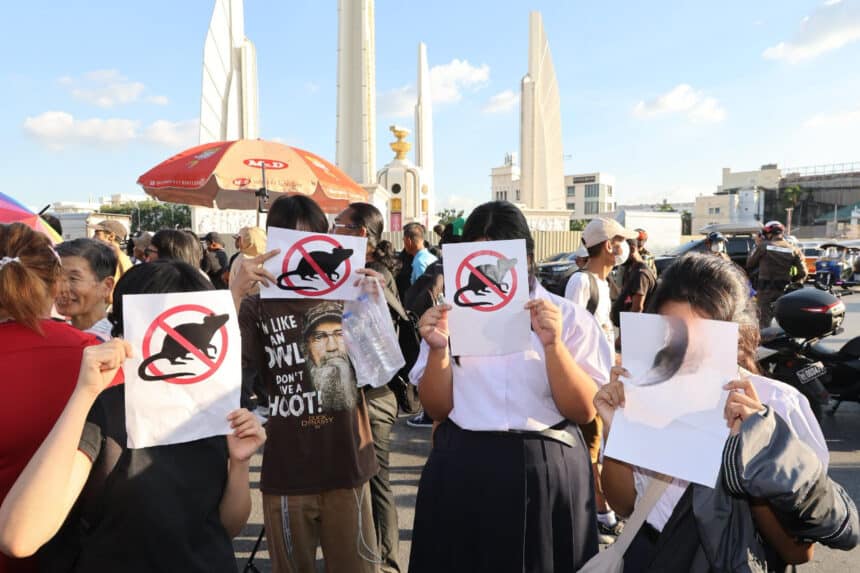
BANGKOK — Student activists and young demonstrators gathered at Bangkok’s Democracy Monument on Nov. 20 to demand the resignation of Prime Minister Anutin Charnvirakul. The afternoon rally, led by the Studem Network and Free Thai Youth, marked the first major street mobilization by Generation Z activists against Anutin’s administration.
Protesters called for sweeping political reforms, greater youth representation in national policymaking and an unconditional amnesty for people prosecuted under Thailand’s strict royal defamation law. Organizers announced a follow-up demonstration outside Klong Prem Central Prison on Nov. 22, prompting security advisories warning foreign nationals to steer clear of protest zones.
Key Takeaways• Youth coalitions led by Studem Network and Free Thai Youth rallied at Democracy Monument on Nov. 20 to demand Prime Minister Anutin Charnvirakul’s resignation and political reform. • Activists are pressing for a full amnesty covering Section 112 royal defamation cases and will stage their next demonstration outside Klong Prem Central Prison on Nov. 22. • Foreign visitors and expatriates are urged to avoid all demonstration sites, as participating in Thai political assemblies risks visa revocation and deportation. |
Cat Ears and Street Theater Return to Ratchadamnoen Avenue
Demonstrators began assembling around 3 p.m. near Satri Witthaya School along Ratchadamnoen Avenue, just steps from the fenced-off monument, where underground railway construction continues to restrict pedestrian access. Wearing school uniforms and cat-ear headbands, students revived the street-level satire that defined Bangkok’s youth rallies earlier this decade. Organizers framed the cat-ear theme around Anutin’s Thai nickname, “Noo,” which translates to mouse or rat.
Speakers from the Studem Network and Free Thai Youth rejected accusations from government backers that opposition parties funded the gathering. Student leaders told the crowd that high school and university students organized the event independently to demand democratic school governance, equal educational funding and a voice in shaping Thailand’s constitutional future.
Unfinished Business From 2020 Fuels the Amnesty Push
Friday’s protest taps directly into unresolved grievances left over from Thailand’s 2020 pro-democracy movement, when tens of thousands of students raised the three-finger salute to demand constitutional changes and limits on royal authority. While mass street rallies subsided after 2022 under heavy legal pressure, hundreds of young activists entered the court system on charges ranging from sedition to violations of the Public Assembly Act.
The flashpoint behind the Nov. 22 march to Klong Prem Central Prison is Section 112 of Thailand’s Criminal Code, the lèse-majesté statute that carries up to 15 years in prison per count for insulting the monarchy.
Legal monitoring group Thai Lawyers for Human Rights reports that at least 293 individuals have been prosecuted across 322 Section 112 cases since 2020. Although lawmakers enacted the Peaceful Society Act in August 2026 to grant amnesty for minor political offenses, Parliament excluded Section 112 defendants from relief, leaving dozens of young activists behind bars at Klong Prem.
For Bangkok commuters and local businesses along Ratchadamnoen Avenue, the renewed demonstrations signal fresh traffic bottlenecks around historic Rattanakosin Island. Police typically deploy crowd-control units and erect shipping-container or metal barricades near Government House and key intersections whenever student networks announce evening marches.
Prison Vigil and Strict Visa Warnings for Foreigners
Activist networks confirmed that the Nov. 22 assembly outside Klong Prem Central Prison in northern Bangkok will focus on letters of solidarity and bail demands for detained protesters. Police officials have urged motorists to avoid Ngamwongwan Road near the prison complex during the late afternoon.
Meanwhile, embassy bulletins and official travel advisories remind tourists and expatriate residents to stay away from all political gatherings. Under Thailand’s Immigration Act and Public Assembly laws, foreign nationals are barred from participating in domestic political demonstrations. Even passive onlookers caught inside police cordons risk arrest, immediate visa cancellation, blacklisting and deportation.