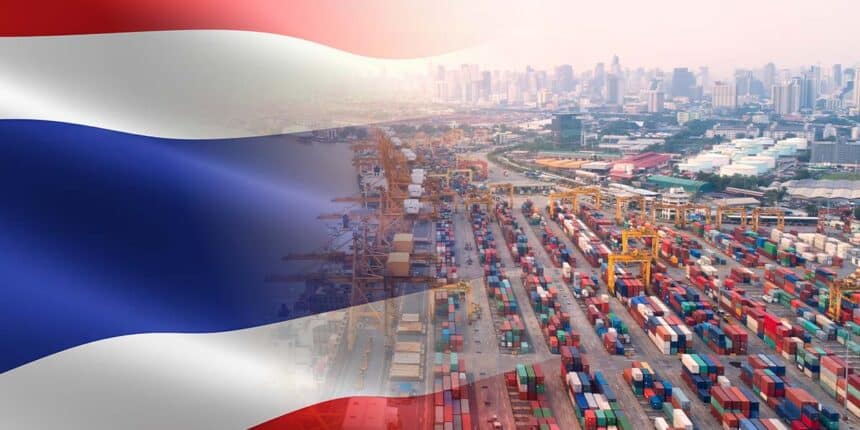
BANGKOK — Foreign tourist arrivals to Thailand dropped 12% year on year to 2.27 million in October, dragged down by a sharp retreat in Chinese visitors, even as merchandise exports surged 27.5% to $36.86 billion, the Finance Ministry’s Fiscal Policy Office reported Friday.
The diverging figures lay bare a split in Southeast Asia’s second-largest economy as global factory demand outpaces a cooling travel sector. While outbound shipments recorded their fastest expansion in more than five years, government economists warned that shifting U.S. trade policies and conflict in the Middle East pose immediate threats to growth heading into 2027.
Key Takeaways
- Foreign arrivals fell 12% from a year earlier to 2.27 million in October, though monthly volume ticked up 4.5% from September.
- Chinese visitor numbers tumbled 13.6% year on year to 308,942, weighing heavily on Thailand’s largest tourism source market.
- Exports jumped 27.5% to $36.86 billion, but the Fiscal Policy Office flagged U.S. tariff threats and Middle East instability as top downside risks.
Factory Shipments Offset Tourism Drag
Manufacturing carried the Thai economy in October. Data compiled by the Trade Policy and Strategy Office showed outbound shipments climbed for a 28th straight month, reaching $36.86 billion on strong global orders for computer components, network equipment and artificial intelligence hardware. Even when stripping out oil, gold and defense goods, core exports still expanded 24.5% from a year earlier, outperforming regional peers across Southeast Asia.
Imports grew even faster, jumping 53.2% to $49.2 billion as Thai factories stocked up on intermediate parts, semiconductors and raw materials, leaving a monthly trade deficit of $12.34 billion. Not every industrial segment shared in the rally: automobile and auto parts exports fell 17.6% amid sluggish overseas vehicle sales. Still, the Fiscal Policy Office said overall macroeconomic fundamentals remain steady, backed by $272.8 billion in foreign reserves and public debt held at 68.6% of gross domestic product.
Safety Warnings, Floods and Tariff Crosswinds
Behind October’s 13.6% slide in Chinese visitors sits a convergence of regional disruptions. According to Tourism Authority of Thailand figures, arrivals from mainland China dropped to 308,942 after the Chinese Embassy issued a travel safety advisory and seasonal flooding inundated parts of Bangkok and central provinces. Hotel operators in Chiang Mai, Phuket and Pattaya reported softer group bookings during what traditionally marks the opening of Thailand’s lucrative high season, forcing airlines and resorts to lean harder on domestic travelers and short-haul flyers from Malaysia and India.
On the trade front, October’s export boom reflects front-loaded orders ahead of potential American protectionism. The Office of the U.S. Trade Representative recently proposed a tariff ceiling of up to 18% on Thai goods, alleging that Chinese manufacturers use Thailand as an assembly hub to reroute excess industrial capacity into the U.S. market. Electronics, appliance and solar suppliers in Thailand’s Eastern Seaboard industrial corridor now face tighter origin audits and rising financing costs as American buyers brace for new customs duties.
Geopolitical Clouds Gather Over 2027 Outlook
A modest 4.5% month-on-month rebound in total arrivals from September offered slight relief for tour guides, street vendors and regional airports preparing for year-end holidays. Still, cumulative foreign arrivals through the first 10 months of 2026 lag behind last year’s pace by 4.66%, curbing household income in provinces heavily dependent on hospitality jobs and retail spending.
Looking ahead, the Fiscal Policy Office cautioned that retaliatory tariffs and prolonged hostilities in the Middle East could drive up maritime freight rates, stoke global energy prices and disrupt Thai supply chains. Headline inflation already climbed to a 45-month high of 3.9% in October on higher fuel and flood-related food costs, leaving central bank and finance policymakers with narrow room to maneuver if global factory demand cools early next year.