BEIJING — Across the outskirts of China’s major cities, roughly 1,000 residential weight-loss boot camps are locking paying clients behind guarded gates, confiscating outside food and enforcing grueling daily workouts to profit from a national obesity crisis affecting 400 million adults. But this $320 million-a-year residential industry now faces an existential threat from cheap GLP-1 weight-loss injections following the March 2026 patent expiration of semaglutide in China.
According to an investigative report by Asia business analysis channel Statrys, residential facilities dubbed “fat prisons” by locals have surged from 300 brands in 2020 to around 1,000 nationwide by late 2024, charging up to $1,800 per 28-day cycle for shared dormitories and starvation-level 400-calorie meal plans. With domestic pharmaceutical firms lining up to sell generic alternatives to Ozempic and low-dose Mounjaro retailing online for roughly $68 a month, consumers are weighing low-cost pharmaceutical subscriptions against locked-door boot camps marked by fatal safety scandals.
Key Takeaways
- China’s residential weight-loss camp sector has expanded to roughly 1,000 facilities generating over $320 million annually, locking voluntary clients inside compounds from Monday through Saturday on 400-calorie daily diets.
- Public health authorities estimate 400 million Chinese adults are overweight or obese—a figure projected to hit 70% by 2030—driving up to $150 billion in annual medical and productivity losses.
- Falling prices for GLP-1 injections, bolstered by Novo Nordisk’s March 2026 Chinese semaglutide patent expiration and online Mounjaro pricing near $2 a day, threaten to undercut residential camps costing $15 to $50 daily.
Inside China’s Locked-Door Weight-Loss Compounds
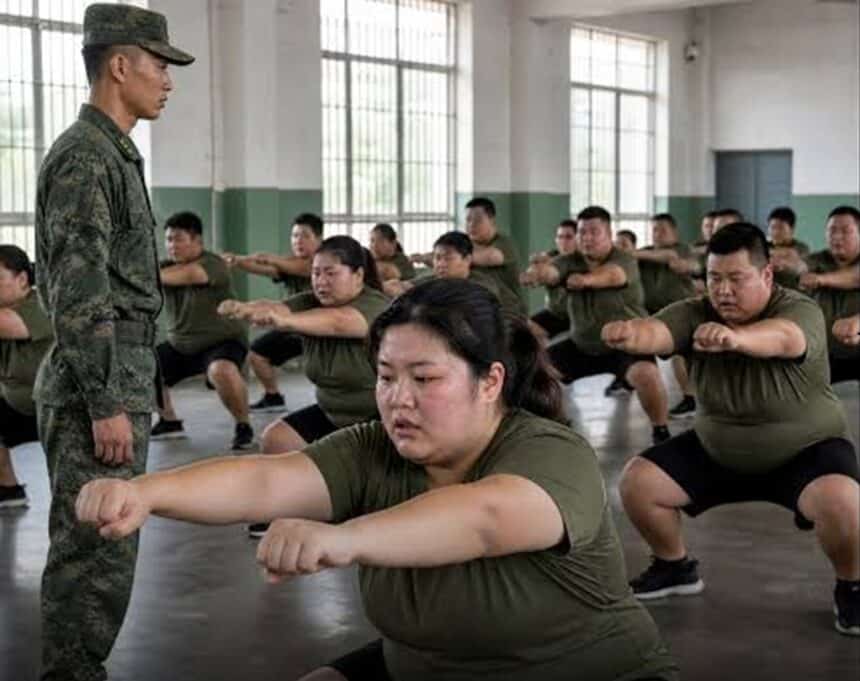
Nobody enters a Chinese weight-loss camp by court order, and no physician signs the admission forms. Clients—or frequently their parents—pay upfront to surrender their autonomy at suburban compounds from Monday through Saturday. Security cameras monitor corridors around the clock. Staff search luggage for hidden snacks at check-in, and posted gate warnings threaten to lock delivery drivers inside the premises if they breach the perimeter.
Days run on rigid military-style schedules. Residents complete up to four high-intensity workouts daily, including a 10-kilometer road hike where coaches trail the pack to prevent detours to street food stalls. Meals total roughly 400 calories per day, served strictly inside an eight-hour eating window. Curiously, camp rules permit cigarettes because tobacco contains zero calories.
Compliance is tracked twice daily on scales and logged into a mobile application. A green readout signals a met target; a red number triggers mandatory extra sessions the next morning. Refusing a surprise room inspection incurs a 100-rep exercise penalty before reentry. According to Statrys, some clients at a camp near Chengdu shed nearly 30 kilograms in a few months, while one viral video documented a 40-kilogram drop. High recidivism rates fuel repeat bookings, turning temporary rapid weight loss into recurring revenue for operators.
High Margins, Social Media Virality and Fatal Costs
The unit economics behind residential camps invert traditional hospitality margins. While conventional hotels lose profit on food and housekeeping, weight-loss camps expand their margins the less their guests eat. A 60-bed facility in Chengdu charging $450 a month—roughly $15 a day for a shared four-person bunk room and a single stage instructor leading dozens of clients—collects $27,000 monthly, or $324,000 annually. Upscale chains in Beijing charge between $650 and $1,450 for two- to four-week stays, while private rooms for a 28-day cycle reach $1,800.
Inspired by a localized adaptation of “The Biggest Loser” in 2013, the sector relies on clients filming daily progress updates on Douyin and Xiaohongshu for free promotion. Some operators recruit livestreamers directly, a practice that drew national scrutiny following the death of 21-year-old influencer Cuihua in May 2023. Weighing 156 kilograms, she aimed to lose 100 kilograms on camera, dropping nearly 28 kilograms in two months at a Guangdong camp before dying on her second day at a facility in Shaanxi province.
Local authorities investigated the Shaanxi camp, which paid financial compensation to her family. Other severe medical emergencies have surfaced, including a woman in Chongqing who required emergency surgery after losing 30 kilograms in 70 days. Despite regulatory warnings, demand persists, driven by beauty standards and viral body-size challenges—such as comparing waists to A4 paper sheets—that push even healthy-weight women toward extreme dieting. Clinical data cited in the report indicates eating disorders in China have quintupled over the past decade.
Urbanization and Beijing’s Policy Shift
China’s commercial weight-loss boom reflects a structural economic transformation spanning a single generation. In 1992, roughly one in five Chinese adults was overweight. Today, more than half carry excess weight—an estimated 400 million people—as hundreds of millions migrated from manual agricultural labor to sedentary urban office jobs fueled by app-based food delivery. Childhood rates mirror the trend, with nearly 20% of youths aged 6 to 17 classified as overweight or obese.
For policymakers in Beijing, rising obesity threatens public healthcare budgets and a shrinking labor pool. Direct medical expenses tied to obesity-related diabetes and cardiovascular disease cost roughly $61 billion annually, while a 2025 analysis by Eli Lilly’s China division estimated total economic losses—including sick days and early workforce exits—at $150 billion. To curb those costs, China’s National Health Commission and 15 partner agencies launched a three-year national “Weight Management Year” campaign in 2024.
The state initiative mandated two hours of daily physical activity in schools, opened over 5,500 hospital weight clinics and prompted cities like Hangzhou to write weight management into local regulations. Private tech platforms joined in: e-commerce giant JD.com enrolled more than 3 million users in a cashback challenge offering roughly $150 to anyone shedding 5 kilograms while selling scales, meal replacements and medications on the same storefront.
GLP-1 Drugs Undercut Camps as Obesity Spreads Across Asia
The sharpest threat to locked-door boot camps comes from pharmaceutical laboratories rather than regulators. GLP-1 receptor agonists, which mimic appetite-regulating hormones, generated $920 million in Chinese sales for Danish drugmaker Novo Nordisk in 2023 alone. Following a December 2025 ruling by China’s Supreme People’s Court, Novo Nordisk’s core Chinese semaglutide patent expired on schedule on March 20, 2026, setting the stage for at least 10 domestic manufacturers to prepare lower-cost versions.
Price competition has already reshaped consumer math. A patient in Beijing who paid $150 a month for injections last year can now purchase a month’s supply of low-dose Mounjaro online for roughly $68, or about $2 a day. For the cost of a single month at a residential camp, buyers can fund more than six months of medication—even though public insurance restricts coverage to diabetes patients and a May 2026 rule barred online platforms from marketing the shots explicitly for weight loss.
While clinical studies show patients regain roughly 60% of lost weight within a year of stopping injections, pharmaceutical firms benefit from long-term subscription use, with oral pill versions nearing market entry. Similar urban lifestyle shifts are accelerating across Southeast Asia, where Malaysia’s adult obesity rate tops one in five and childhood overweight rates in Vietnam are climbing nearly 8% annually—positioning Chinese drugmakers and camp operators alike to export their weight-loss models across the region.
Trending News:
China’s XPeng Targets 2027 Mass Production for IRON Robot
Thailand Crackdown on Deadly Weight-Loss Pills: FDA Warns Over Sibutramine