
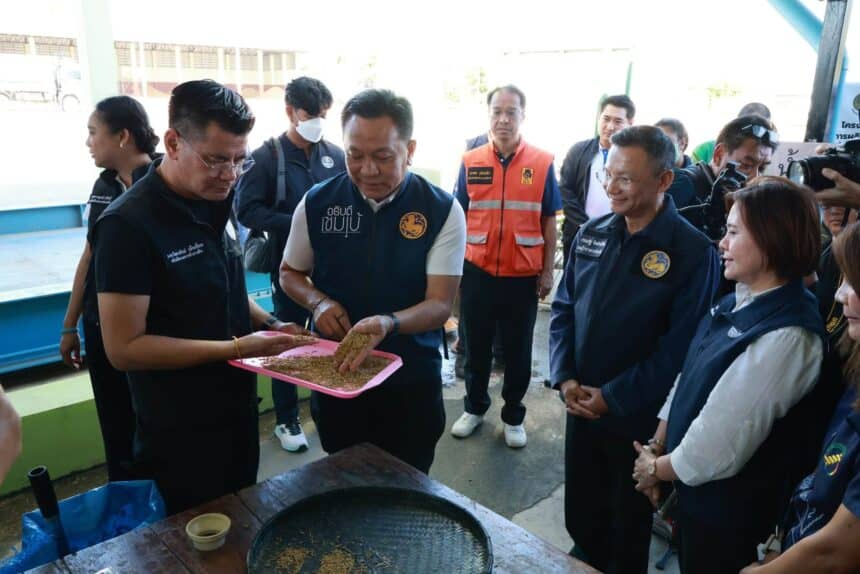
CHIANG RAI— Two top Thai officials visited Mae Sai, Chiang Rai on Saturday to revive stalling sticky rice sales and secure clean water supplies after reports of river contamination rattled local grain markets.
Department of Internal Trade Director-General Wattanasak Sur-iam and Department of Disaster Prevention and Mitigation Director-General Nirat Pongsitthithavorn inspected a 2026/27 paddy rice market at the Mae Sai Agricultural Cooperative. Joined by Deputy Chiang Rai Gov. Prasert Jitpleecheep, the officials moved to restart mill purchases and separate safe farmland from polluted riverbanks.
Key Takeaways• Paddy rice prices in Chiang Rai have rebounded to 10–10.20 baht per kilogram following safety clearances and state-backed market interventions. • Farmers have harvested 94% to 95% of the provincial crop, with the remaining grain expected to reach buyers within 10 days. • Authorities are mapping farmland by water source and shifting local waterworks away from the contaminated Sai River. |
Rice Mills Resume Buying as Prices Rebound
Trading had slowed sharply after rumors of tainted water prompted rice mills to pause purchases, pushing down farmgate prices. In response, the Department of Internal Trade opened special buying stations and coordinated with the Thai Rice Mills Association, the Bank for Agriculture and Agricultural Cooperatives and local security agencies to stabilize the market.
Subsequent laboratory testing found no contamination exceeding safety thresholds in the broader Chiang Rai rice supply, according to Wattanasak. Trading has since begun returning to normal. Local paddy prices climbed back to 10 baht ($0.30) per kilogram, reaching 10.20 baht in several districts.
Roughly 94% to 95% of Chiang Rai’s seasonal rice crop is already harvested and entering the market, Wattanasak said. Officials expect nearly all remaining grain to clear the fields within seven to 10 days, and commerce teams will continue monitoring mills to ensure fair pricing.
Cross-Border Mining Fuels Water Crisis
The market scare stems from a broader environmental crisis along Thailand’s northern border. Heavy metal runoff, including elevated arsenic levels linked to upstream mining across the border in Myanmar, has polluted the Sai River and neighboring Kok basin over the past year.
Even though most Chiang Rai paddies rely on rain or separate inland reservoirs, wholesale buyers in central Thailand recently canceled orders out of caution. The stigma threatened to punish clean farms alongside affected plots just as peak harvest arrived. Earlier this week, Thailand and Myanmar agreed to establish 12 joint water-sampling stations to track cross-border toxicity, while Thai officials moved to zone provincial farmland by contamination risk.
Mapping Risk Zones and Securing Clean Water
Nirat warned against blanket assumptions that taint the entire province’s agricultural output. Different districts draw from distinct water sources, he said, requiring officials to clearly map which farms irrigate from the Sai River and which use uncontaminated waterways.
Inspections confirmed actual contamination in specific rice plots directly bordering the Sai River. Authorities are enforcing targeted crop controls for those high-risk zones while protecting harvests from safe areas.
To safeguard household tap water, the disaster prevention agency is working with the Provincial Waterworks Authority and local village utilities to develop alternative raw water sources. Crews are expanding inland water reserves so Mae Sai residents no longer depend on the polluted river for daily consumption.