
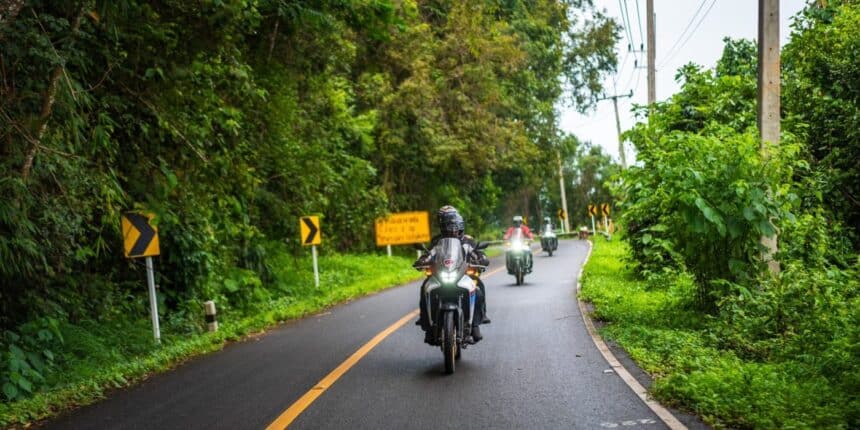
The Mae Hong Son Loop packs roughly 600 kilometers of mountain roads into a ride that’s memorable for its winding climbs and shifting views. Those same curves, along with changing road conditions and long distances between towns, make a little planning essential.
A four-day ride is possible, but extra days give you room to rest and explore without rushing the demanding stretches. This guide lays out the route, worthwhile stops, realistic trip lengths, and practical safety tips, with more advice on Northern Thailand driving safety by season before you set out.
Key Takeaways
- The classic Mae Hong Son Loop runs about 590 to 600 kilometers: Chiang Mai, Pai, Mae Hong Son, Mae Sariang, then back to Chiang Mai.
- Four days is a tight minimum; allow six to eight days for rest, sightseeing, and safer daily riding distances.
- Route 1095 has steep climbs and blind curves, so ride slowly and finish each stretch before dark. See these motorbike safety tips for northern Thailand.
- Before renting, confirm your motorcycle license and IDP cover the bike class, and check that your insurance covers riding in Thailand. Review Thailand IDP requirements.
- Refuel in towns, since stations are sparse between some stops, and check local road conditions before departure, especially after heavy rain.
Mae Hong Son Loop by Motorbike: The Route and Daily Ride
The standard clockwise route covers about 590 to 600 kilometers: Chiang Mai, Pai, Mae Hong Son, Mae Sariang, then back to Chiang Mai. Route 1095 carries riders through the steepest, tightest mountain curves; Route 108 is generally more open, though the final leg is still long. Four days is a tight schedule, so allow extra time if you want breaks and sightseeing without rushing.
Start in Chiang Mai and follow Route 1095 to Pai
The ride from Chiang Mai to Pai is roughly 127 to 130 kilometers. Route 1095 climbs into the mountains, with steep sections and a long sequence of sharp bends. Give yourself time to settle into the curves, especially if you’re new to riding in Thailand.
Some bends are blind, and minibuses, pickups, or motorcycles may cross the center line while turning. Stay in your lane and slow down before each curve rather than braking hard midway through it. Take breaks when you need them, and plan to reach Pai in daylight. Thailand’s official road safety guidance is worth reviewing before setting out.
Continue through Pang Mapha to Mae Hong Son
From Pai, it’s about 106 to 110 kilometers to Mae Hong Son, passing through Soppong and Pang Mapha. The road remains winding, so keep a steady pace and avoid letting a tight schedule push you into riding faster than conditions allow.
Near Pang Mapha, the turnoff for Tham Lod Cave makes a worthwhile stop if you have time to explore. Fuel needs more attention on this remote stretch: stations become sparse between towns, and gaps can exceed 50 kilometers. Fill up in Pai before leaving, then top off in Mae Hong Son rather than relying on finding fuel along the way. For more ideas on planning an overnight stop, see this Mae Hong Son travel guide.
Ride south through Khun Yuam and Mae Sariang
The leg from Mae Hong Son to Mae Sariang is roughly 160 to 163 kilometers, passing through Khun Yuam. Break the ride into manageable stretches and stop for fuel in towns, since stations are limited between them.
From Mae Sariang, Route 108 leads about 190 to 196 kilometers back to Chiang Mai. It’s generally more open than Route 1095, but distance and fatigue still make this a demanding final day. Start early, take breaks, and avoid adding detours unless you have enough daylight. A four-day itinerary means covering one main leg each day, but an extra day or two gives you more room to rest and enjoy the route.
Best Stops and Detours Along the Mae Hong Son Motorbike Route
You don’t need to fit every attraction into the ride. Choose stops that match your pace, and leave enough daylight for the mountain roads, especially when a detour adds distance.
Take a break in Pai and explore the mountain scenery
Pai makes a natural overnight stop after the winding ride from Chiang Mai. Rather than arriving late and leaving at first light, give yourself time to rest, eat, and explore the surrounding mountain scenery. A slower day here can make the next stretch toward Pang Mapha and Mae Hong Son feel more manageable.
If you have an extra night, consider a nearby waterfall or hot spring, but check conditions and travel times before setting out. Pai also rewards low-key plans, such as visiting local cafés or taking a short walk. For ideas that keep the visit relaxed, see these responsible travel tips for Pai.
Make time for Tham Lod Cave near Pang Mapha
Tham Lod Cave sits near the route between Pai and Mae Hong Son, making it a memorable stop for riders with room in their schedule. Cave visits can involve a guided walk and a raft ride through sections of the cave, so allow extra time rather than treating it as a quick roadside break. You can find a visitor overview of Tham Lod Cave, but confirm local access and tour arrangements before you go.
Choose a Mae Hong Son or Ban Rak Thai side trip
Mae Hong Son is a useful overnight base before riding south toward Khun Yuam. If you have additional days, Ban Rak Thai offers a longer side trip near the Myanmar border. Mae Surin Waterfall is another possible route extension, though reaching it can add riding time and distance.
Depending on which stops you combine, detours can add roughly 100 to 200 kilometers. Check the route and daylight before committing, and review Mae Hong Son attraction and travel updates before departure.
Consider Khun Yuam and Doi Inthanon on the return
Khun Yuam lies on the southern leg between Mae Hong Son and Mae Sariang, so it fits naturally as a break rather than a major detour. Doi Inthanon can extend the return toward Chiang Mai, but reaching the park and exploring it takes time. Review the options for a Doi Inthanon National Park visit and check the added distance before you go. If the stop would push your ride into dusk, save it for another trip.
How Many Days to Ride the Loop, and When to Go
The Mae Hong Son Loop is roughly 590 to 600 kilometers, but the tight curves and mountain roads make mileage a poor measure of riding time. Plan at least four days, and allow six to eight if you want room for breaks and sightseeing.
Plan four days at minimum, or take six to eight
A practical four-day itinerary gives you one main riding leg each day, with overnight stops in Pai, Mae Hong Son, and Mae Sariang:
- Day 1: Ride from Chiang Mai to Pai on Route 1095. Take your time on the bends and arrive with enough daylight to settle in.
- Day 2: Continue through Pang Mapha to Mae Hong Son. Tham Lod Cave can be a stop if you leave early and have time for the visit.
- Day 3: Ride south to Mae Sariang through Khun Yuam. Stop for fuel and breaks rather than pushing through the whole leg without pause.
- Day 4: Return to Chiang Mai on Route 108. Start early, since this is a long final stretch.
Four days is a minimum, not a relaxed pace. Six to eight days gives you time to rest in Pai or Mae Hong Son, explore local sights, and take detours such as Ban Rak Thai without turning every day into a long ride. Use the extra time to shorten riding days, especially if mountain roads are new to you. Don’t try to ride the entire loop in one day.
Check weather, fog, and road conditions before departure
November through February is often recommended for riding, but seasonal patterns don’t guarantee clear skies or dry pavement. February through April can bring difficult haze in northern Thailand; the seasonal weather guide for Chiang Rai offers broader regional context.
Mountain fog can reduce visibility, especially at higher elevations, while rain leaves pavement slick and can bring debris onto the road. Check the Thailand Meteorological Department’s northern forecast shortly before departure, then check again each morning before a longer ride.
Road conditions can change after storms or roadwork. Since live closure information isn’t confirmed here, ask locally about the route before setting out, particularly after heavy rain. If visibility or grip worsens, slow down and stop somewhere safe rather than trying to keep to the itinerary.
Renting a Motorbike and Staying Safe on the Loop
A little preparation makes the ride safer and can prevent a rental problem from turning into an expensive one. Check your documents and coverage before choosing a bike, then take time to inspect it and plan your riding days around daylight and fuel stops.
Check your motorcycle license and insurance before renting
You need a license that covers motorcycles, plus an International Driving Permit (IDP) with the motorcycle category if required for your license, or an appropriate Thai motorcycle license. A car-only license or car-only IDP does not authorize you to ride a motorbike. Carry your home license and IDP together, and review Thailand’s motorcycle license requirements before you rent.
Also read your travel insurance policy’s exact terms. Some policies require the correct license and IDP, and may limit coverage by engine size or other conditions. Ask the rental shop what its insurance covers and what you would owe after damage or theft. Thailand’s compulsory third-party insurance is not the same as personal injury coverage or full damage protection for you and the rental bike. For an additional overview, see this motorcycle license and IDP guide.
Inspect the bike, helmet, and rental paperwork
Before leaving, check that the helmet fits securely and has no visible damage. Test the brakes, inspect the tires, and confirm that the lights work. Ask to see the registration and insurance documents, and make sure the bike’s details match the rental paperwork.
Photograph existing scratches, dents, and other damage from several angles, then ask the rental staff to note them on the agreement. Read the rental terms before signing, including the deposit and damage rules. Finally, save the shop’s contact details and confirm what to do if the bike breaks down on a remote stretch.
Ride within your limits and refuel in towns
The loop is paved, but that doesn’t make every stretch easy. Route 1095 has steep climbs and blind bends, and the road can feel demanding if you’re new to riding in Thailand. Ride in daylight, slow before curves, and leave room for gravel, dogs, livestock, fog, and vehicles that swing wide into your lane.
Fuel stations are sparse between major towns, so don’t count on finding one just when you need it. Refuel in Chiang Mai, Pai, Mae Hong Son, Mae Sariang, or Hot, and top off before leaving town for a longer leg. If you feel tired or conditions worsen, stop somewhere safe and adjust your plans.
Frequently Asked Questions
The route plan covers the main ride, but a few practical details can affect how comfortable each day feels. These answers help you prepare for passengers, overnight stops, navigation, and unexpected problems.
Can I ride the loop with a passenger?
Yes, but a passenger and luggage add weight, which can affect braking, balance, and control on steep climbs and tight bends. Choose a motorcycle that can handle the combined load, and take a short test ride together before leaving Chiang Mai. If either rider feels uncomfortable, travel separately or choose another form of transport.
Should I book places to stay in advance?
Booking ahead can make the trip easier, especially if you have fixed overnight stops or want a particular type of lodging. It also gives you less flexibility if rain, fatigue, or road conditions delay your arrival. Leave room in the itinerary for a slower day, and avoid planning a long ride just to reach a prepaid room.
Is my phone map enough for navigation?
A phone map can help with directions, but don’t rely on it as your only source of route information. Download an offline map before leaving towns, since mobile service may be limited on remote stretches. Check signs and confirm the next stop before setting off, rather than handling your phone while riding.
What should I do if a road is closed?
Don’t ride around a barrier or follow a detour unless local authorities or reliable local information confirm that it’s open to motorcycles. Ask at your accommodation or a nearby service station, then adjust your route or wait for conditions to improve. Heavy rain can cause flooding and landslides, as reported in these Mae Hong Son road disruption updates.
Do riders and passengers need helmets?
Yes. Both the rider and passenger must wear helmets in Thailand, so check that each helmet fits securely and fastens properly before starting the ride. Thailand’s helmet rule applies to passengers as well as riders, according to Royal Thai Police guidance reported by The Nation.
What should I do if the bike breaks down?
Move as far off the road as you safely can, especially near a bend where approaching drivers may not see you. Contact the rental shop using the number you saved before departure, and share your location if you have service. If you’re stranded on a remote stretch, stay clear of traffic and ask for help from a staffed business or a local authority rather than attempting an unfamiliar repair.