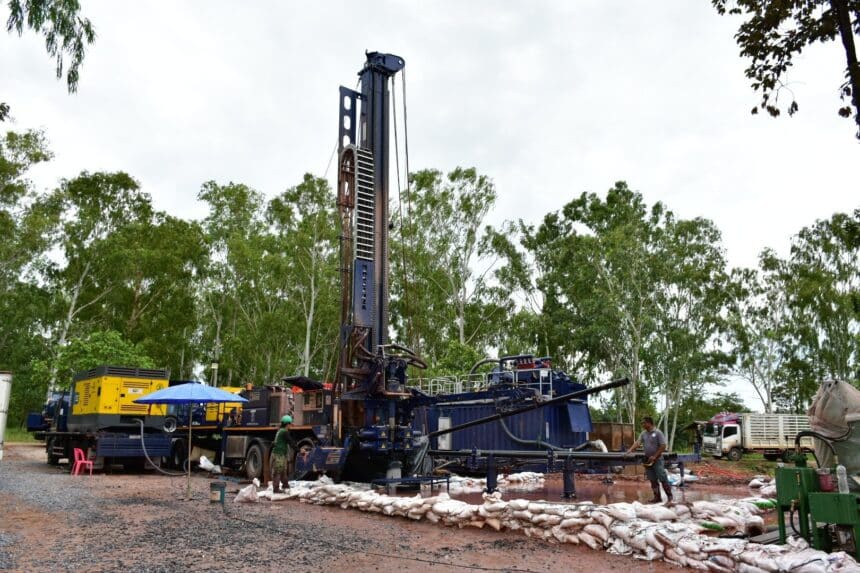
CHIANG RAI — Thai authorities are moving to drill 10 deep groundwater wells across Chiang Mai and Chiang Rai provinces this month to replace tainted river water after heavy metal pollution disrupted tap supplies for more than 20,000 border households.
The emergency drilling plan follows an urgent directive from Prime Minister Anutin Charnvirakul after laboratory tests found arsenic levels up to 39 times above national safety limits in the Kok, Sai and Ruak rivers. While the new wells remain in development, officials are urging residents to distinguish between unverified village boreholes, suspended river intakes and municipal tap networks already certified safe to drink.
Key Takeaways
- Emergency Well Rollout: The government is developing 10 new deep groundwater wells in Chiang Mai and Chiang Rai to supply clean water away from contaminated border rivers.
- Safe vs. Unsafe Supplies: Municipal tap water treated by the Provincial Waterworks Authority meets safety standards, whereas untreated river water and nine shallow village wells failed arsenic tests.
- Boiling Warning: Health officials warn residents not to boil tainted well or river water, as heat concentrates arsenic instead of removing it.
Where New Wells Are Planned and How Testing Stacks Up
Engineers with the Department of Groundwater Resources are targeting high-need border districts, including Mae Sai, Chiang Saen and Mueang Chiang Rai in Chiang Rai province, alongside Mae Ai district in neighboring Chiang Mai. Unlike existing community boreholes that tap shallow soil layers near riverbanks, the 10 planned wells will bore into deeper bedrock aquifers shielded from surface runoff. Crews will pair the new wells with reverse-osmosis filtration units before connecting them to local distribution pipes.
Recent laboratory testing underscores why location and depth matter. Out of 133 groundwater samples collected across both provinces this year, 124 met Thailand’s drinking water standard of 0.01 milligrams of arsenic per liter. Nine shallow community wells exceeded that threshold, confirming that polluted river water has begun seeping into porous upper aquifers.
Officials stress that these planned wells are distinct from water systems already certified safe. Treated municipal tap water supplied by the Provincial Waterworks Authority in Chiang Rai city passed six-stage filtration audits and remains safe for household use. Conversely, raw water from the Kok, Sai and Ruak rivers—and local village waterworks in 14 Mae Sai villages where intakes were shut down—remains unsafe for drinking, cooking or irrigation.
Upstream Mines in Myanmar Drive a Cross-Border Crisis
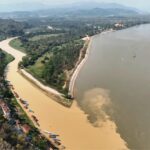
The contamination did not start inside Thailand. Satellite modeling and chemical tracing by researchers at Naresuan University and Mae Fah Luang University linked the toxic sediment to rapidly expanding gold and rare-earth mining operations upstream in Myanmar’s Shan State. The Kok and Sai rivers originate in those mountain mining zones before flowing south into northern Thailand and emptying into the Mekong River.
Unregulated extraction processes use hazardous chemicals to leach minerals from hillsides, washing arsenic, lead and cadmium into river tributaries during heavy rains. Over the past year, contaminated river water has threatened roughly 19,000 hectares of rice paddies and orchard land in Chiang Mai and Chiang Rai, forcing vegetable buyers to halt orders and prompting health screenings for riverside farmers. Because diplomatic talks with Myanmar authorities have moved slowly, Thai agencies have shifted toward building independent, deep-groundwater infrastructure on Thai soil to insulate border towns from upstream discharges.
Safe-Use Guidance for Northern Residents
Public Health Minister Phatthana Phromphat warned villagers this week against attempting to purify suspect well or river water on household stoves. Boiling kills bacteria, but it does not remove dissolved heavy metals. Evaporation instead increases the concentration of arsenic left behind in the pot.
Until the 10 new groundwater wells come online and pass final certification, residents in affected subdistricts should rely exclusively on municipal tap water certified by the Provincial Waterworks Authority, bottled drinking water or water dispensed from government-approved reverse-osmosis stations. Health officials also advise farmers to wear waterproof boots and gloves when working in flooded fields near the Kok, Sai and Ruak rivers, and to avoid eating fish or shellfish caught in those waterways until further testing clears local catches.