
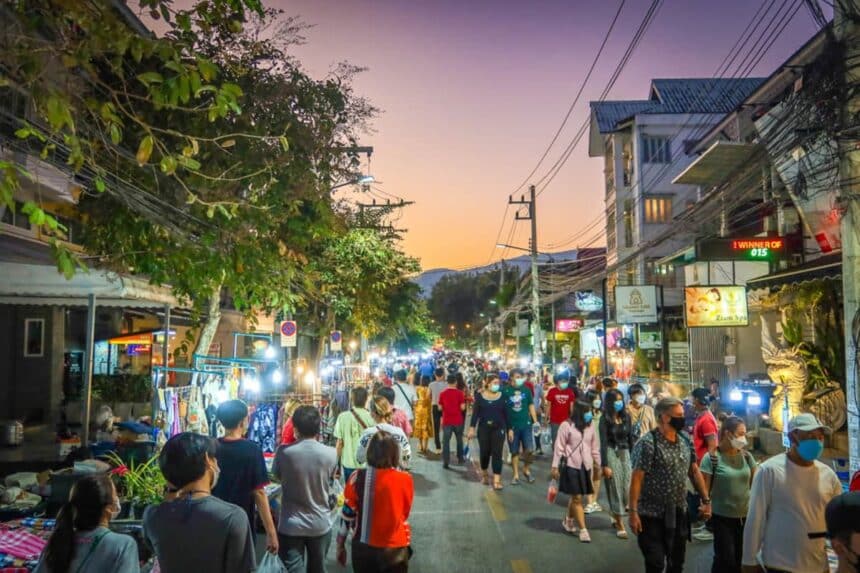
As evening settles over Chiang Mai’s Old City, Sunday Walking Street fills Ratchadamnoen Road with food stalls, craft tables, and a steady flow of visitors. It’s a lively place to sample Northern Thai dishes and browse textiles, ceramics, and other souvenirs.
The market runs west from Tha Phae Gate toward Wat Phra Singh, and crowds build as the evening goes on. Stall hours can vary, so plan for an unhurried walk, bring comfortable shoes, and leave room to browse and eat. Here’s how to choose what to try and what to take home, with a few practical tips for a more comfortable visit. Chiang Mai’s crafts, food, and hidden spots
Key Takeaways
- Sunday Walking Street follows Ratchadamnoen Road from Tha Phae Gate toward Wat Phra Singh, with stalls spilling into side streets and temple courtyards.
- Go in the late afternoon or evening; published opening times vary, while crowds are usually thickest from 7 to 9 p.m.
- Browse hand-printed textiles, silver jewelry, ceramics, and small souvenirs. Check materials and workmanship because not every item is handmade.
- Try sai ua, khao soi, coconut pancakes, or mango sticky rice, and bring small Thai baht notes for food and crafts. Temple courtyards offer food stalls and places to pause, as noted in this Sunday market guide.
- For other market options around the country, see this Thailand night market guide.
Chiang Mai Sunday Walking Street: What to Buy and Eat
The main route runs west from Tha Phae Gate along Ratchadamnoen Road toward Wat Phra Singh. As the market fills the Old City, stalls and food vendors also spill into side streets and temple courtyards, where you can pause for a snack or browse at a slower pace. Handmade crafts sit alongside mass-produced souvenirs, so take a close look before choosing.
Food is part of the browsing experience. You might find Northern Thai sai ua sausage, bowls of khao soi, grilled skewers, coconut pancakes, fresh fruit, or mango sticky rice. Temple courtyards often have food stalls and seating, while smaller portions make it easier to sample a few dishes as you walk. For more ideas on local dishes and other markets, see this Chiang Mai travel guide.
Look for Lanna textiles, silver, ceramics, and art
The craft stalls offer plenty to browse, including hand-printed fabrics, Lanna-style textiles, silver jewelry, ceramics, watercolors, and illustrated stationery. You may also spot natural soaps and small leather goods. For a closer look at the kinds of crafts sold along the route, consult this Sunday Walking Street craft guide.
Since the market includes both handmade work and factory-made goods, check the material, finish, and details before buying. Look for clear printing on fabric, smooth edges on ceramics, and secure clasps on jewelry. If you’re curious about a piece, ask the seller politely how it was made or where the materials came from.
Bargaining may be welcome at some craft stalls, especially if you’re buying more than one item. Still, it isn’t expected everywhere, so read the seller’s cues and keep the exchange friendly. Food prices are generally fixed, and bargaining over a snack isn’t customary.
Choose small souvenirs that are easy to take home
Compact finds are easier to carry through the crowds and pack for the trip home. Consider a textile, illustrated stationery, a small ceramic piece, natural soap, or a piece of jewelry. These can make useful keepsakes without taking up much room in your luggage.
Before paying, check the size and weight, then consider how fragile the item is. A ceramic cup may need extra wrapping, while a bar of soap or a paper notebook can travel with less fuss. If you’re buying fabric, ask how it folds or whether it needs special care. A quick check now can help you avoid discovering at the airport that your favorite find needs more space or protection than you planned.
What to Eat at the Sunday Walking Street Market
Food stalls make Sunday Walking Street a worthwhile stop even if you’ve already eaten. Rather than settling in for one large meal, look for small servings that let you taste several dishes as you walk. You might find Northern Thai sausage beside grilled skewers, then finish with coconut pancakes or fresh fruit.
Stall menus change, and not every vendor sells the same dishes. Check the price before ordering, especially if a menu or price list isn’t visible, and carry small Thai baht notes for quick purchases. Food prices are generally fixed, so bargaining isn’t expected. For a closer look at the region’s flavors, see this guide to Northern Thai food and regional flavors.
Try Northern Thai favorites like sai ua and khao soi
Sai ua is a fragrant Northern Thai sausage, usually made with pork and herbs, then grilled until smoky. Vendors often cut it into easy-to-eat portions, making it a practical snack as you browse. Since recipes vary, the balance of herbs and spice can differ from stall to stall.
Khao soi is a curry noodle dish, typically served as a hearty bowl rather than a walking snack. Its rich broth and noodles make it a good choice when you want a more filling meal. You can learn more about khao soi’s noodle and curry combination. Grilled pork and other skewers are another convenient option if you’d rather keep moving. Stall availability varies, so choose from what’s fresh and ready when you pass by.
Save room for coconut pancakes, fruit, and mango sticky rice
For dessert, look for khanom krok, small coconut pancakes with a soft center and lightly crisp edges. Mango sticky rice is another satisfying treat, with ripe mango served alongside sweet sticky rice. Grilled corn, cut fruit, and fruit smoothies offer lighter choices between richer snacks.
Portions are often manageable, but sharing makes it easier to sample more than one treat without overfilling. You can also buy a small serving first, then decide whether to try something else. Temple courtyards along the route may have food stalls and places to sit, which gives you a welcome break from the crowd.
When to Go and How to Find Your Way Along the Route
Chiang Mai Sunday Walking Street takes place on Sundays along Ratchadamnoen Road. Published opening times vary, so treat it as a late-afternoon-to-evening outing rather than planning around one exact start time. Many visitors browse and eat between 6:00 and 10:00 p.m., when more stalls are open and the market feels liveliest.
Start at Tha Phae Gate and follow Ratchadamnoen Road
Tha Phae Gate is the eastern landmark and a natural starting point. From there, follow Ratchadamnoen Road west through the Old City toward Wat Phra Singh. The route is around a mile long, but stalls also branch into nearby lanes and temple grounds, so the market can take longer to explore than the main road suggests.
Wat Phan On and Wat Chedi Luang are useful landmarks as you walk. They also help you keep your bearings if you step away from the main stretch to look around a temple courtyard or browse side-street stalls. For route details and a map, see this Sunday Walking Street guide.
Ratchadamnoen Road closes to vehicle traffic for the market, so arrange to be dropped off outside the pedestrian area or walk in from nearby. You won’t be able to ride directly along the market road once the closure is in effect. If you want to add more Old City stops to your evening, browse these Chiang Mai sightseeing ideas.
Arrive earlier for an easier browse, or later for the full buzz
Arriving in the late afternoon can give you more room to browse before the densest crowds arrive. However, stall schedules differ, and some vendors may still be setting up. Published hours vary, so check locally if you plan to arrive early.
By evening, more stalls are operating, and the food choices make it easy to turn the walk into dinner. The trade-off is that the route can slow to a shuffle as crowds build, especially around popular stalls. Allow extra time for browsing, ordering food, and finding a place to pause. A flexible plan works better than trying to cover the whole market quickly.
Simple Tips for Shopping, Eating, and Getting Around
A little preparation makes the Sunday Walking Street easier to enjoy, even when the route gets crowded. Wear comfortable walking shoes, carry only what you need, and leave room in your plans for slow-moving sections and snack stops. Since the market road closes to vehicles, arrange your ride to a drop-off point outside the pedestrian area, then walk in.
Bring cash and keep your purchases easy to carry
Cash is the safest payment option at food stalls and small craft tables. Some sellers may accept digital payments, but visitors shouldn’t rely on cards or QR payments. Bring Thai baht in small bills and coins so you can pay quickly without asking a vendor to break a large note.
Before you arrive, set a personal spending limit for food and souvenirs. That makes it easier to enjoy browsing without losing track of small purchases. For help planning costs beyond the market, see this Thailand travel cost breakdown.
Also think about how you’ll carry each purchase through the crowd and pack it for your trip home. Check the size and weight of larger items, and ask whether a fragile piece needs extra wrapping. A ceramic bowl or bulky textile can be awkward to carry for the rest of the evening, even if it looks manageable at the stall.
Shop and eat with care in the crowds
The walkway can become tightly packed, especially around popular food stalls. Keep your phone and valuables secure, and hold your bag where you can see it. If you want to stop and inspect a display, step to the side first so other visitors can pass.
Patience helps when the flow slows to a shuffle. Take your time ordering, allow space for people around you, and look for a temple courtyard or less crowded spot when you need a break. Small servings can make it easier to sample different foods without juggling too much as you walk. For more ideas on local market dishes, browse the Tourism Authority of Thailand’s Chiang Mai food guide.
Confirm the price before ordering, particularly when a menu or price list isn’t clear. Food prices are generally fixed, so bargaining over a snack isn’t customary. At some craft stalls, a polite offer may be appropriate, especially when buying several items; follow the seller’s cues and accept the answer graciously.
Frequently Asked Questions
A few details can make it easier to plan your evening, especially if you have limited time, specific food needs, or mobility concerns.
Is Chiang Mai Sunday Walking Street free to enter?
Yes, visitors can walk through the market without paying an admission fee. You’ll only spend money if you buy food, drinks, or crafts, so set a budget that suits your plans. This Chiang Mai market guide also describes the market as free to enter.
How long should I plan to spend there?
Allow about two to four hours if you want time to browse, eat, and pause along the route. Your visit may take less time if you focus on one stretch, or longer if you stop at several stalls and temple courtyards. The crowded evening flow can also slow your pace.
Can I find vegetarian food at the market?
You may find fruit, grilled corn, coconut pancakes, and other meat-free snacks, but the choices vary by stall. Ask vendors about ingredients before ordering, especially if you avoid fish sauce, meat broth, eggs, or dairy. A dish that looks vegetarian may include an ingredient you don’t eat.
Is the market manageable for visitors with limited mobility?
The market runs along a lengthy pedestrian route, and crowded sections can make moving at your own pace difficult. Published information doesn’t provide a reliable accessibility map or details about accessible facilities. If you use a mobility aid, consider visiting earlier and checking your route with your hotel before setting out.
Is Sunday Walking Street a good outing for children?
It can be, particularly if children enjoy browsing food and craft stalls, but the busiest stretches may feel crowded. Visit earlier in the evening when possible, agree on a meeting point, and keep children close in dense areas. A short visit with snack breaks may be easier than walking the full route.
Are there other markets to visit in Chiang Mai?
Yes. Chiang Mai has several markets with different settings and shopping experiences, including the Night Bazaar and Jing Jai Market. If you have another day in the city, explore this guide to Chiang Mai’s markets and local culture.