
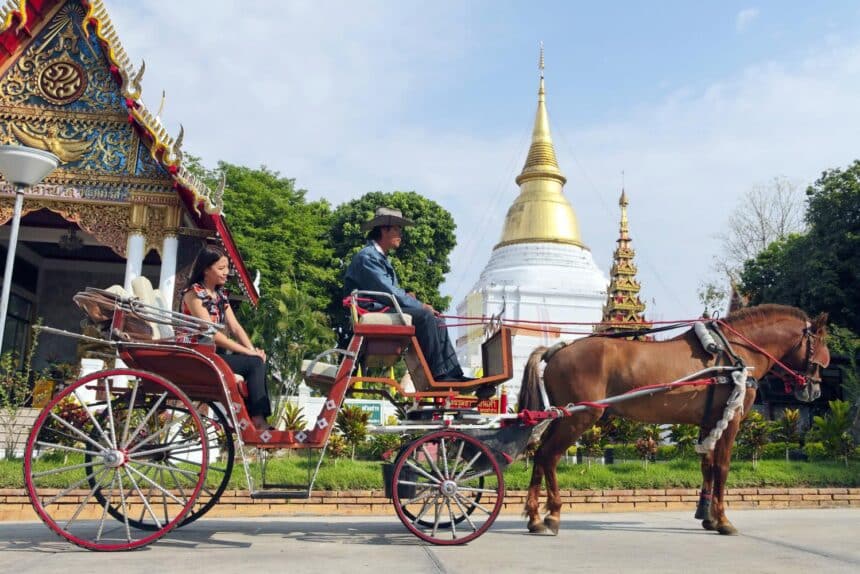
LAMPANG – Clip-clop, creak, clip-clop: a horse-drawn carriage moves at an easy pace through Lampang’s old streets, bringing you close to the city’s Lanna-era character. The ride offers a street-level view of local life, but routes, departure times, and prices can vary.
Lampang’s carriages are part of a living local tradition, and a little planning helps you choose a ride that fits your visit. For a wider look at the region’s heritage, explore these hidden gems in Northern Thailand.
Here’s what to know about the carriages’ place in Lampang, the routes and costs, and how to ride with care for the horses.
Key Takeaways
- Lampang’s horse-drawn carriages offer a local sightseeing ride through streets known for their Lanna character and heritage.
- The municipal guide lists routes along Thip Chang, Boonwat, and Wang Kwa roads, with stops near Kelang Nakhon Park and Assawin Market (official route details).
- Departures follow schedules that vary by starting point, so check availability before planning your ride.
- Fares can differ by route and source; confirm the price, trip length, and what it covers with the driver before boarding.
- Choose a driver who handles the horse with care, and explore Lampang’s heritage and unhurried charm beyond the carriage ride.
Lampang Horse Carriages: A Ride Through Old Lanna
In Lampang, a rot ma is a horse-drawn carriage used for sightseeing around the city. The ride offers a slower way to see its older streets and buildings, while the drivers and the local association keep the service part of everyday tourism.
How the carriage became part of Lampang’s identity
Lampang’s carriage service is managed by the Wagon Association, which organizes rides for visitors. The Lampang City Municipality’s carriage guide describes it as a local sightseeing service. Its place in the city comes from that ongoing role, not from a verified founding date or a precise claim about when the tradition began.
As a familiar feature of Lampang, the carriage connects visitors with the city at street level. It moves through districts where older buildings and local businesses sit alongside present-day routines. The ride can make the city’s heritage easier to notice, but it remains one way to explore, not a substitute for walking or visiting places on your own.
Local drivers also help keep the custom active. A Bangkok Post report on the carriage association discusses efforts to support younger drivers and care for the horses. That focus on continuing the service helps explain why the carriages matter as living cultural heritage, rather than as objects kept behind glass.
What the ride feels like from the carriage seat
The pace is slower than traveling by car, so there’s more time to look closely at the streets. You may notice the facades of older buildings, shaded shopfronts, or the changing rhythm of a commercial road as the carriage passes. Because you’re close to the street, everyday activity becomes part of the view.
The ride is also shaped by the horse’s pace and the route chosen. That makes it a relaxed sightseeing option, though traffic, weather, and the route itself affect what you see. Some visitors may prefer to walk, pause at a temple, or explore farther on their own; the carriage works best as one part of a broader visit.
Lampang’s built heritage includes distinctive Burmese-style wooden architecture, such as the historic temple building described in this account of a heritage structure in Lampang. From the carriage, details like rooflines and wooden facades pass at an easy pace. If a particular building catches your eye, consider returning on foot for a closer look.
What you’ll see on a Lampang horse carriage ride
Lampang’s municipal guide lists two set sightseeing options, plus an hourly custom ride. The shorter and longer circuits share some streets, but the longer route adds more of the city; a reported parade route is a separate event route, not a standard sightseeing circuit.
The shorter ride along Thip Chang and Boonwat roads
The roughly 20-minute option travels along Thip Chang Road, known for its old-style buildings, and Boonwat Road, an important commercial street. From the carriage, you’ll see the streets at an unhurried pace, with older facades and active shopfronts forming part of the view. The municipality describes the route by its streets and general character, so don’t expect a narrated history of every building.
This shorter circuit is a good fit if you want a brief look at Lampang’s central streets. Check the municipality’s route details before setting out, and confirm the exact route with the driver.
The longer route past the park and market
The roughly 40-minute option follows the shorter route, then extends along Wang Kwa Road and past Kelang Nakhon Park and Assawin Market. That extra distance adds more everyday city scenery, including a view of the park and the market area, rather than turning the ride into a series of fixed sightseeing stops.
The municipal guide names these landmarks, but it doesn’t promise a scheduled pause at either one. For that reason, ask the driver whether the carriage will pass by at a pace that lets you take a closer look. If you want to visit a place on foot, you can plan a separate stop after the ride. For other outings beyond the carriage circuit, see Lampang attractions and travel conditions.
How to choose between a set route and a custom ride
Choose the shorter route for a quick overview of the central streets, or the longer option if you’d like additional city scenery. The municipal page also lists a custom ride, arranged directly with the driver at 300 baht per hour. This gives you a chance to discuss where you’d like to go, though the final route depends on what you agree on before departure.
A parade reported in Lampang followed a route past places such as Lampang Museum and Orange Bridge. That event itinerary should not be confused with either standard sightseeing option; the parade route report describes a separate occasion.
Before boarding, confirm the duration, route, fare, and what the price includes. This matters especially for a custom ride, since the exact route and any stops should be agreed with the driver in advance.
How to plan your Lampang carriage ride
A little preparation helps you avoid waiting at an empty stand or misunderstanding the fare. Lampang’s municipality confirms that departures follow schedules that vary by starting point, but it does not publish a complete timetable in the available visitor information.
Check the departure point, schedule, and current fare
Carriages don’t run continuously throughout the day, so check with the stand or the Wagon Association before making a special trip. Some travel listings name possible pickup areas, but the municipality’s visitor information doesn’t confirm those locations as official departure points. Treat them as leads to verify, not guaranteed places to find a carriage.
Published fares also vary. The municipality lists a custom ride at 300 baht per hour, while a January 2026 Bangkok Post report quotes 300 baht for a short trip and 400 baht for a long trip. The figures may describe different ride lengths or arrangements, so check the reported short- and long-trip fares, then confirm the current price directly with the driver or association. Ask whether the quoted fare covers the whole carriage, too.
What to ask before you board
Before setting off, confirm the details in plain terms. A quick conversation can clarify what you’re paying for and whether the ride fits your plans.
- Ask which streets or landmarks the route includes.
- Confirm the ride duration and total fare.
- Check whether the price covers the entire carriage or is charged another way.
- Ask which payment methods the driver accepts.
- Find out whether the driver can adjust the route or duration.
Also check whether a carriage is available at your intended stand. A 2025 report announced a horse-carriage option in the Maxim app, but that doesn’t guarantee the service is active or available for your location and time. Verify in the app or with a local contact before relying on it.
Ride with care for the horses
Before boarding, take a moment to observe the horse. If it appears exhausted, distressed, or uncomfortable, don’t push for a longer ride. Follow the driver’s guidance and keep the trip at a pace that seems appropriate for the animal.
The available visitor information does not confirm a formal public welfare checklist, so avoid assuming one exists. If you have concerns, ask the driver about the horse’s condition and choose not to ride if you’re uncomfortable with what you see.
Frequently Asked Questions
Lampang’s horse carriages are a distinctive way to see the city, but the service runs on schedules and fares can vary. Confirm the details locally before setting aside time for a ride.
Are horse carriages still operating in Lampang?
Yes. The Lampang municipality lists the service as managed by the Wagon Association, and its visitor information describes scheduled departures from different points. Rides aren’t continuously available throughout the day, however, and the published information doesn’t provide a complete timetable. Check with a local stand or the association before planning around a specific departure. The municipality’s carriage information lists the service and its route options.
How long does a typical carriage ride last?
The listed sightseeing options take about 20 minutes or 40 minutes. You can also arrange a custom ride with the driver, depending on availability. Actual timing may change with the agreed route and local conditions, so confirm the expected duration before you set off.
How much does a Lampang horse carriage ride cost?
The municipal listing confirms a custom ride at 300 baht per hour. Reported fares for the shorter and longer sightseeing rides differ across sources, so those figures may not reflect the same route or arrangement. Before boarding, ask for the current total fare and check what it covers, including whether it applies to the whole carriage.
Can you ask the driver to follow a custom route?
Yes. The municipal information lists a custom route arranged with the driver at an hourly rate. Before the ride begins, agree on where you’ll go, how long the trip will take, and the total price. That helps prevent confusion if the route or timing changes along the way.
Is a horse carriage ride the best way to see all of Lampang?
A carriage ride offers a slow look at selected streets and landmarks, including parts of the city’s older center. It doesn’t cover the whole city or replace visits to places that require more time on foot. Pair the ride with walking or other transportation if you want to explore farther afield.